Fantasy Atlas
Explore the sigils and house words of 147 noble houses of Westeros, the fictional continent from George R.R. Martin's A Song of Ice and Fire and HBO's Game of Thrones. A heraldic tapestry of dragons, wolves, lions, roses, and falcons across the Seven Kingdoms.
In Westeros a house is rarely introduced by its name alone. It arrives behind a banner, and the banner is read first — by the men who have to follow it into a battle line, and by the reader, who is being told something about a family before anyone in it has spoken.
A sigil is not ornament. With the house words that go with it, it forms an identity the books treat as a matter of law rather than taste: the arms belong to the family and not to one man, so every trueborn member may bear them, and a bastard must alter them before he does.
What earns Westeros a place in an atlas of real heraldry is how loosely it wears the rules it borrows. Martin keeps the look of medieval blazon and drops most of its grammar, and what comes out sits closer to the early Middle Ages than to anything a college of heralds would recognise — a heraldry caught before the heralds got to it.
The arms also move, in ways a genealogist would recognise. Marriage carries a sigil into a house that never owned it; extinction takes one out of the world; conquest hands a kingdom to a family that arrives with a device of its own.
What follows gathers 147 houses, region by region, with their sigils, their words and — where it is known — where the device came from. It is another way of reading the Seven Kingdoms: not through its wars and its kings, but through what its people painted on shields, gates and banners.
Click on a country to learn more
Aegon’s Conquest is the great redistribution of Westerosi heraldry. In the space of a few years it ended one royal line, stripped the crowns from several others and created a region that had no ancient arms at all. The realm it left behind holds nine regions — the north, the Vale of Arryn, the Iron Islands, the riverlands, the westerlands, the crownlands, the Reach, the stormlands and Dorne — and is still called the Seven Kingdoms, after the seven sovereigns who held Westeros on the eve of the invasion. Two cases run in exactly opposite directions.
After the defeat of Argilac the Arrogant, the last Storm King, his only daughter Argella Durrandon was married to Orys Baratheon — one of Aegon’s generals, his closest companion and his rumoured bastard half-brother — who became the first Lord of Storm’s End. Orys took the sigil and the words of House Durrandon for his own.
So the crowned black stag on gold and Ours is the Fury are Durrandon inheritances, worn by a house founded in 2 BC. House Baratheon is the youngest of the Great Houses of Westeros, and its arms are among the oldest: through the female line they reach back to Durran Godsgrief, who founded the kingdom of the Storm Kings in the Age of Heroes.
House Gardener had ruled the Reach since the Age of Heroes under argent, a hand vert — a green hand on white. Mern IX Gardener and his kin were killed at the Field of Fire in 1 BC, and the line ended there. Aegon gave Highgarden and the Reach to the Tyrells, who until then had been the Gardeners’ stewards.
The Tyrells did not take the arms with the castle. They brought their own golden rose, and the green hand of the old kings survives only in the name of a chivalric order founded in its honour, the Order of the Green Hand. Where Storm’s End kept a dead dynasty’s sigil, Highgarden buried one.
Elsewhere the devices stayed and only the crowns went. Stark and Arryn submitted, Lannister bent the knee after the Field of Fire, and all three were confirmed as Wardens over the lands they had ruled as kings. The direwolf, the falcon and the lion are therefore royal arms still borne by houses that no longer reign. The Martells kept theirs by a different route: Dorne stayed out of the realm for nearly two centuries and joined in 187 AC by marriage, which is why its princes kept the title as well as the sun and spear.
The one region with no inherited heraldry is the crownlands, carved out around King’s Landing from ground that had been contested between several kingdoms. It had no ancient house and so no ancient arms, and the three-headed dragon set over it was an import — the more so because the dragonlords of the Valyrian Freehold, whom the Targaryens came from, practised no heraldry at all.
Arms are worked hard in Westeros, and in that at least it behaves like Europe. They go on shields, on surcoats and above all on banners, which is why a lord’s sworn vassals are called his bannermen. A knight who wants to fight unrecognised rides as a mystery knight behind a blank or borrowed shield. The arms of the realm’s great men are gathered in rolls of arms, and highborn children learn to read them through a game called come-into-my-castle.
What does not behave like Europe is the grammar. Martin borrows the look of medieval European heraldry and quietly drops most of its rules, so the result sits closer to the early Middle Ages, before blazon hardened into a discipline: arms are described in plain English rather than in heraldic jargon, and a good many of them would never have passed a herald’s desk.
European blazon forbids colour on colour and metal on metal. Westeros ignores it outright: House Waynwood sets black on green, House Kettleblack black on red, House Chyttering gold on white. Nor does Westeros keep the European habit of folding white, silver and grey together as argent — here they are three distinct tinctures, which is how House Stark can bear a grey direwolf on a white field and have it read as a contrast at all.
Some of the old vocabulary does survive. Furs are still used — ermine for House Rosby, vair for House Harte — but they sit alongside tinctures no roll of arms would accept: sunset, oak, sand, masonry, or the grey-green of House Reed.
Real heraldry keeps its charges simple, because a shield has to be read across a battlefield. Westeros does not. House Manderly puts a merman on the field and House Umber a chained giant — figures European practice would only ever have allowed as supporters, standing beside the shield rather than on it. Others go further: the flayed man of House Bolton, the silk-swirled dancing maiden of House Piper, the fool of House Falwell. And the local wildlife arrives with the setting — the lizard-lion of House Reed, the weirwood of House Blackwood.
The seven-pointed star of the Faith of the Seven, borne by houses such as Templeton, is almost unknown in European arms; the flag of Australia is the famous exception.
Because the descriptions are prose rather than blazon, many of them underspecify the design. House Blanetree bears “maple leaves, green and brown, strewn on a field of yellow” — which says neither how many leaves nor how they sit. Others produce arms that simply do not work at a distance: the fields of House Hayford bleed into one another, and House Lynderly is both busy and low in contrast. Set against them, House Footly — silver caltrops strewn on black — is exactly the kind of design a real herald would have approved.
Shape is the clearest line on the map. Most of the realm bears its arms on an escutcheon; Dornish houses favour a circular field, a form barely seen north of the Red Mountains.
Eight of the nine regions are covered below. The Iron Islands are not: the ironborn houses are still to be drawn, and none of them appears in this atlas yet.
The North wears its own country. Its devices are drawn from the land and from the First Men who settled it long before any herald reached Westeros: the grey direwolf of House Stark on a white field, the grey-green lizard-lion of House Reed, the merman of House Manderly, the flayed man of House Bolton. Beasts no European herald ever blazoned, on tinctures no European roll would name.
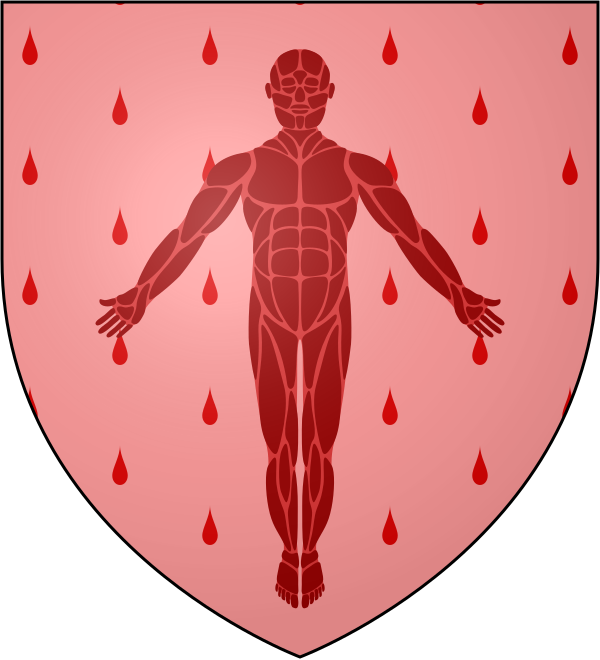 House Bolton of the Dreadfort
 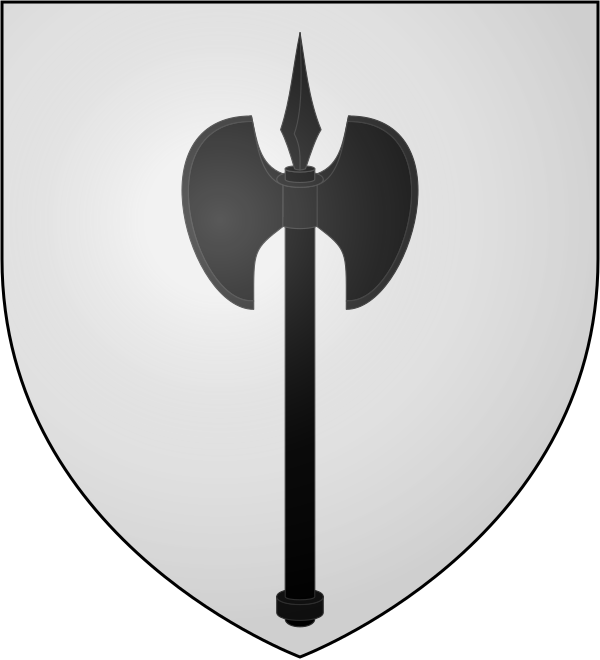 House Cerwyn of Cerwyn Castle
 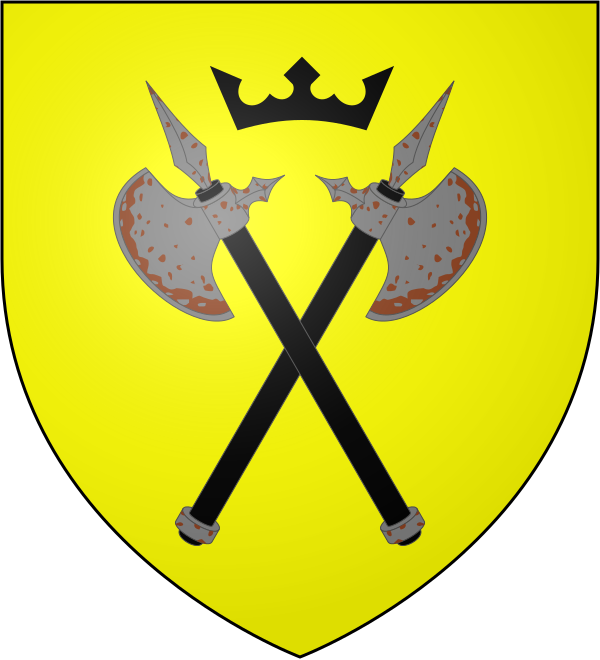 House Dustin of Barrowton
 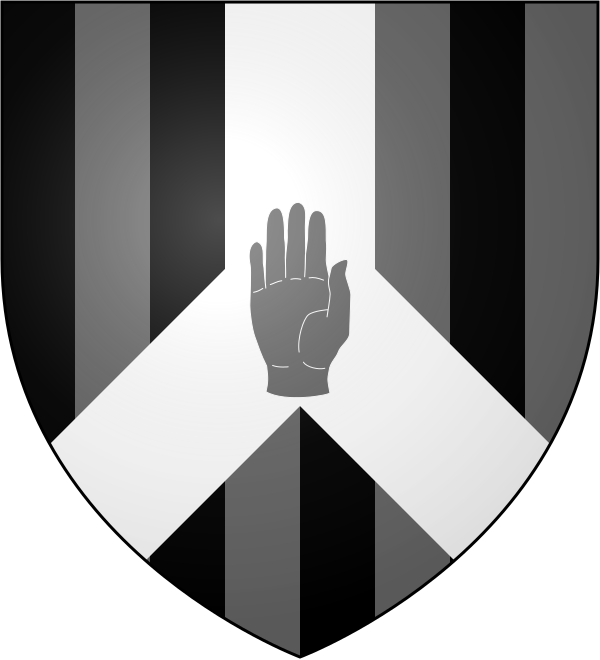 House Flint of Flint's Finger
 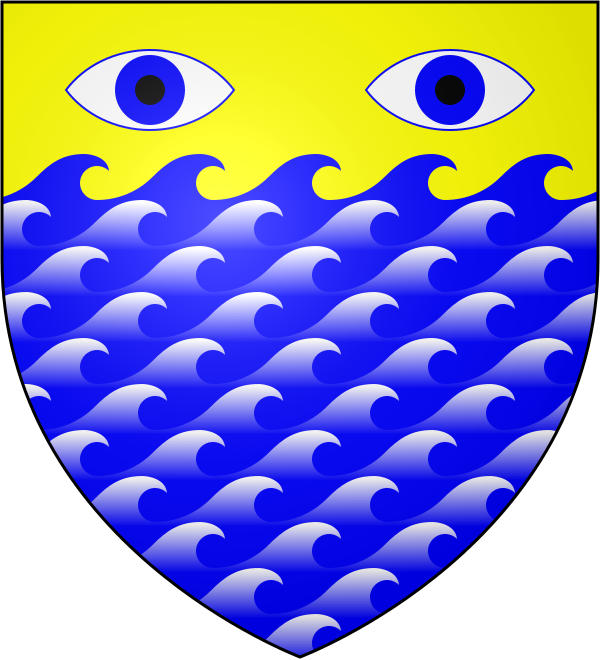 House Flint of Widow's Watch
 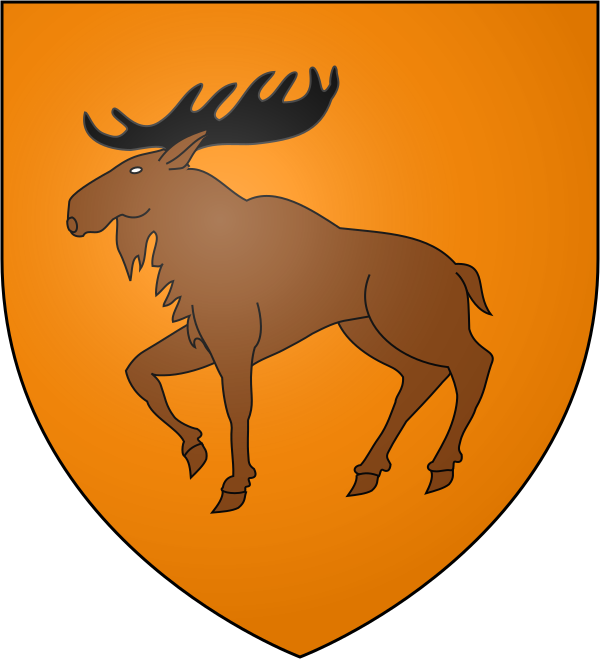 House Hornwood of Hornwood
 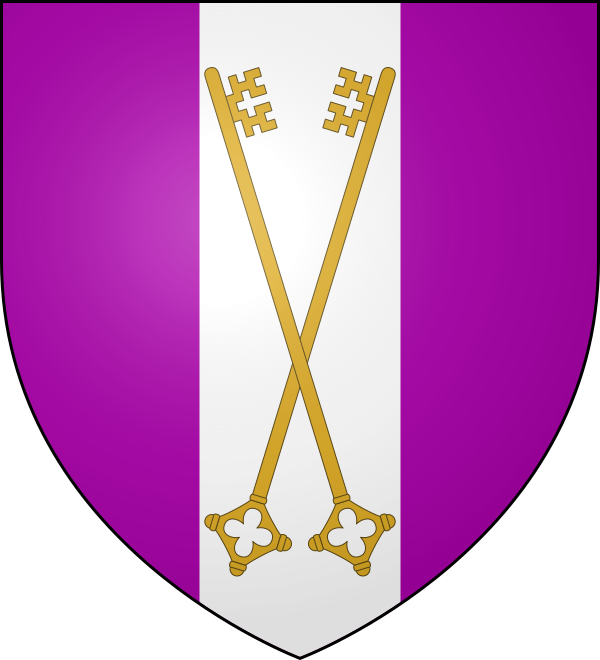 House Locke of Oldcastle
 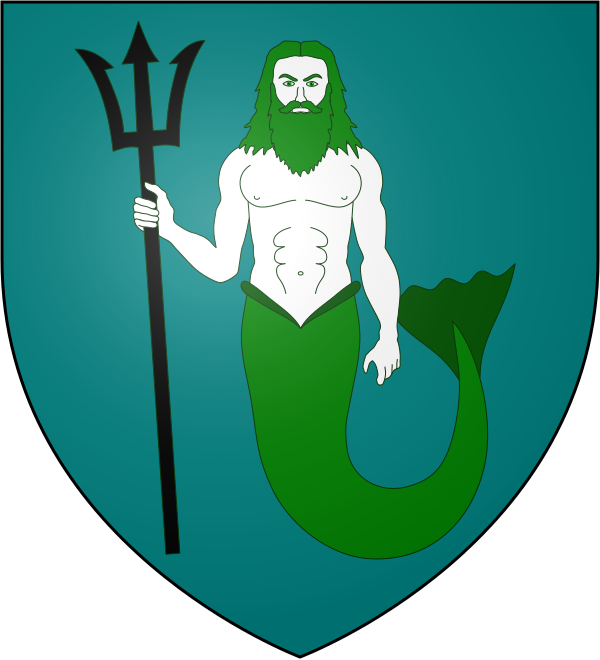 House Manderly of White Harbor
 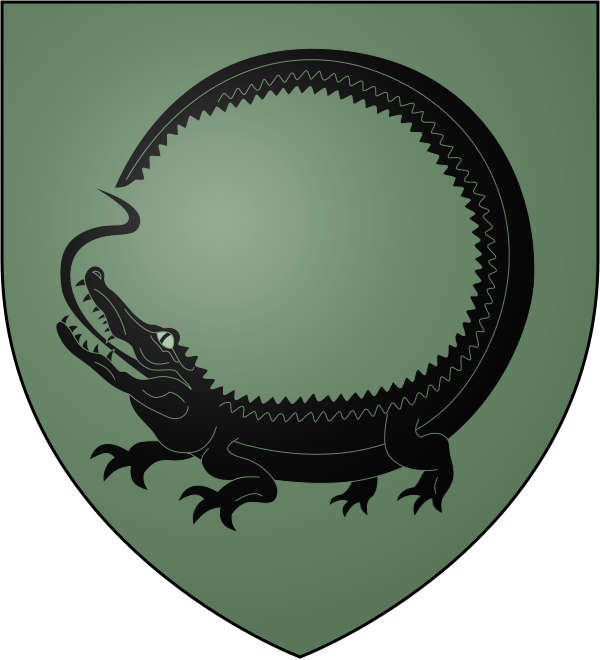 House Reed of Greywater Watch
 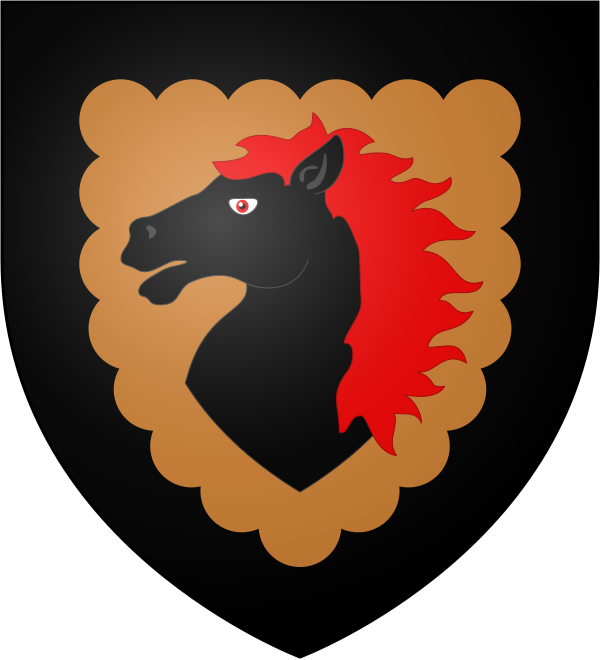 House Ryswell of the Rills
 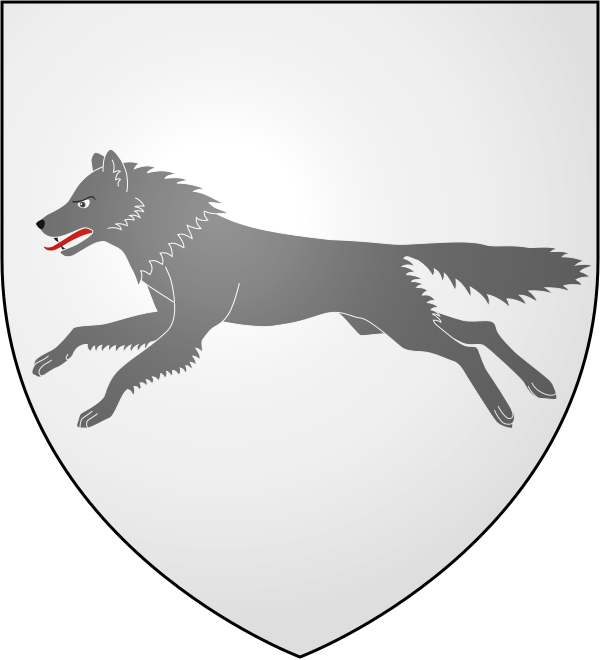 House Stark of Winterfell
 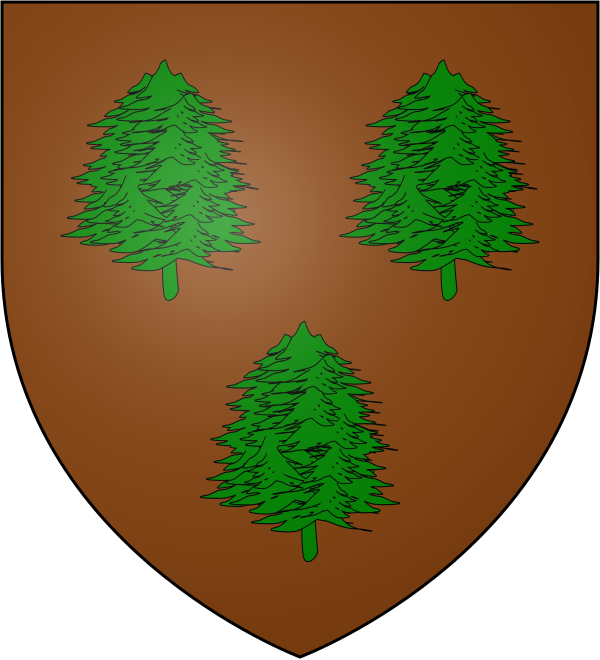 House Tallhart of Torrhen's Square
Two heraldic traditions are stacked in one valley. The Andals landed here first, and House Arryn — said to descend from the oldest line of Andal nobility — bears a sky-blue falcon against a white moon, blazoned bleu celeste, one of the few genuinely heraldic tinctures in the books. Beneath them sits House Royce, First Men since the Dawn Age, with black iron studs on bronze inside a border of ancient runes, and We Remember for words.
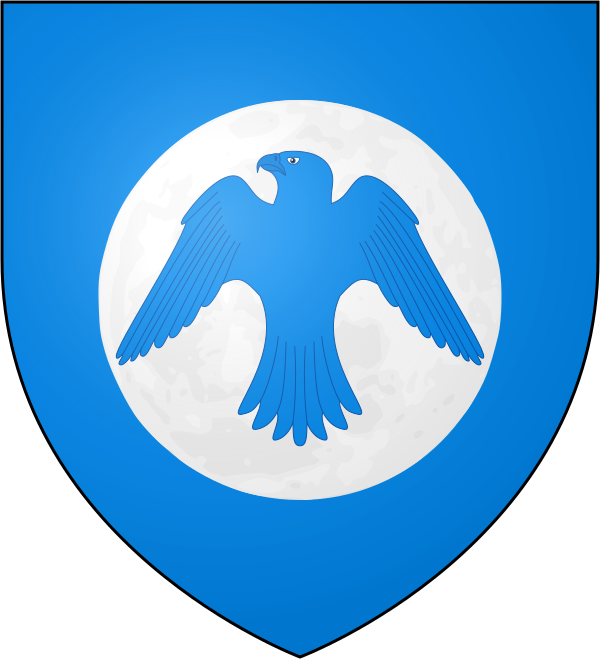 House Arryn of Gulltown
 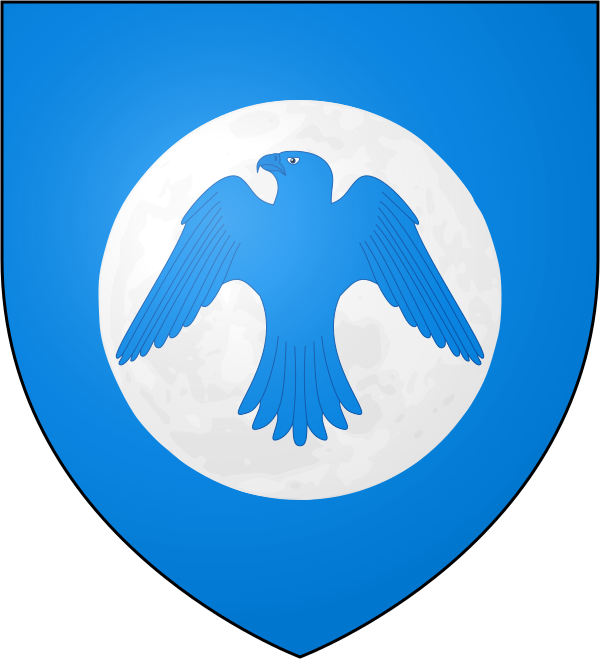 House Arryn of the Eyrie
 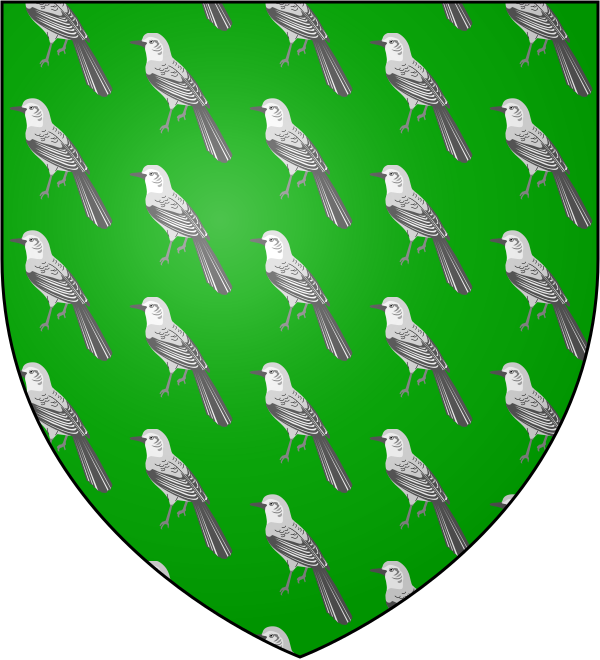 House Baelish of the Fingers
 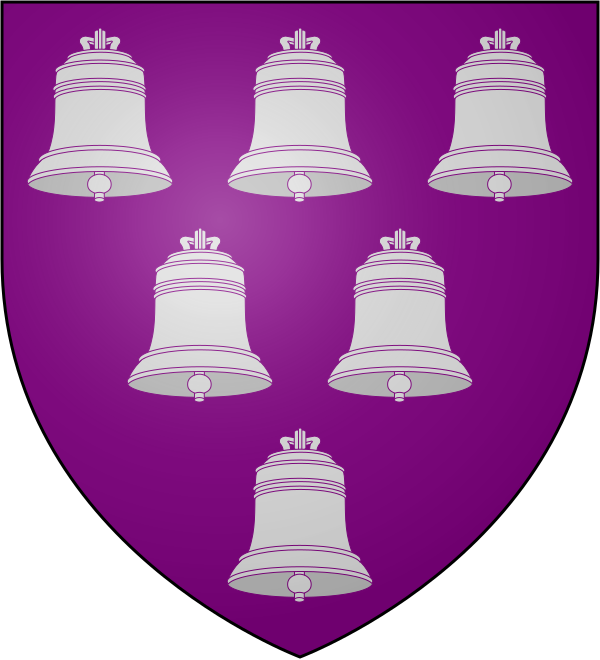 House Belmore of Strongsong
 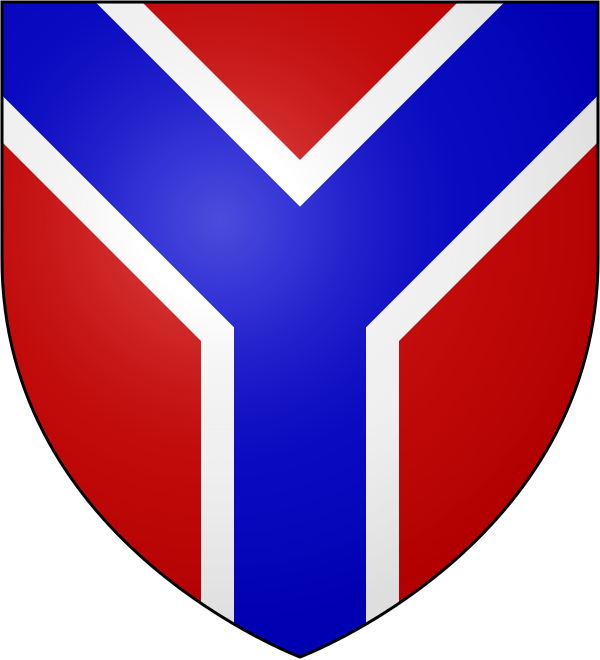 House Coldwater of Coldwater Burn
 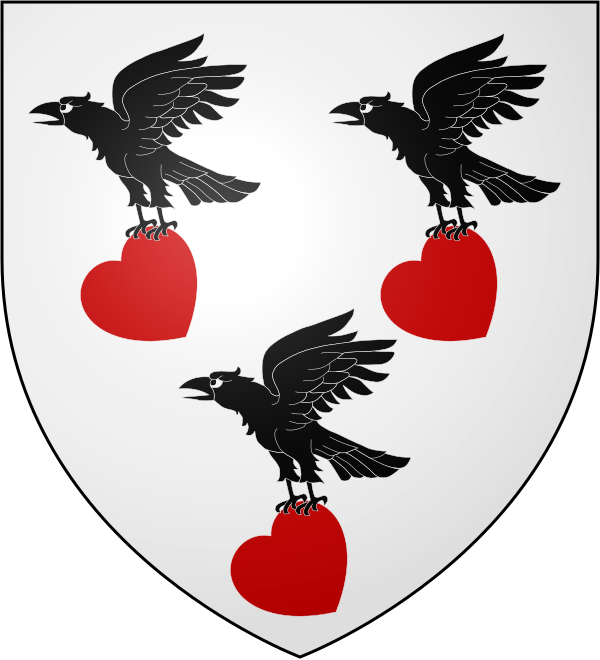 House Corbray of Heart's Home
 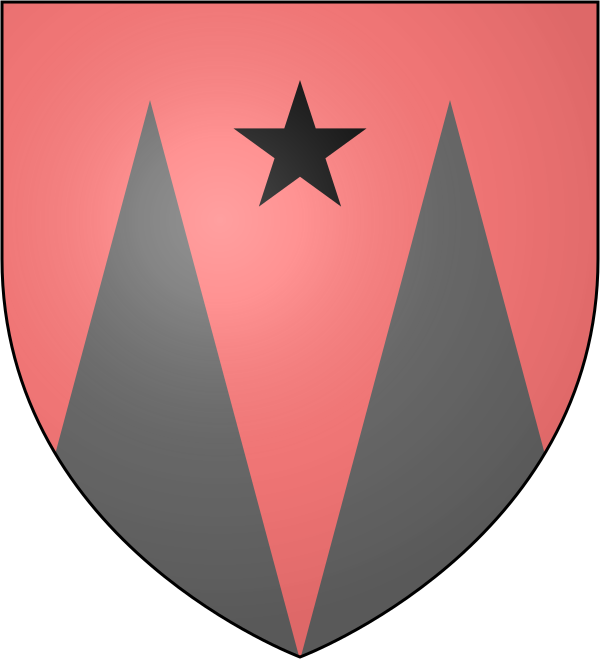 House Elesham of the Paps
 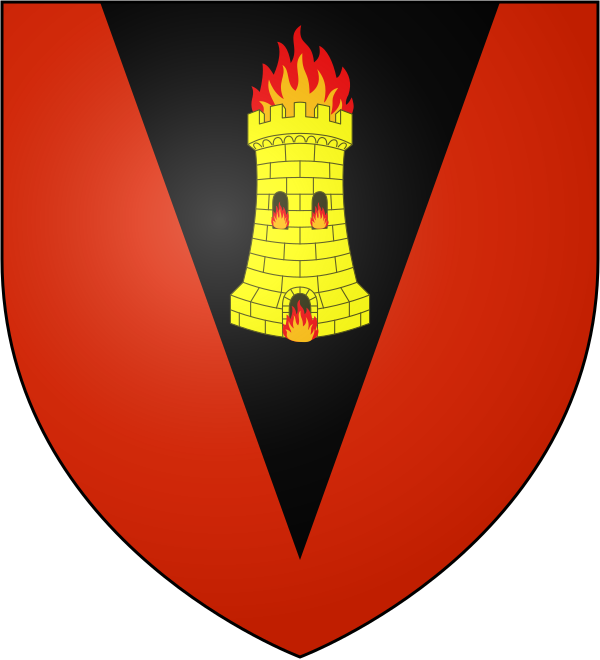 House Grafton of Gulltown
 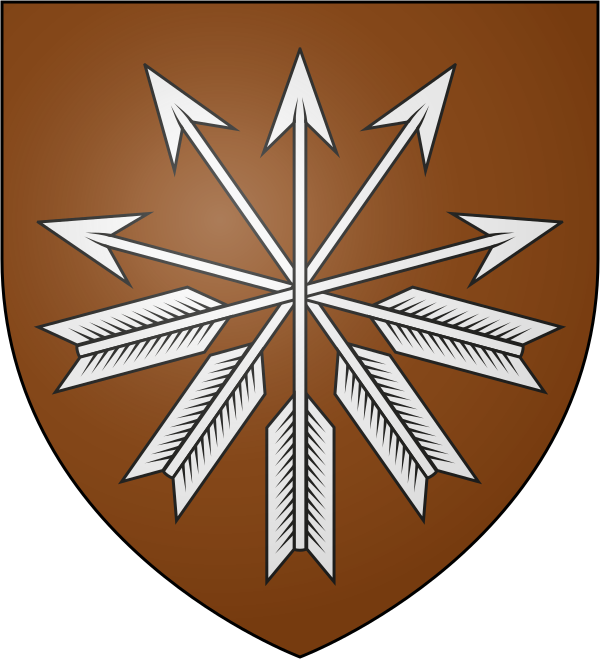 House Hunter of Longbow Hall
 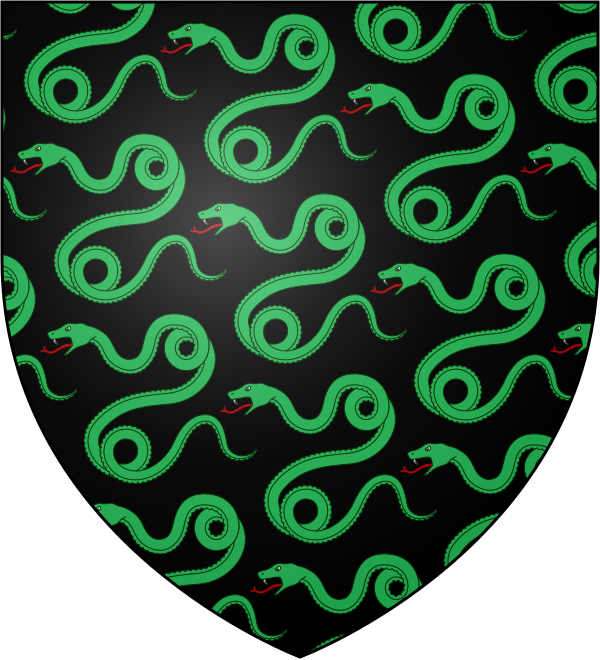 House Lynderly of Snakewood
 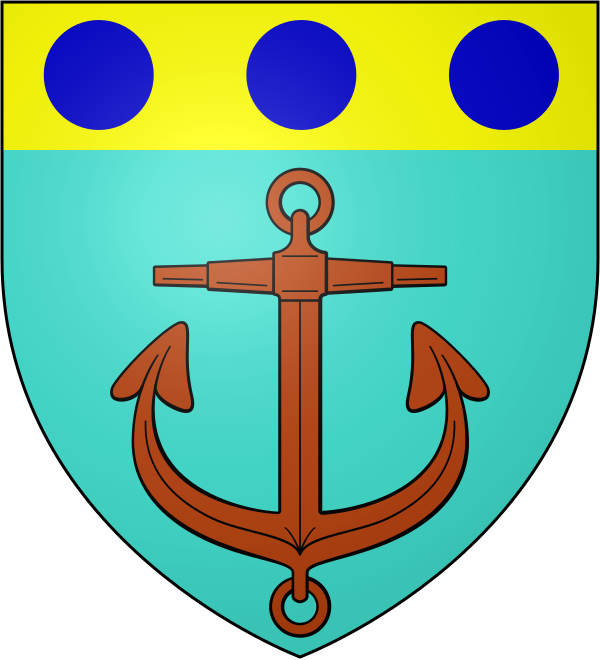 House Melcolm of Old Anchor
 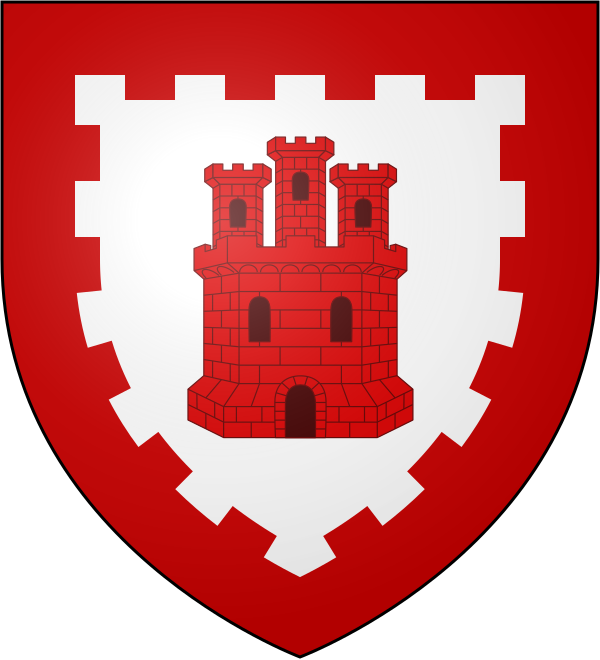 House Redfort of Redfort
 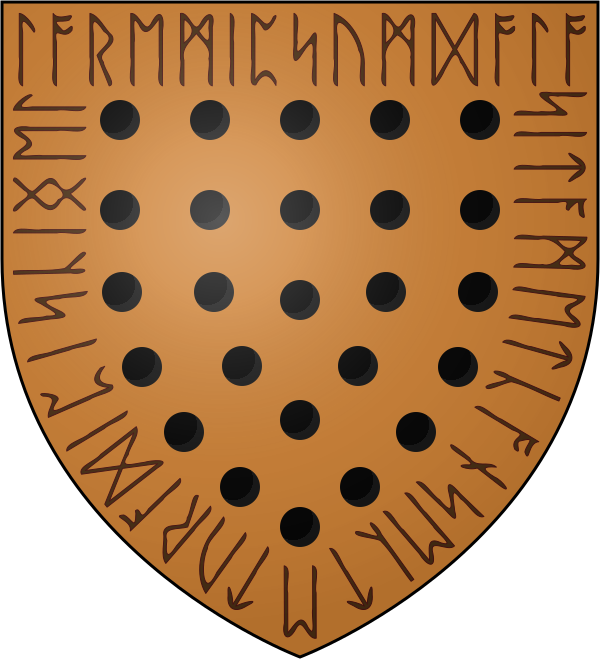 House Royce of Runestone
 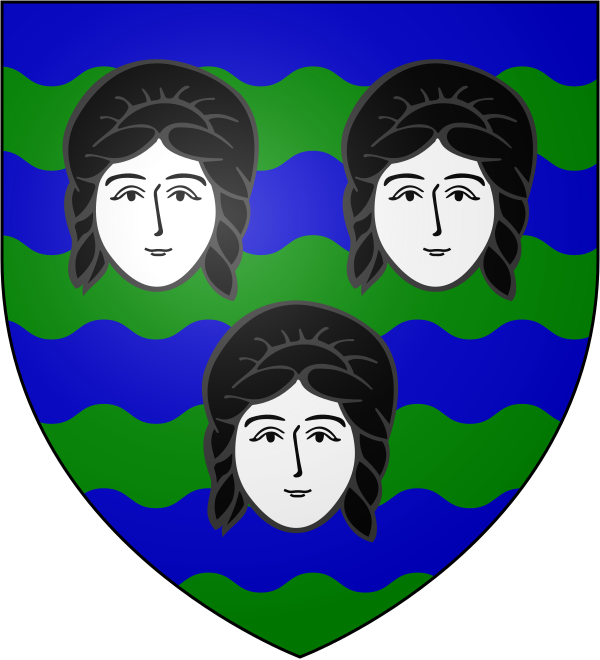 House Sunderland of the Three Sisters
 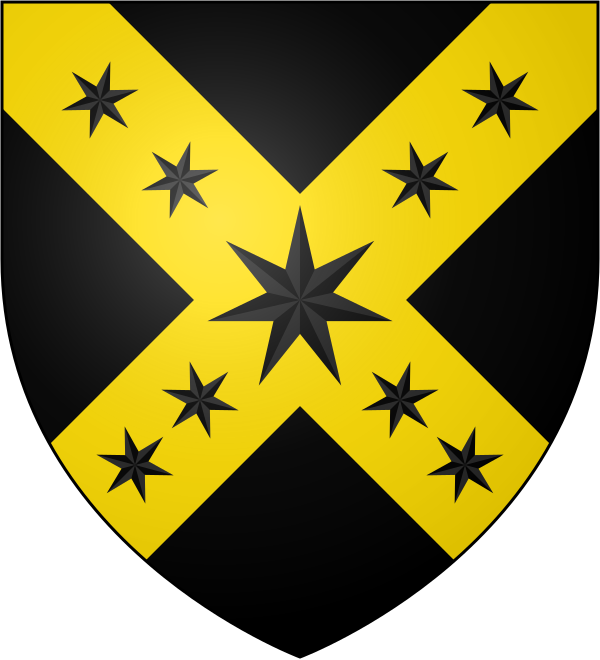 House Templeton of Ninestars
 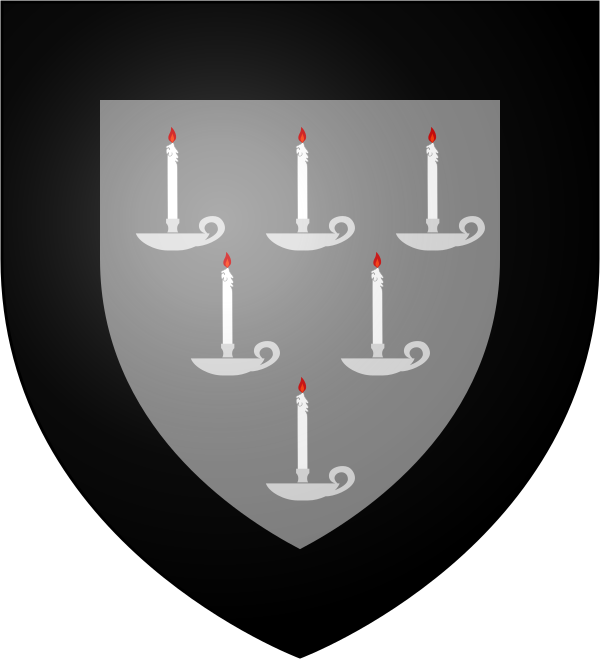 House Waxley of Wickenden
 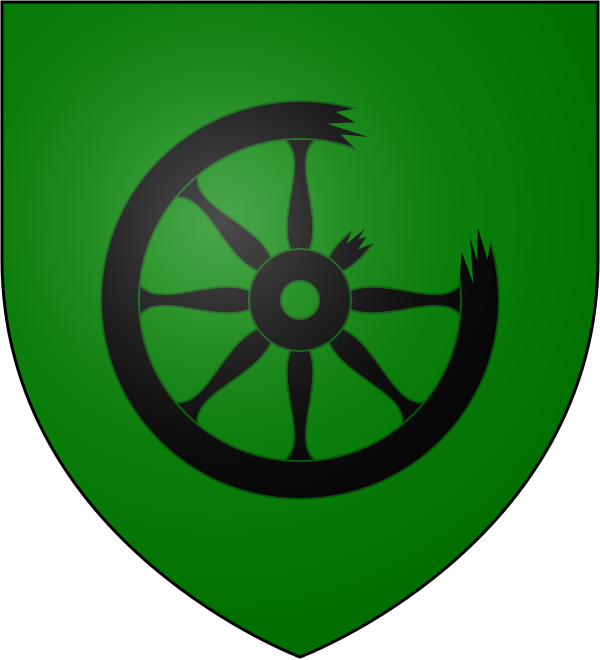 House Waynwood of Ironoaks
The riverlands were never long their own kingdom. They passed between river kings, storm kings and ironborn until Aegon took them from House Hoare and gave them to Edmyn Tully. The arms remember the older claims: House Blackwood, river kings in the Age of Heroes, bear a dead weirwood on a black inescutcheon within an orle of ravens — one of the rare Westerosi blazons built from real heraldic ordinaries. Their house words have never been recorded.
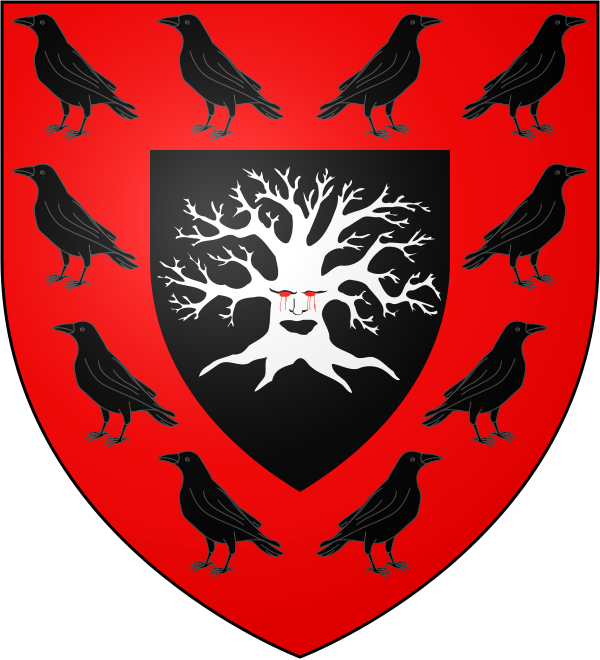 House Blackwood of Raventree Hall
 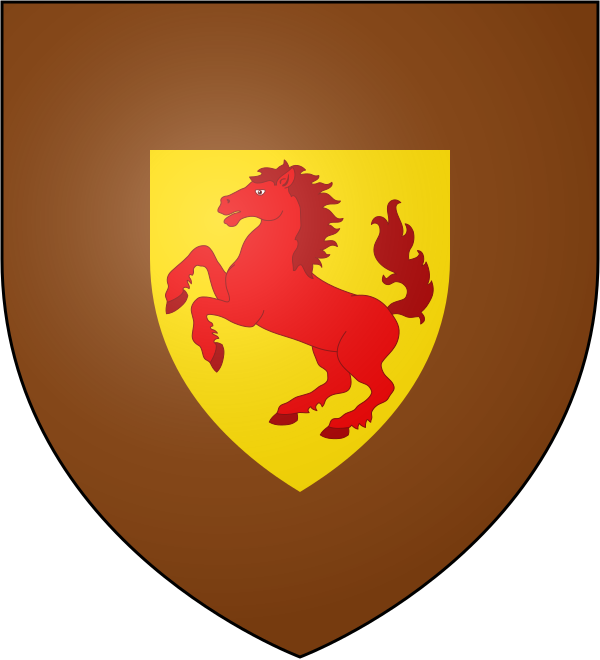 House Bracken of Stone Hedge
 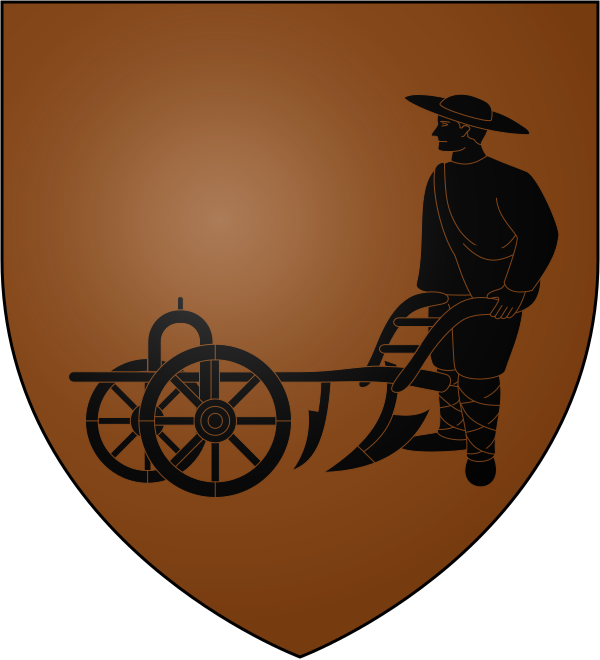 House Darry of Darry
 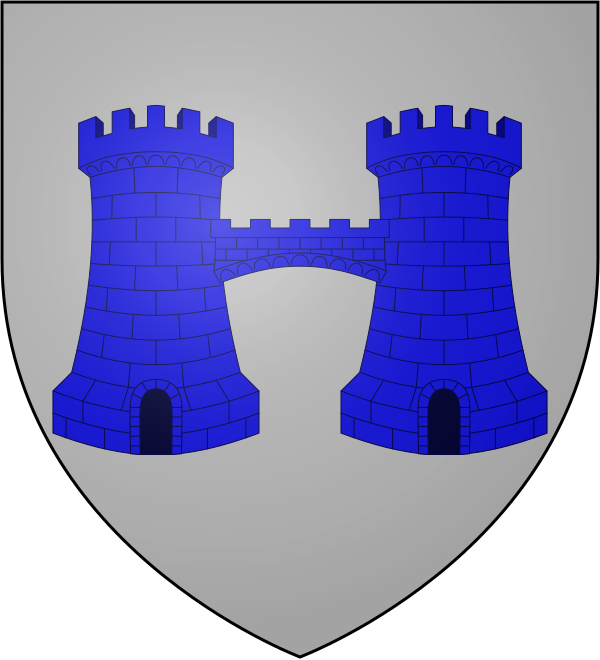 House Frey of the Crossing
 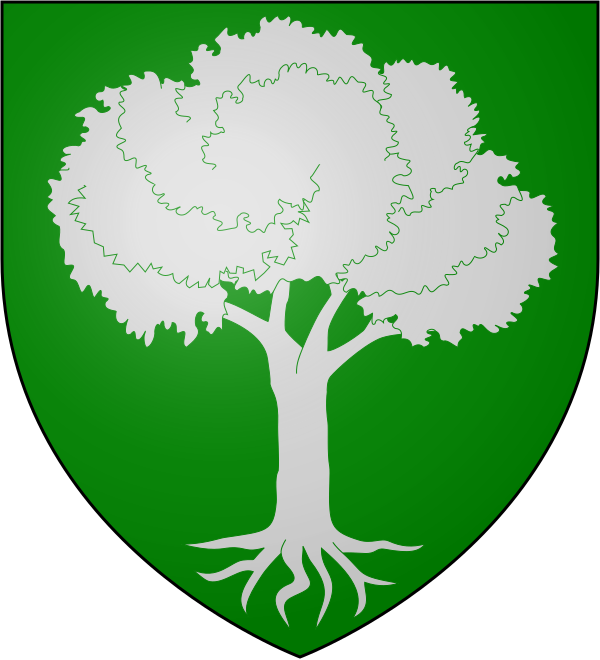 House Harlton of Castlewood
 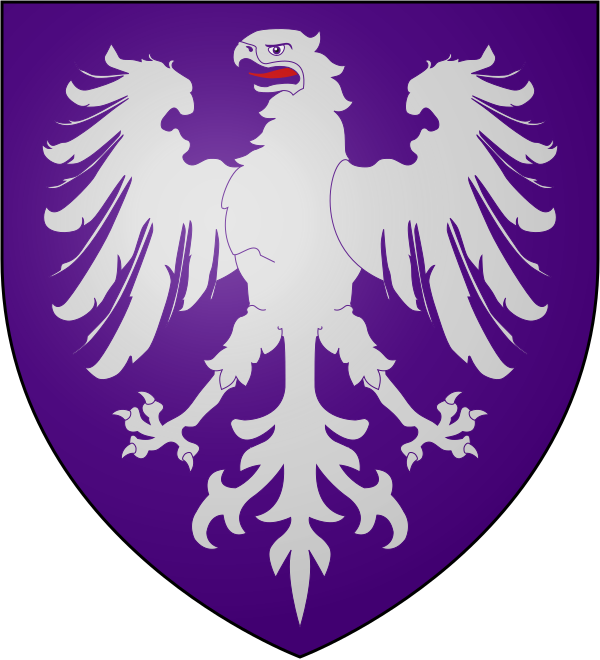 House Mallister of Seagard
 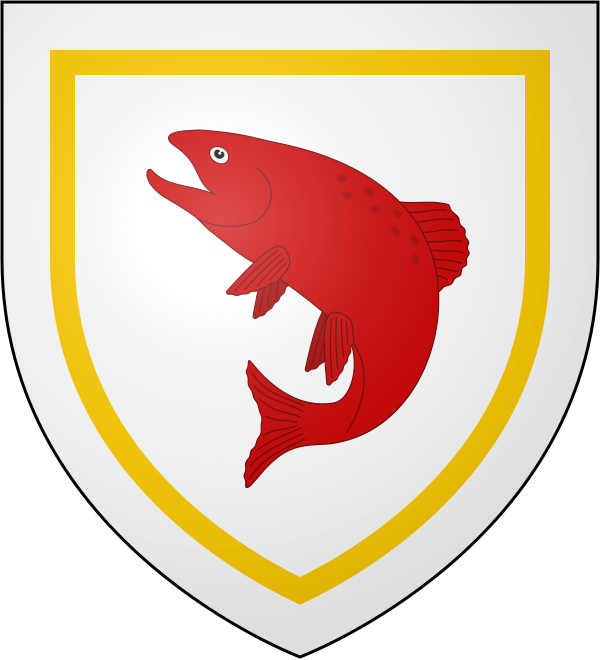 House Mooton of Maidenpool
 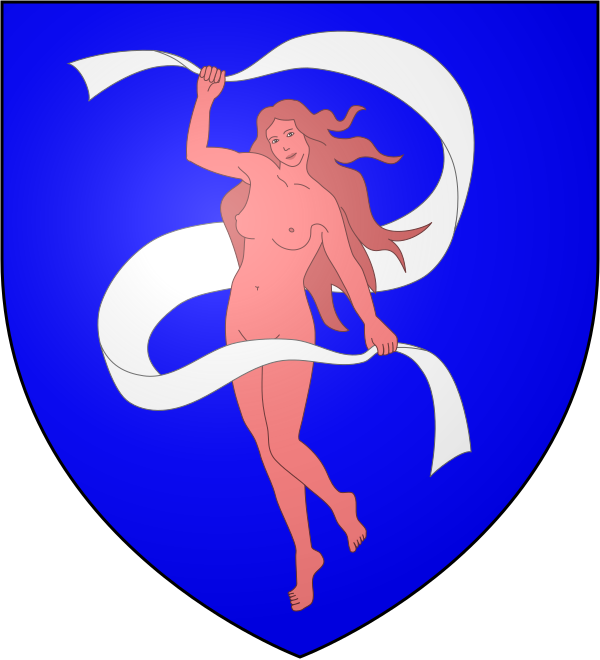 House Piper of Pinkmaiden
 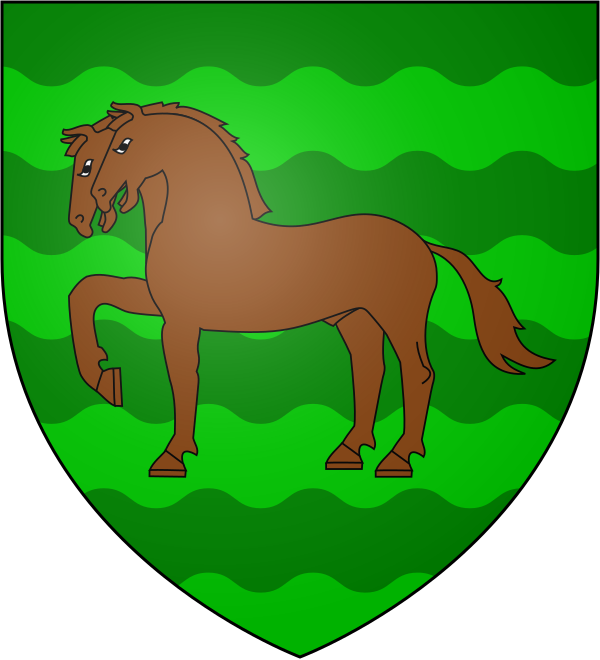 House Roote of Lord Harroway's Town
 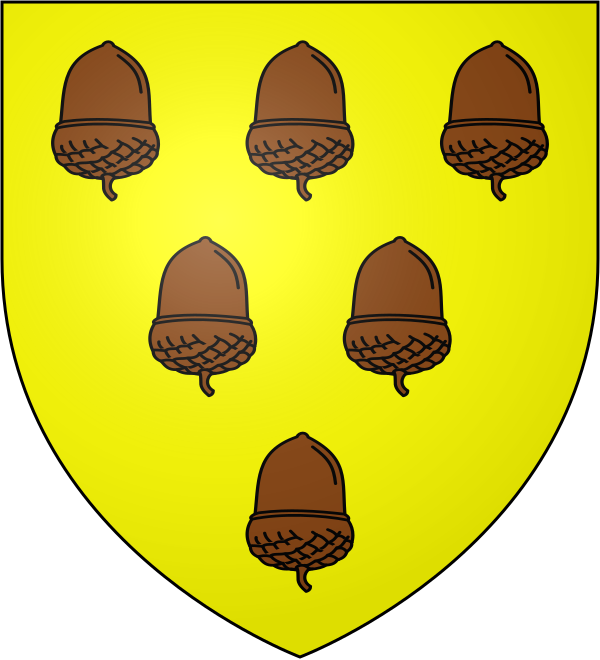 House Smallwood of Acorn Hall
 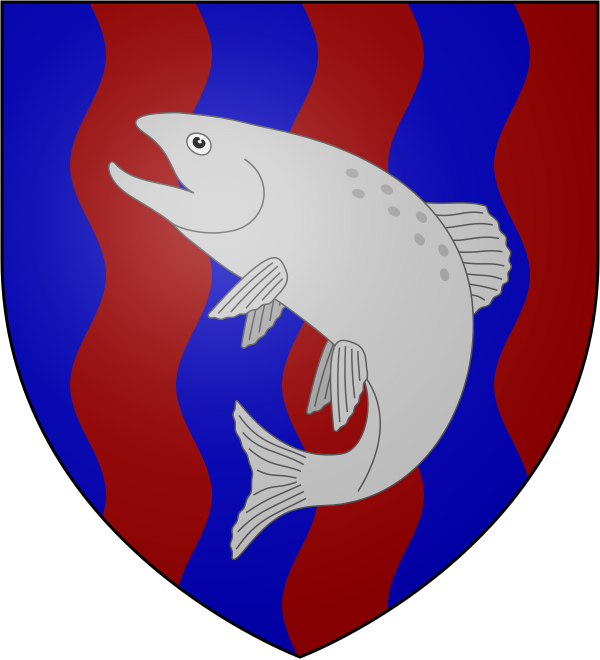 House Tully of Riverrun
 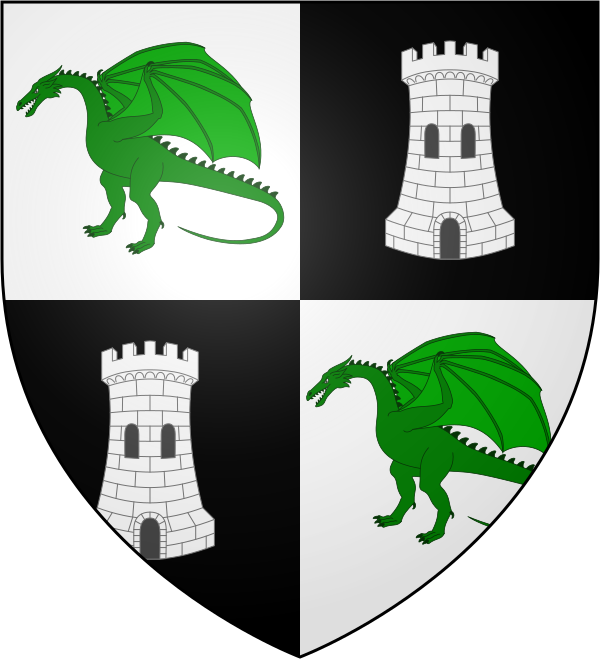 House Vance of Atranta
 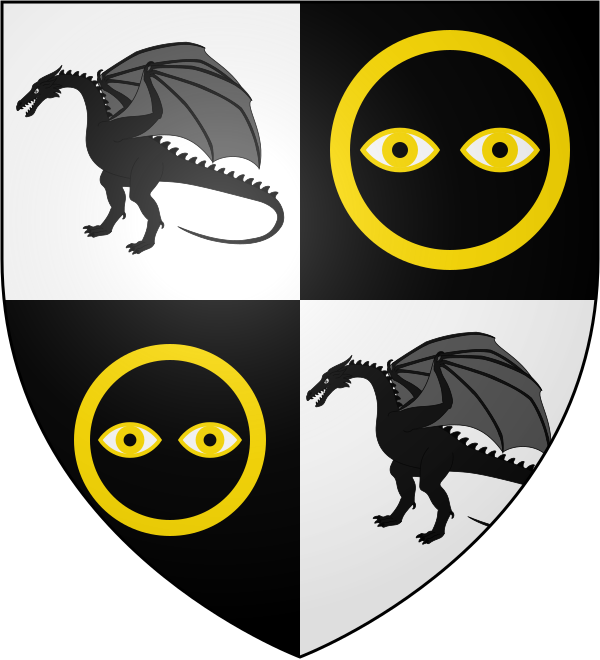 House Vance of Wayfarer's Rest
 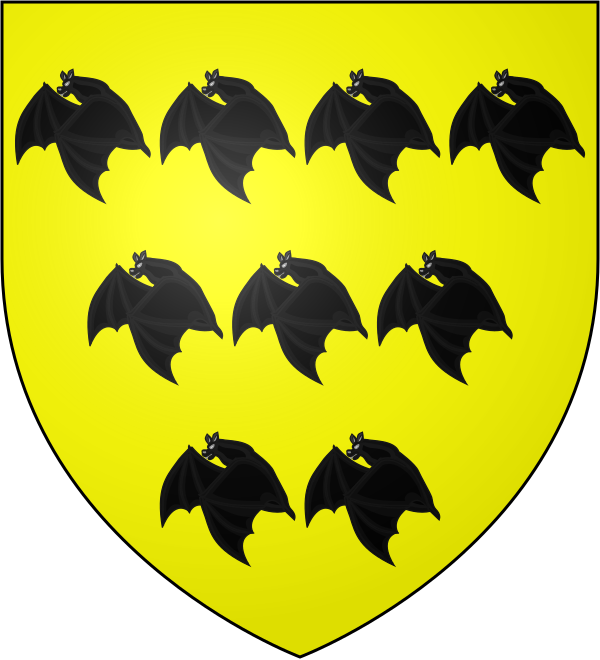 House Whent of Harrenhal
Gold country, and the home of the clearest grant of arms in the books. A kennelmaster of Casterly Rock saved Lord Tytos Lannister from a lioness, losing a leg and three dogs in the doing. Tytos gave him lands and a towerhouse, and the new House Clegane took for its sigil the three dogs it had lost, on the yellow of autumn grass — an augmentation of honour in all but name.
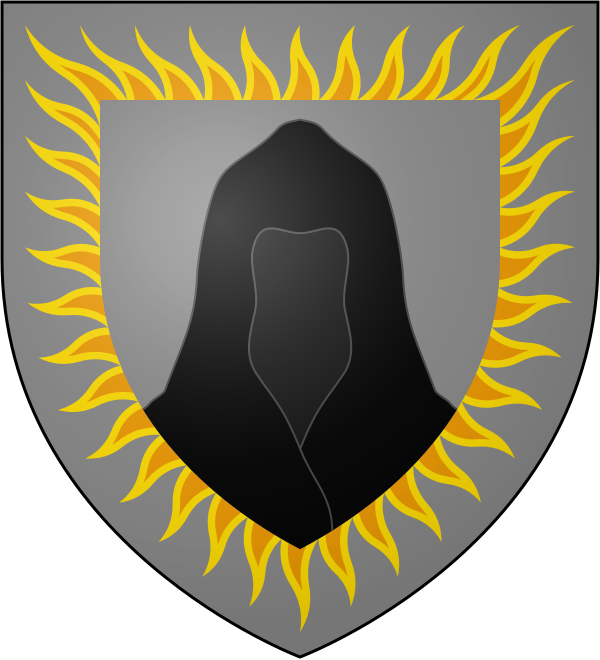 House Banefort of Banefort
 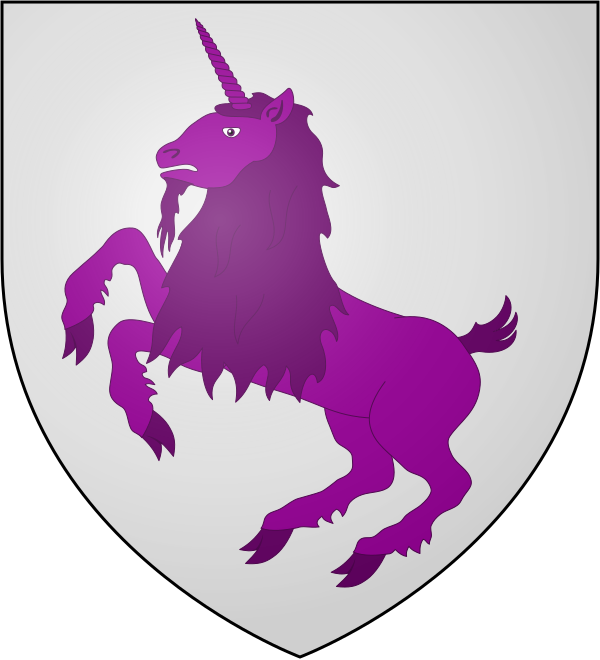 House Brax of Hornvale
 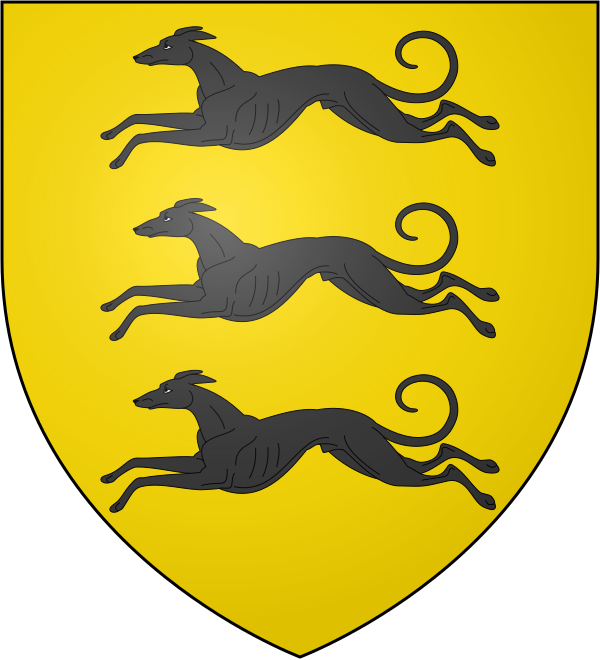 House Clegane of Clegane's Keep
 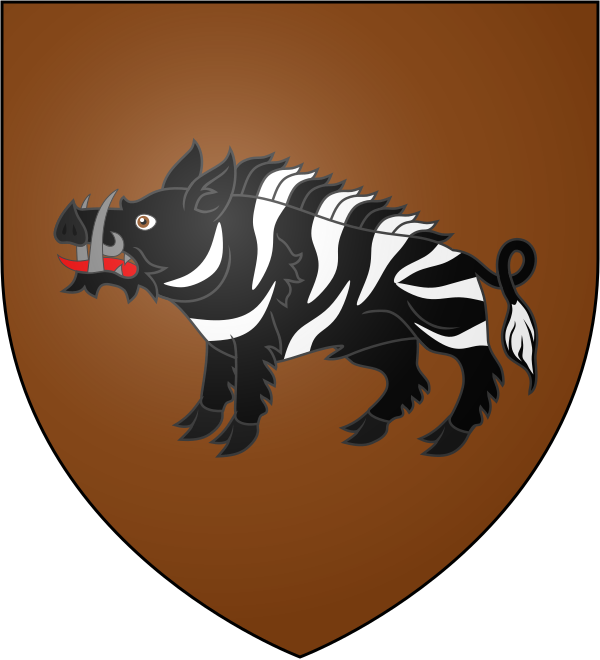 House Crakehall of Crakehall
 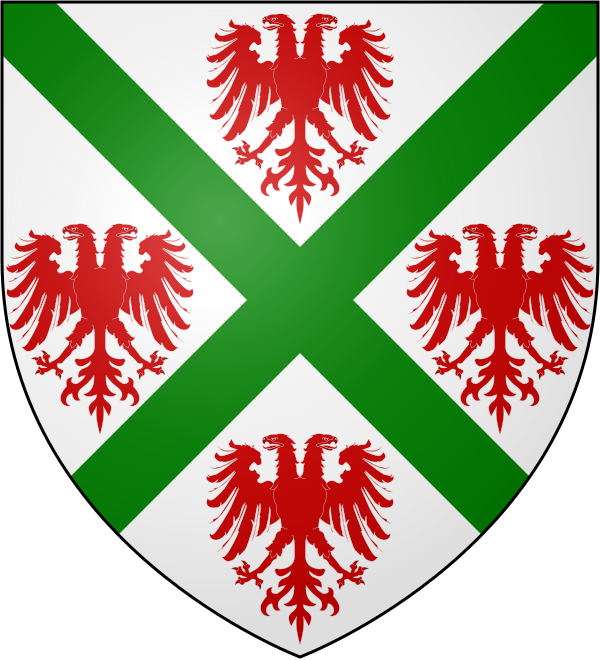 House Estren of Wyndhall
 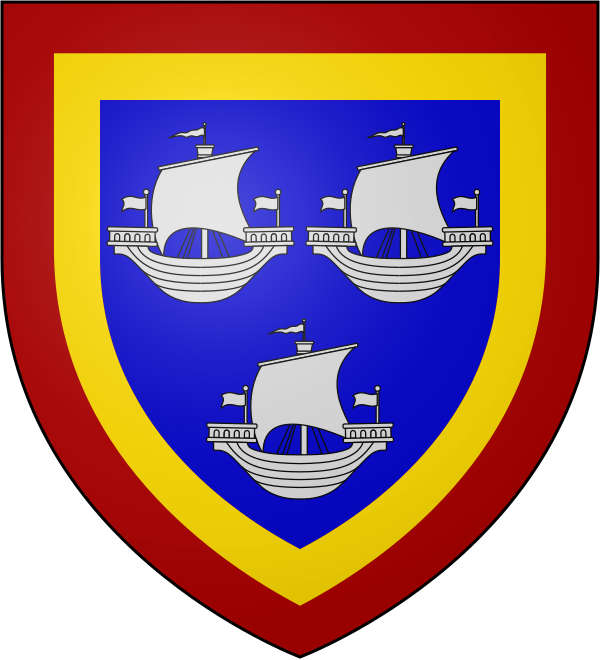 House Farman of Faircastle
 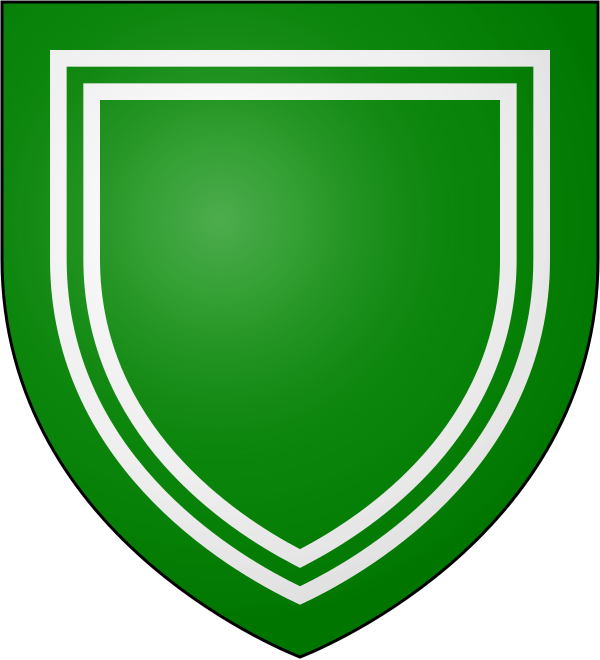 House Greenfield of Greenfield
 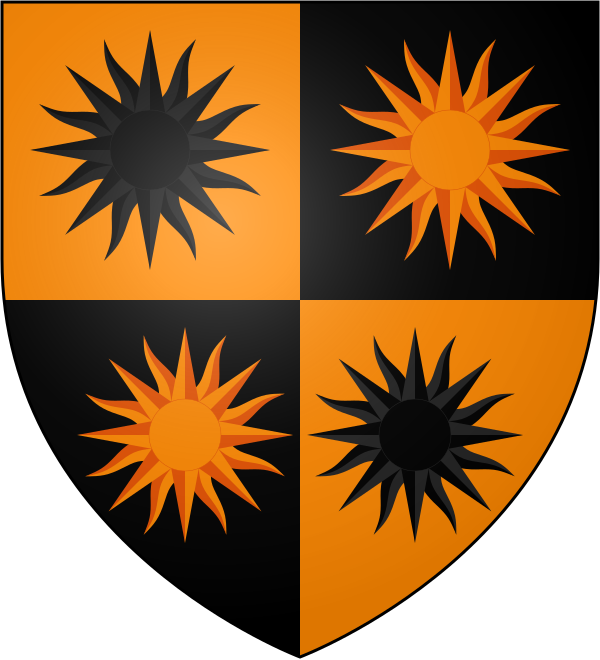 House Kenning of Kayce
 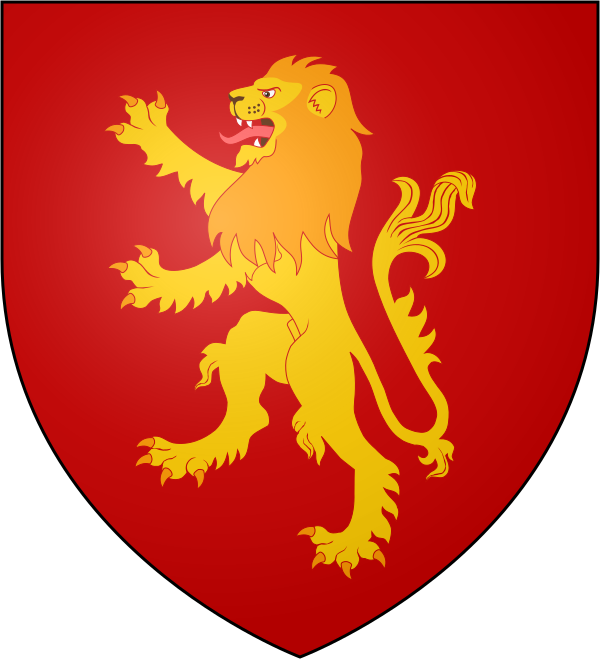 House Lannister of Lannisport
 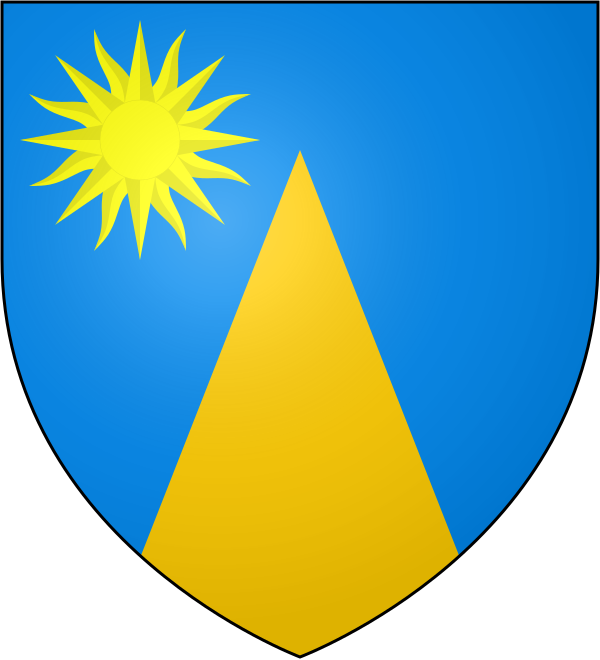 House Lefford of the Golden Tooth
 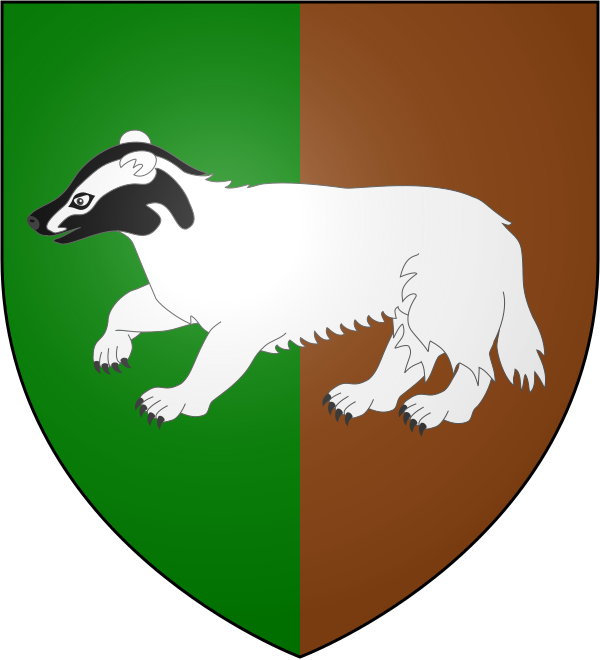 House Lydden of Deep Den
 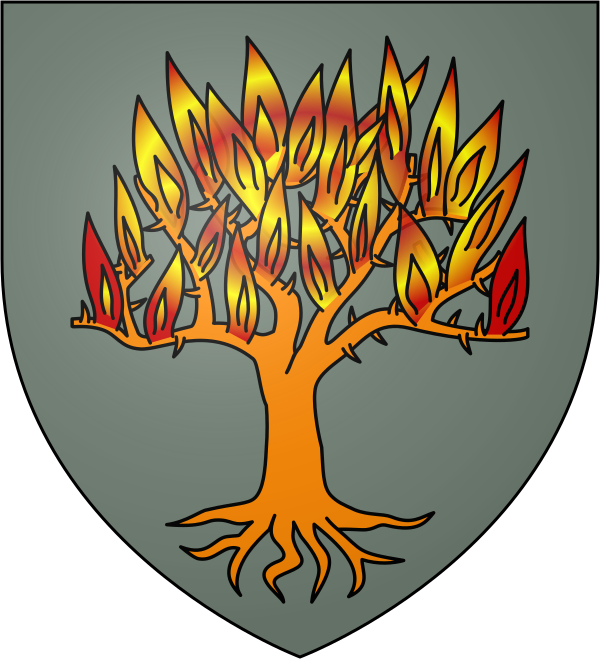 House Marbrand of Ashemark
 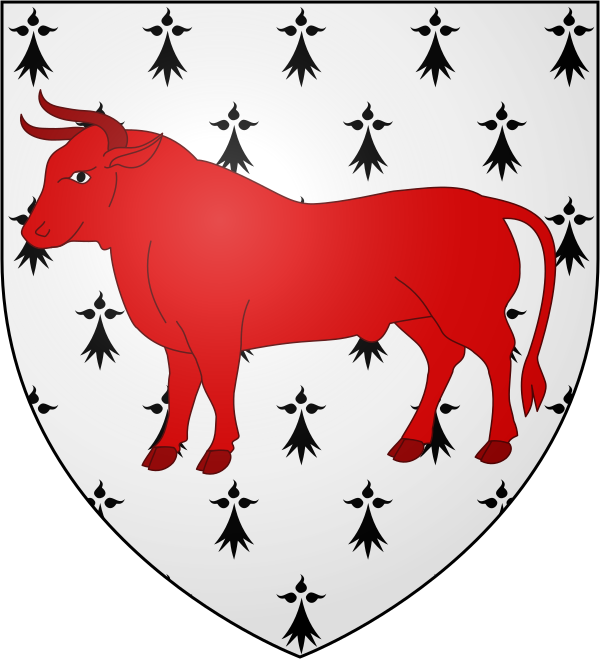 House Prester of Feastfires
 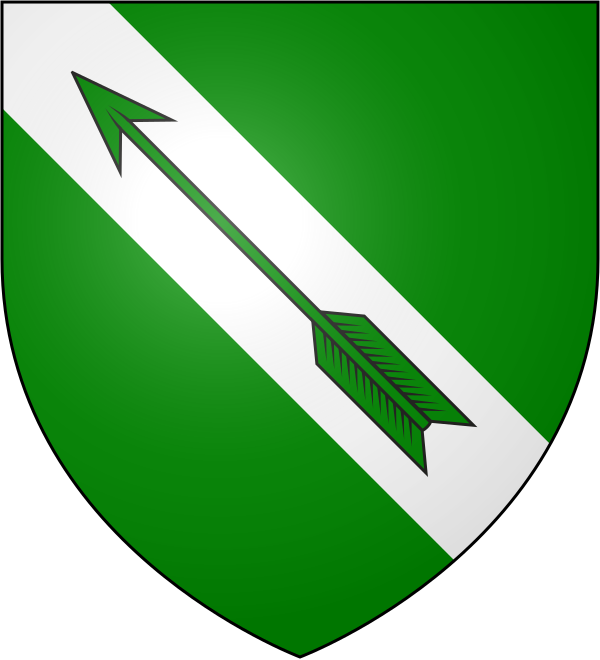 House Sarsfield of Sarsfield
 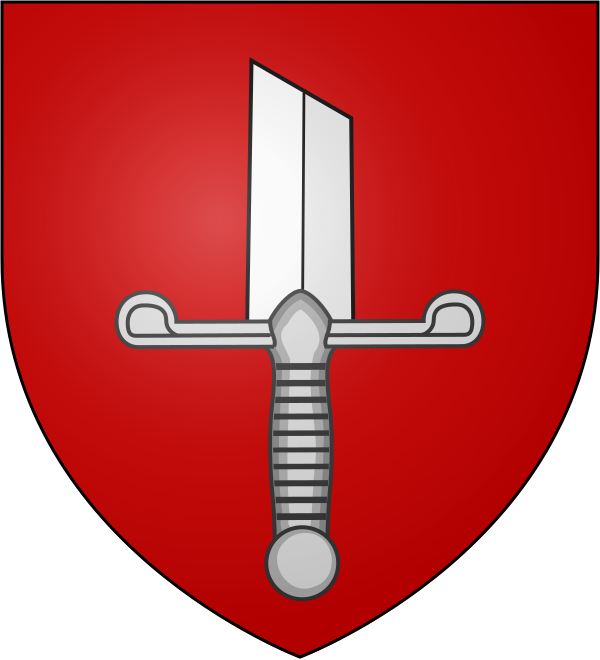 House Sarwyck of Riverspring
 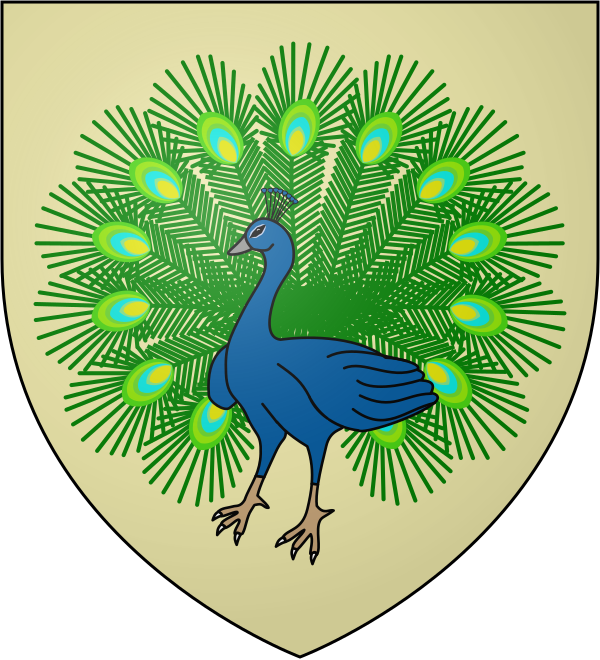 House Serrett of Silverhill
 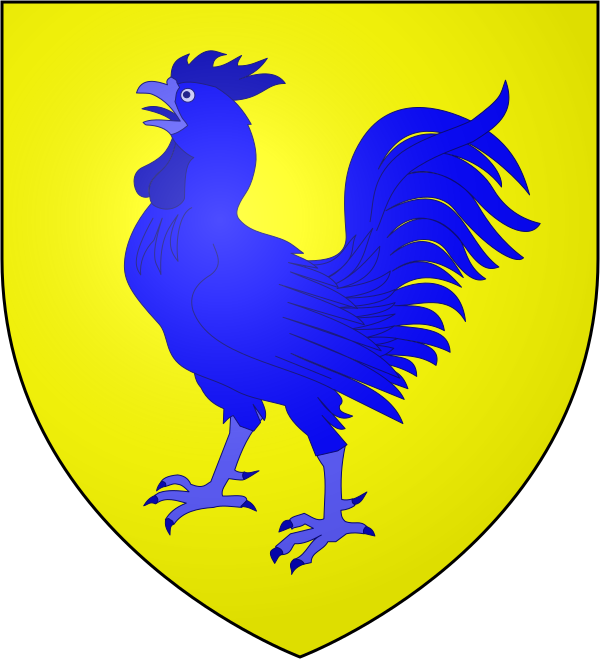 House Swyft of Cornfield
 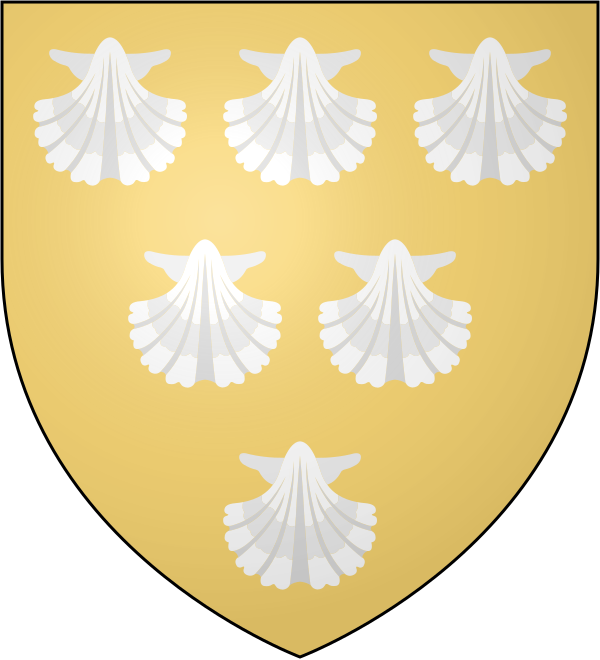 House Westerling of the Crag
The one region with no inherited heraldry. Carved out around King’s Landing from ground several kingdoms had fought over, it had no ancient royal house and therefore no ancient arms, and the dragon set above it was an import. What surrounds it is a patchwork of lesser houses: Rosby, bearing ermine, one of the few true heraldic furs in Westeros, and Hayford, whose fields bleed into one another badly enough that a herald would have sent the design back.
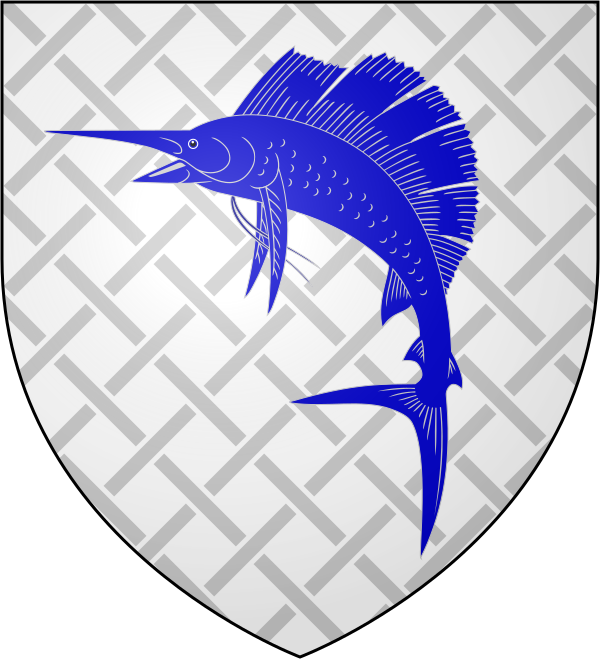 House Bar Emmon of Sharp Point
 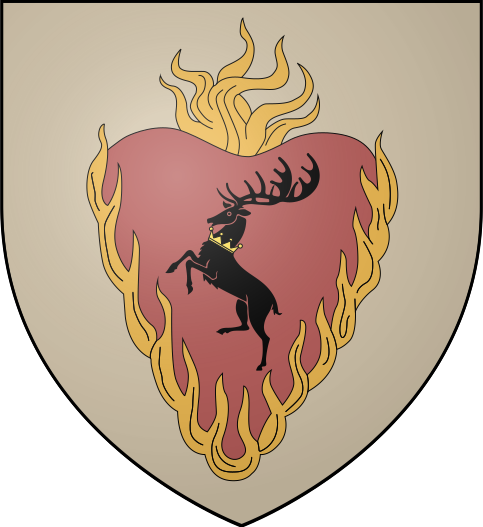 House Baratheon of Dragonstone
 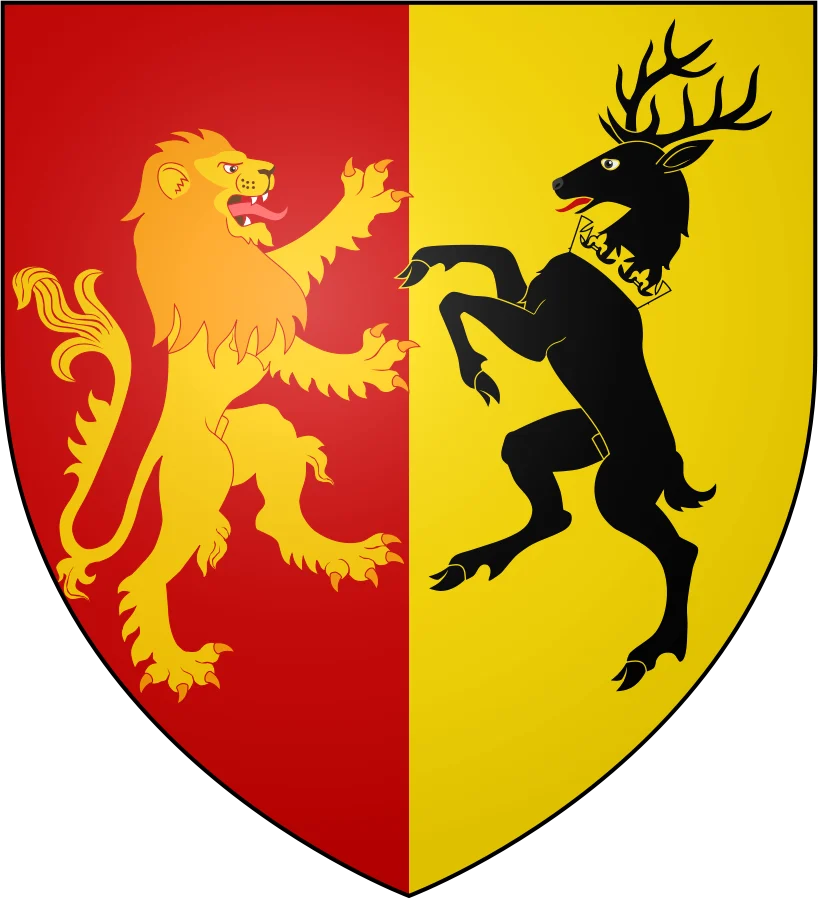 House Baratheon of King's Landing
 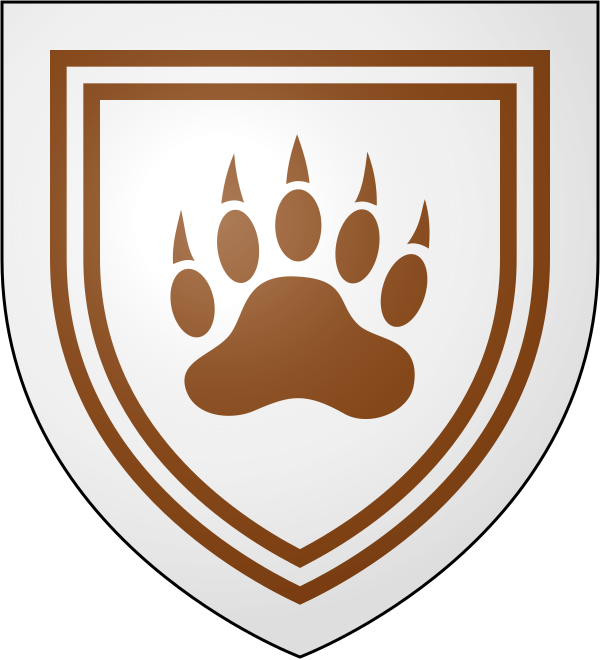 House Brune of Brownhollow
 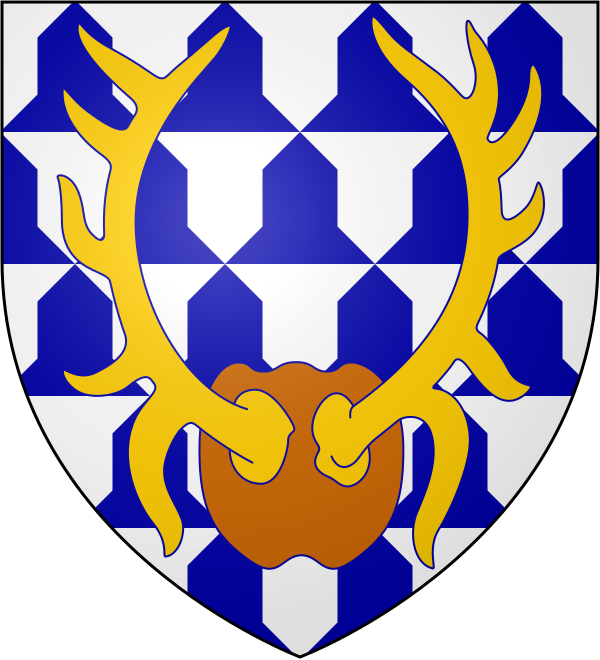 House Buckwell of the Antlers
 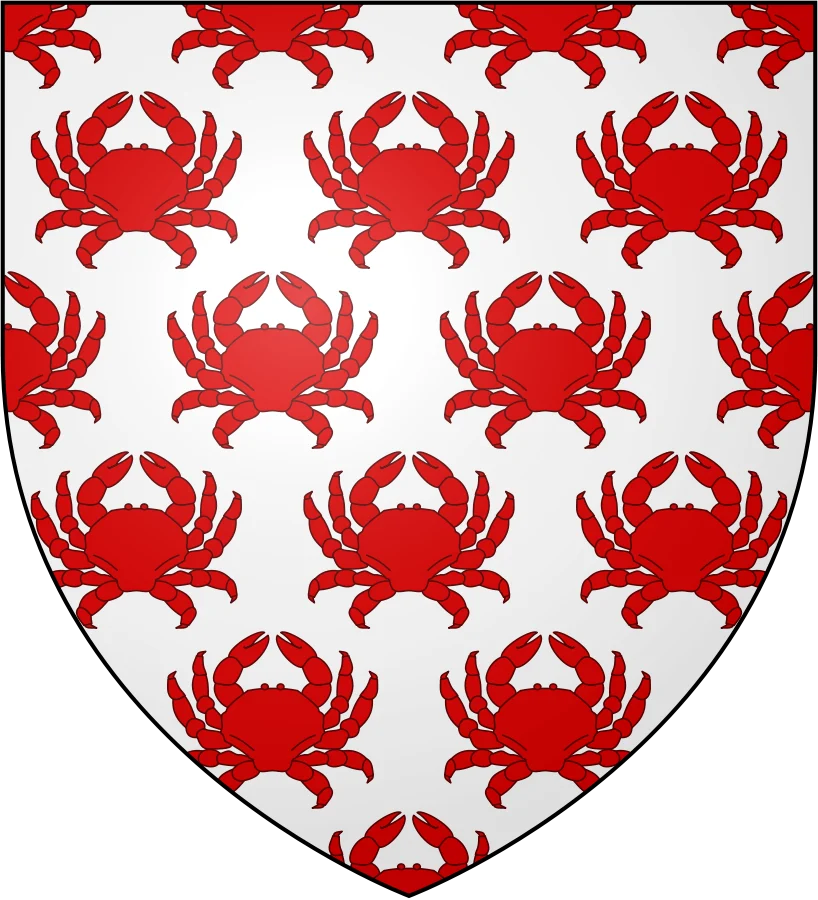 House Celtigar of Claw Isle
 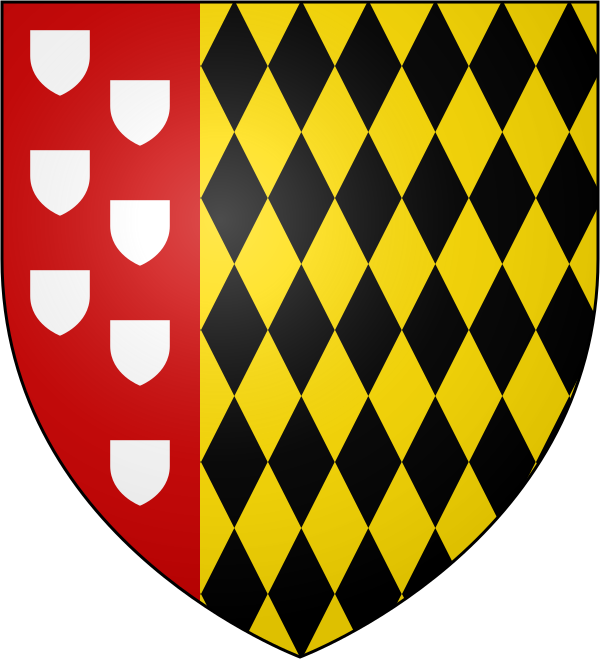 House Darklyn of Duskendale
 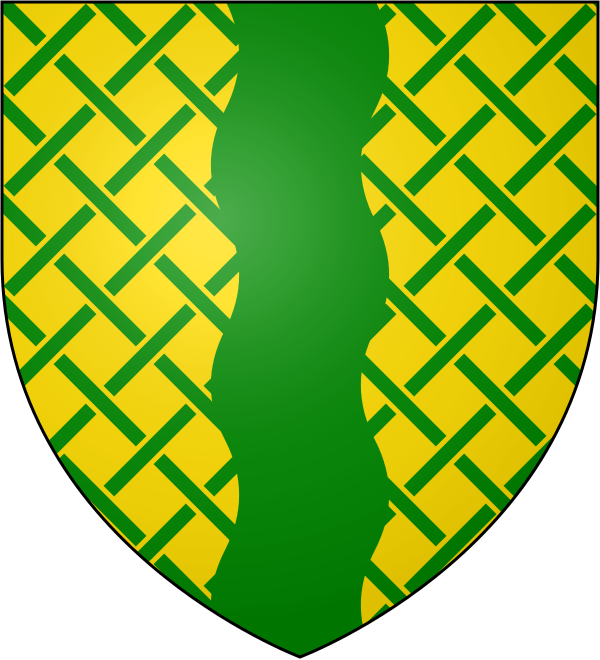 House Hayford of Hayford
 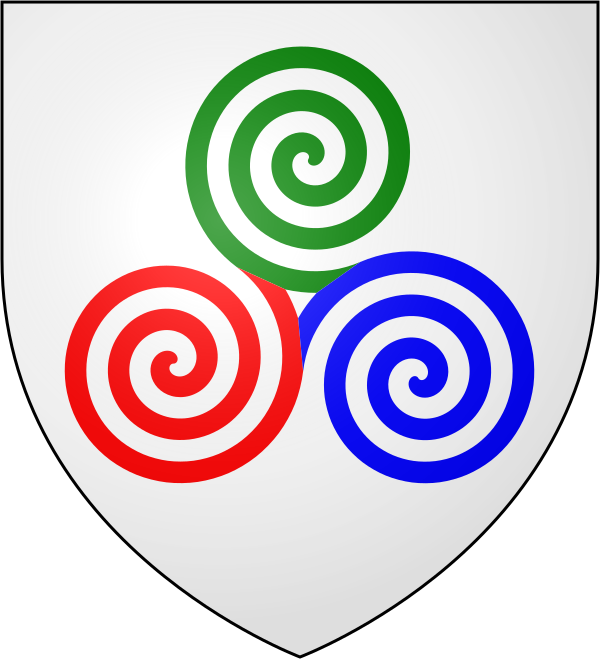 House Massey of Stonedance
 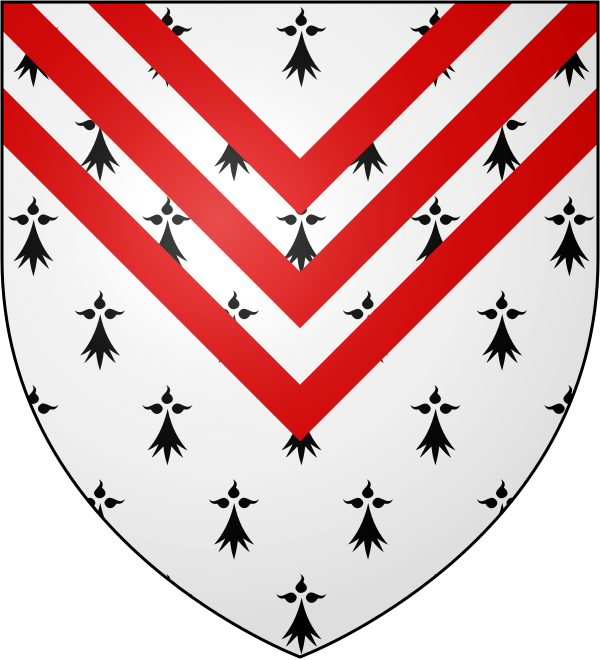 House Rosby of Rosby
 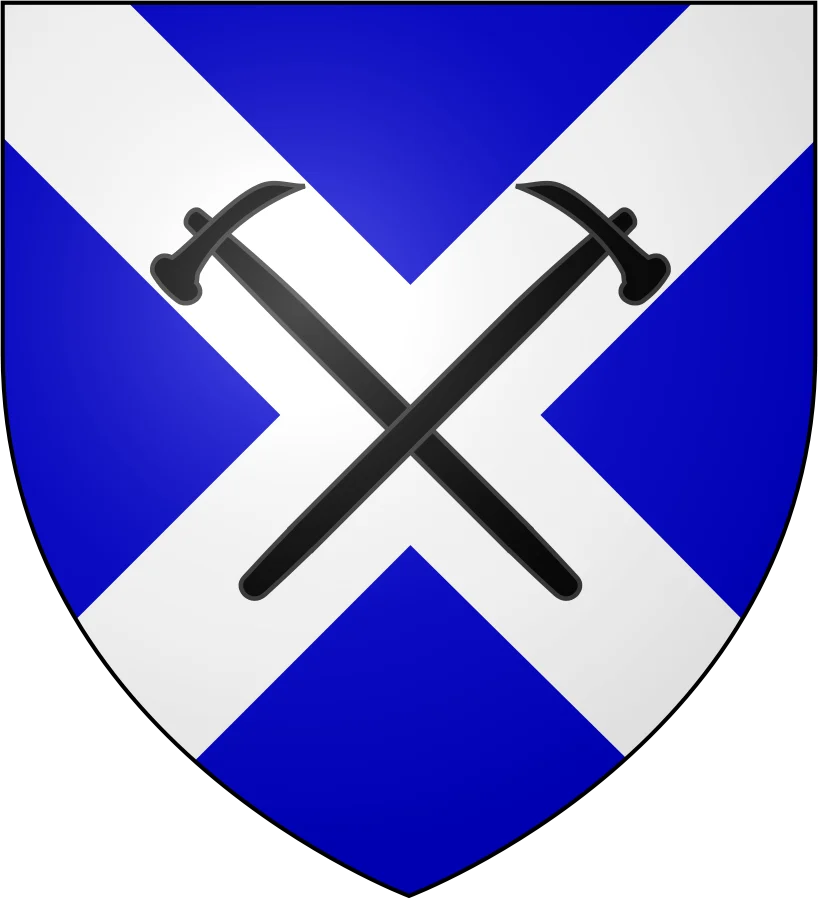 House Rykker of Duskendale
 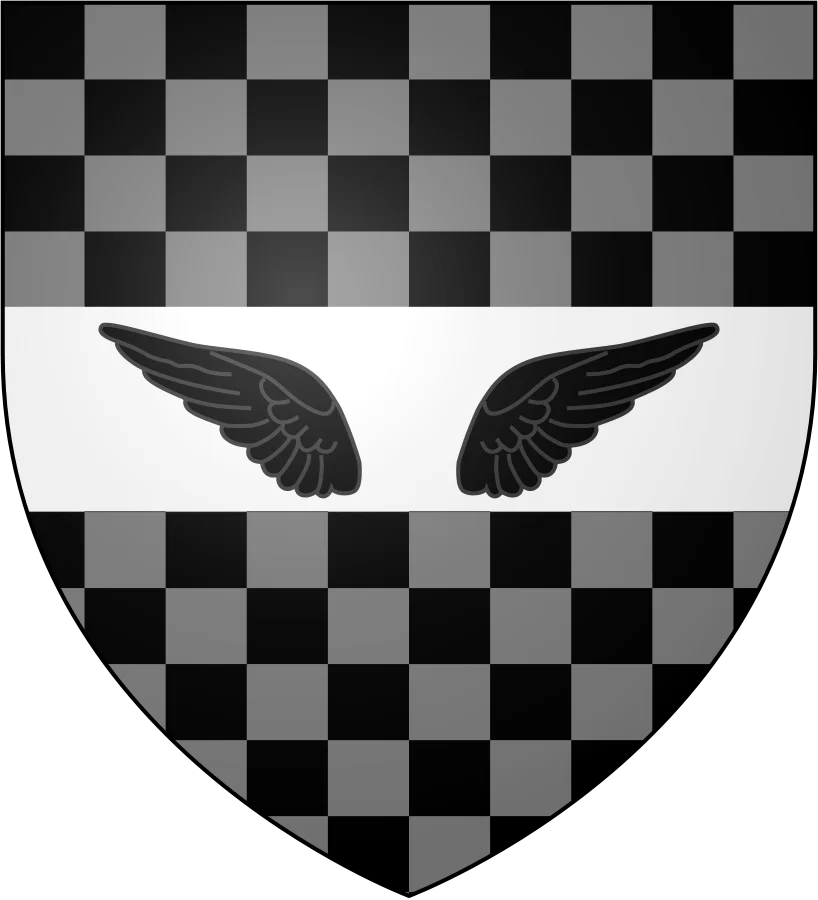 House Staunton of Rook's Rest
 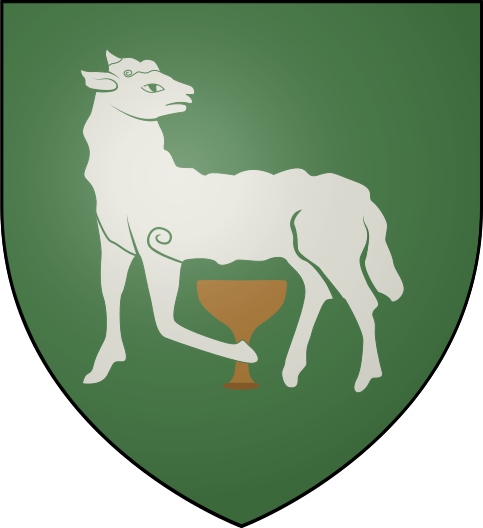 House Stokeworth of Stokeworth
 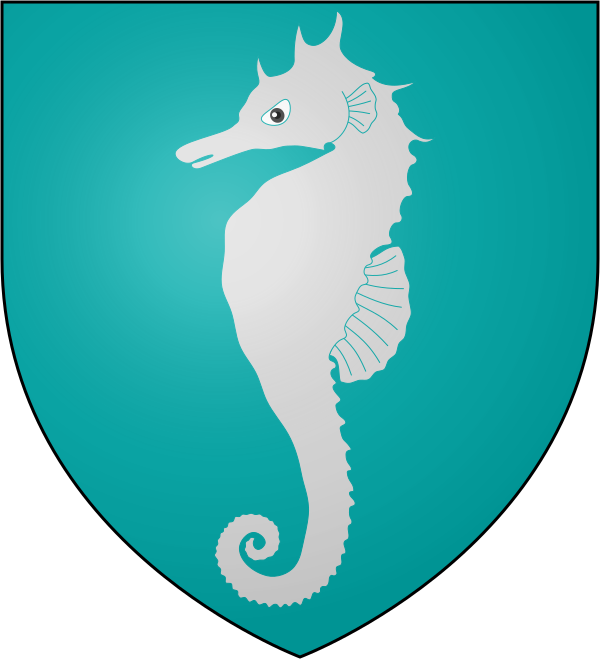 House Velaryon of Driftmark
The largest group in this atlas, and the most chivalric region of the realm. Its old kings, House Gardener, bore argent, a hand vert — a green hand on white — and claimed descent from Garth Greenhand, as a great many Reach houses still do. The line was extinguished at the Field of Fire and the green hand went with it, surviving only in the name of an order of knights. The Tyrells took Highgarden and brought their own golden rose.
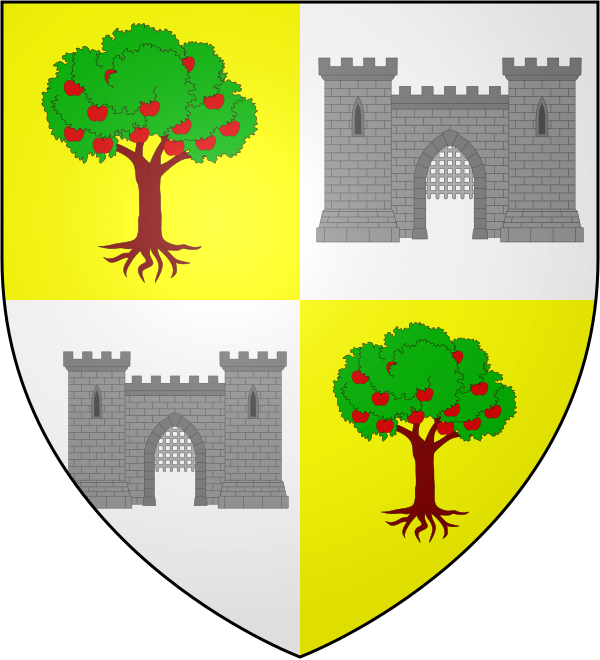 House Appleton of Appleton
 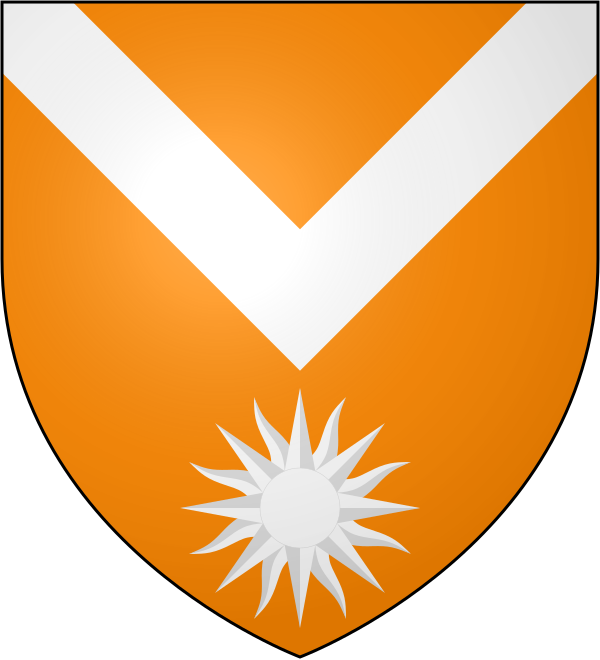 House Ashford of Ashford
 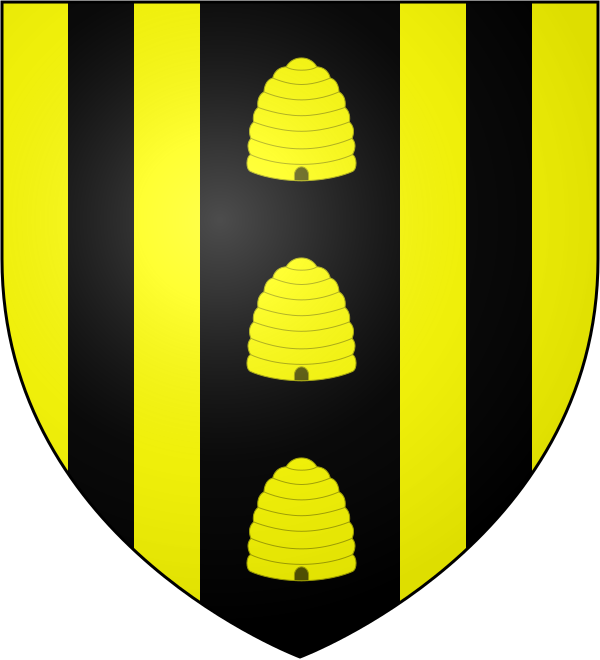 House Beesbury of Honeyholt
 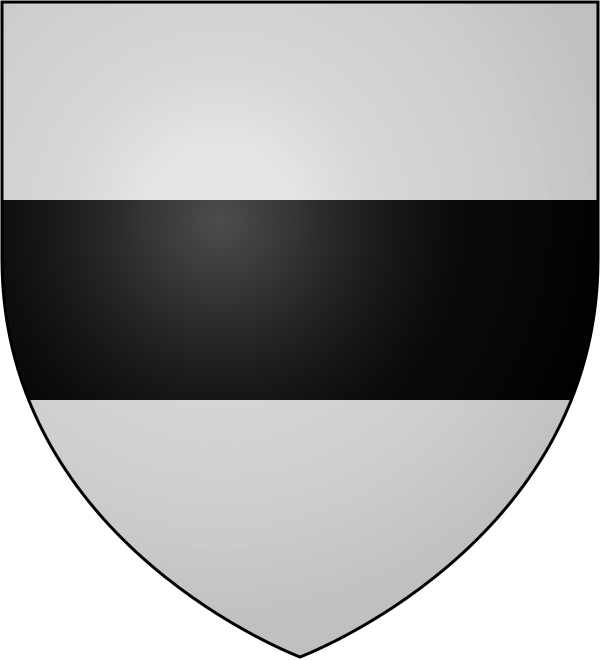 House Blackbar of Bandallon
 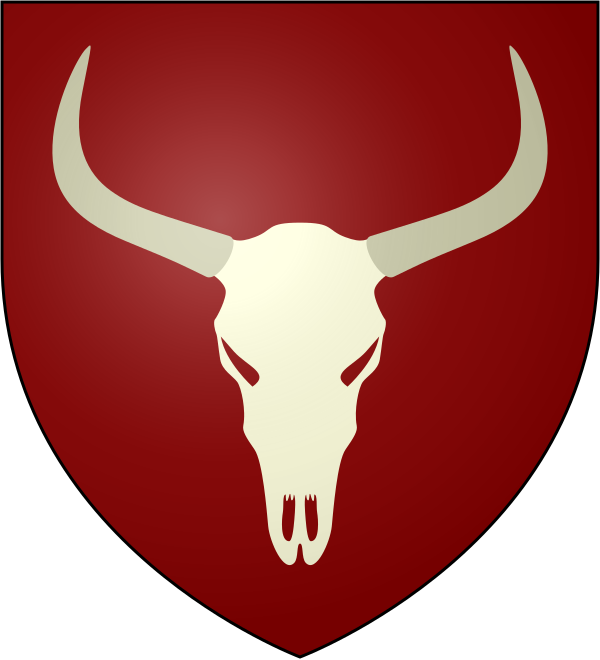 House Bulwer of Blackcrown
 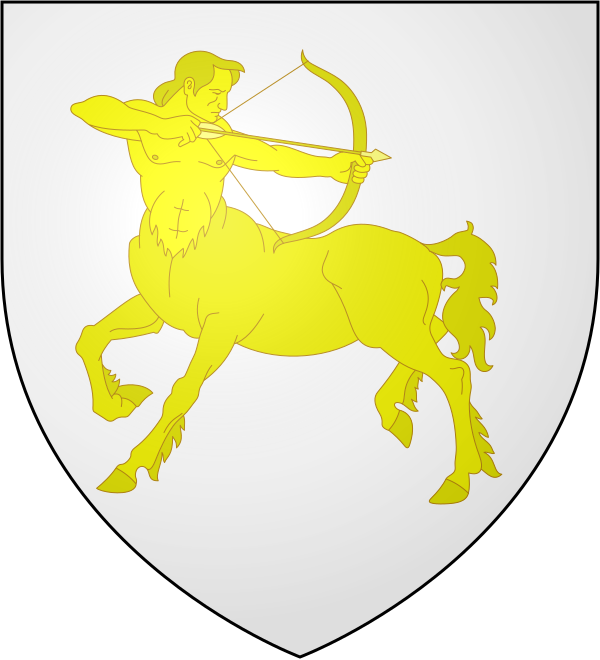 House Caswell of Bitterbridge
 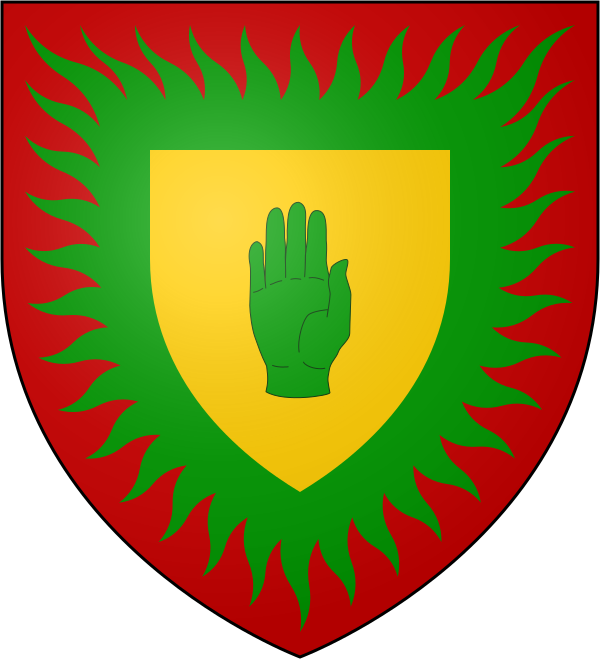 House Chester of Greenshield
 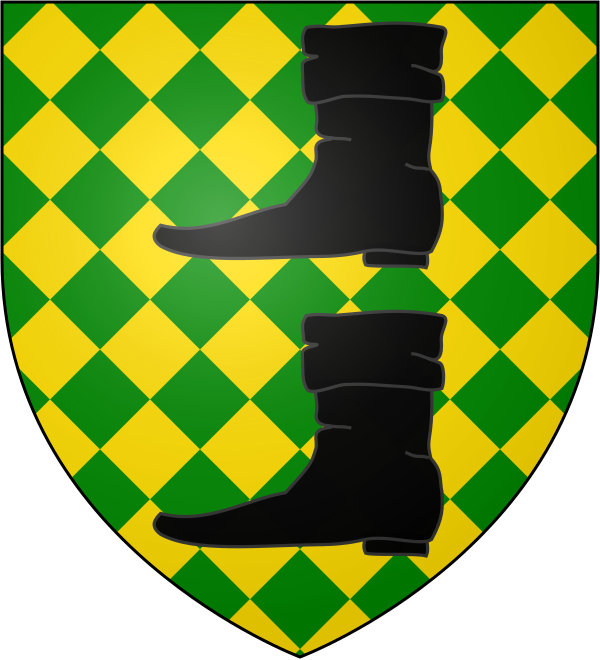 House Cordwayner of Hammerhal
 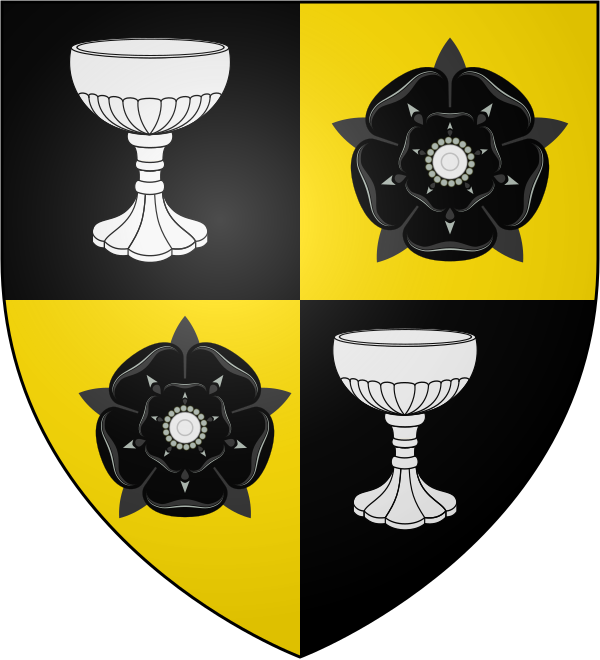 House Costayne of Three Towers
 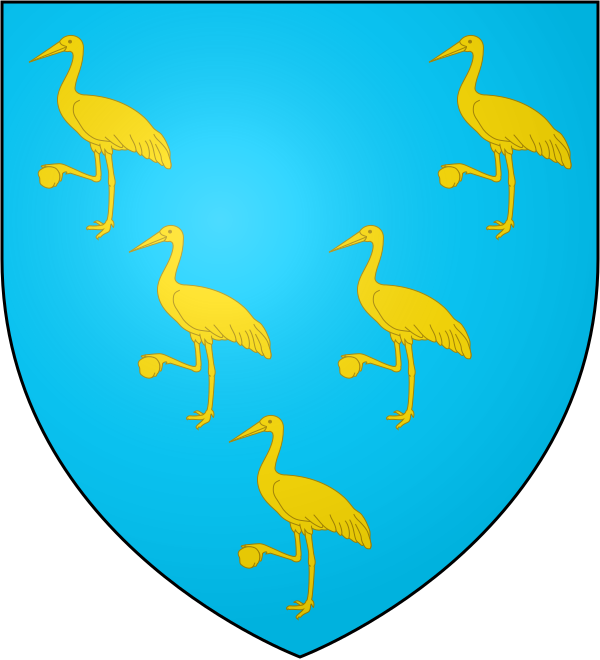 House Crane of Red Lake
 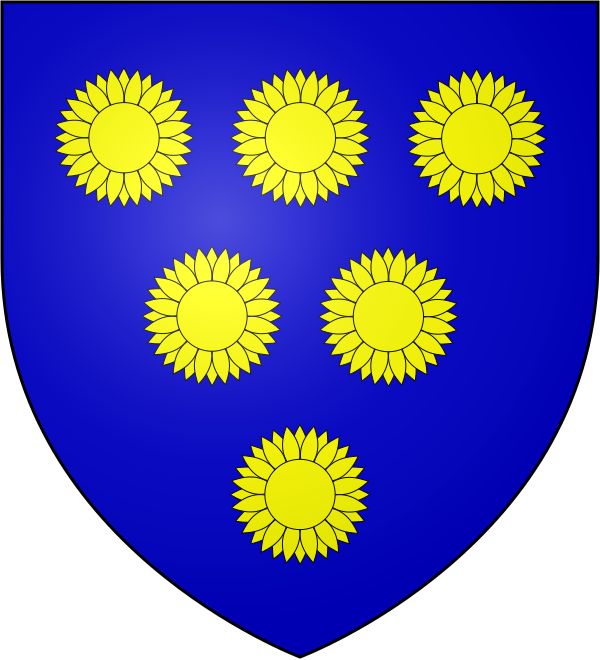 House Cuy of Sunhouse
 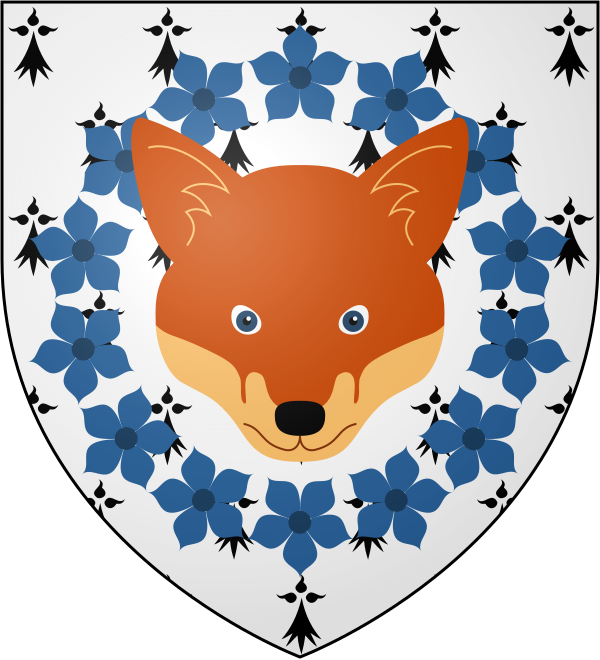 House Florent of Brightwater Keep
 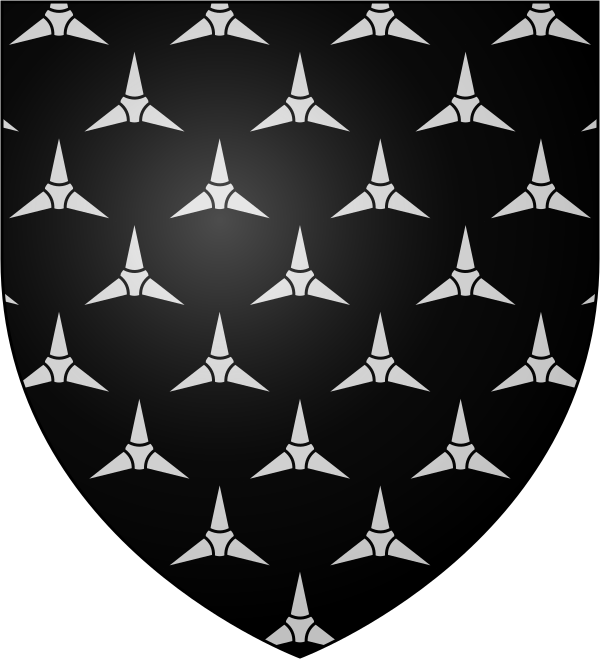 House Footly of Tumbleton
 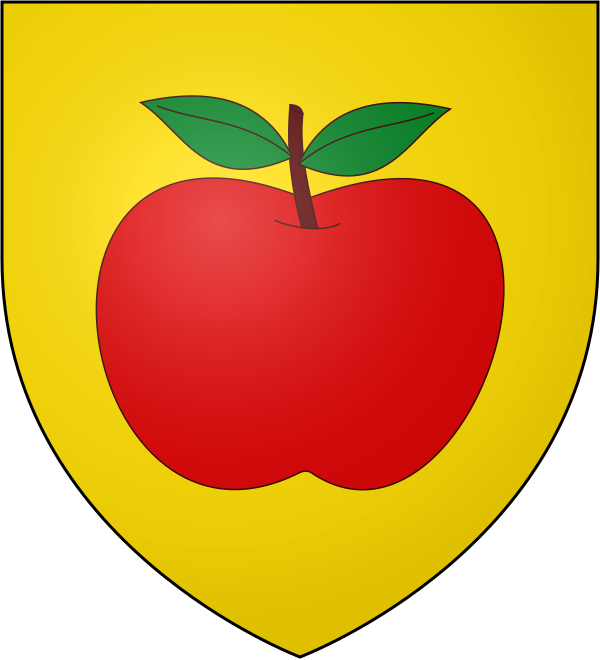 House Fossoway of Cider Hall
 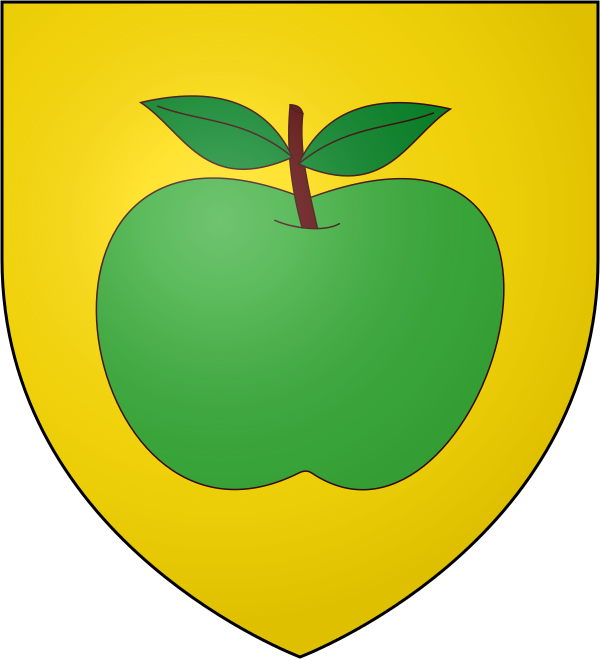 House Fossoway of New Barrel
 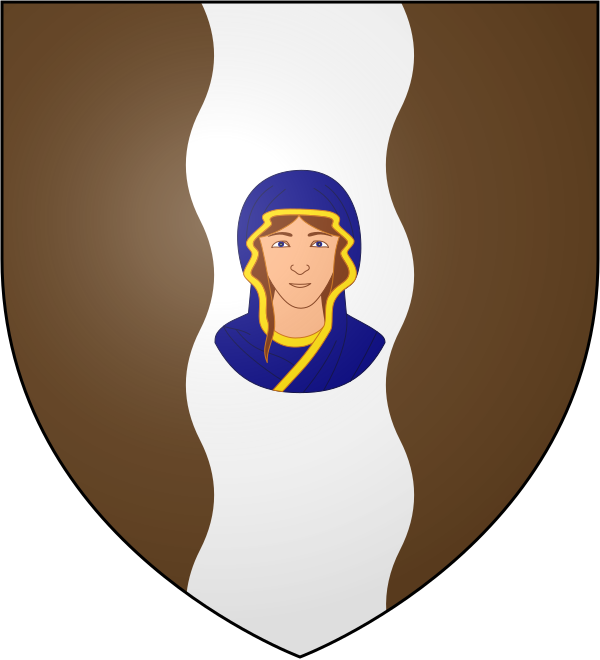 House Graceford of Holyhall
 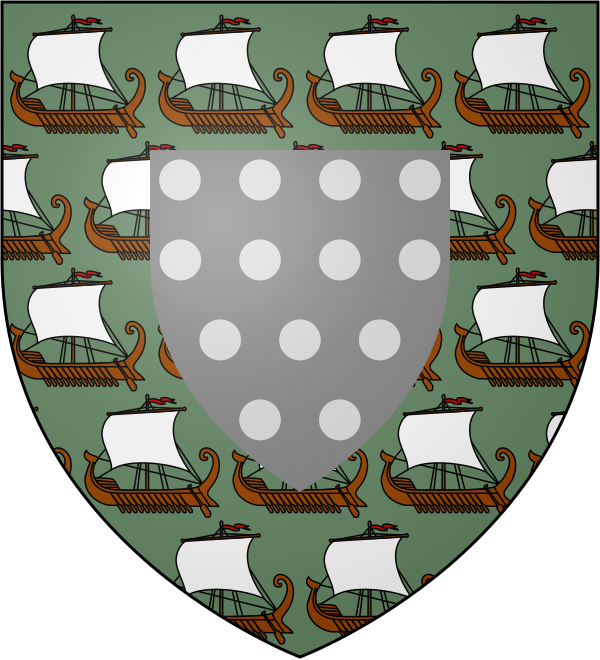 House Grimm of Greyshield
 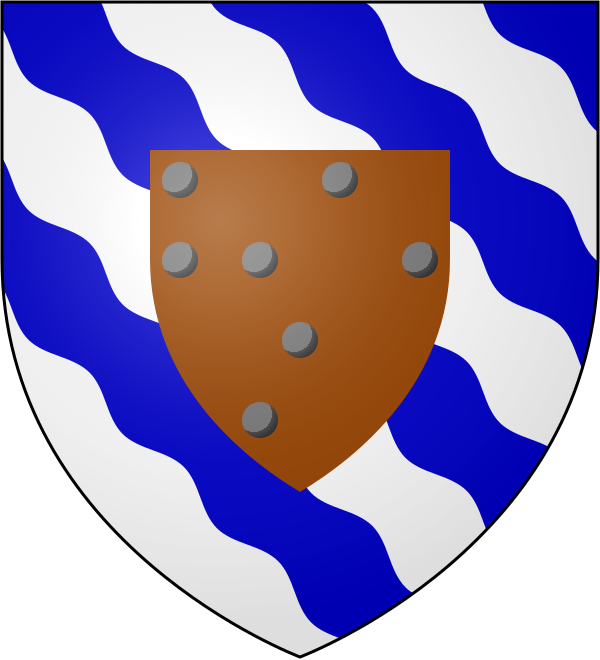 House Hewett of Oakenshield
 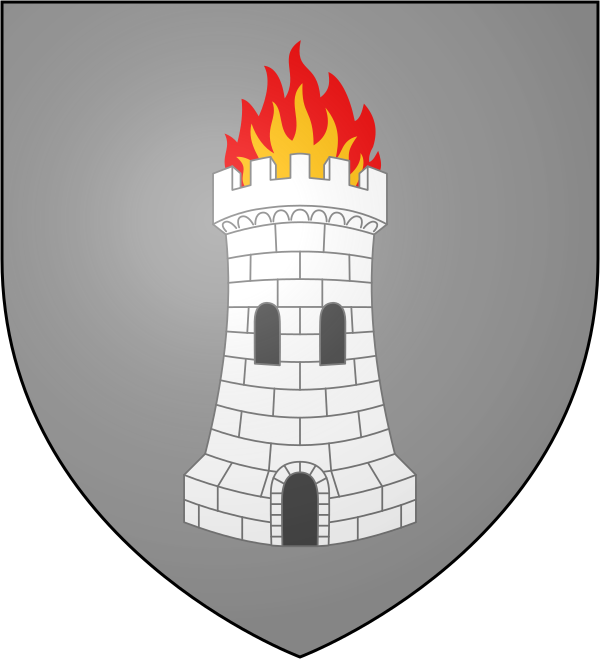 House Hightower of the Hightower
 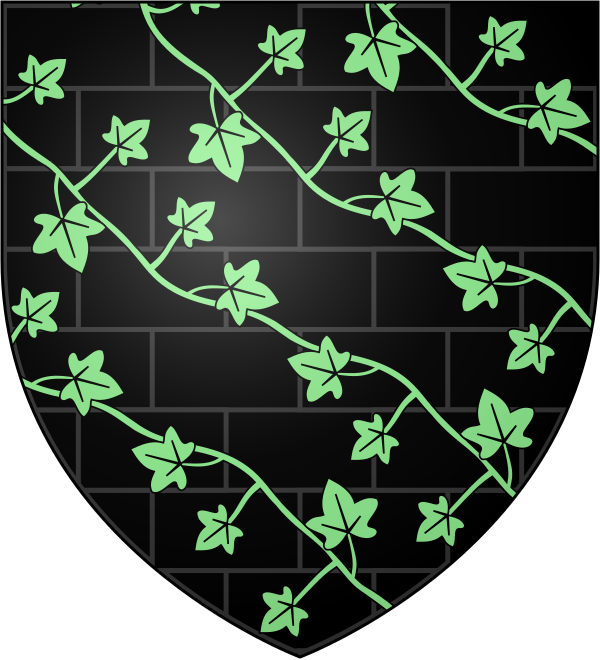 House Kidwell of Ivy Hall
 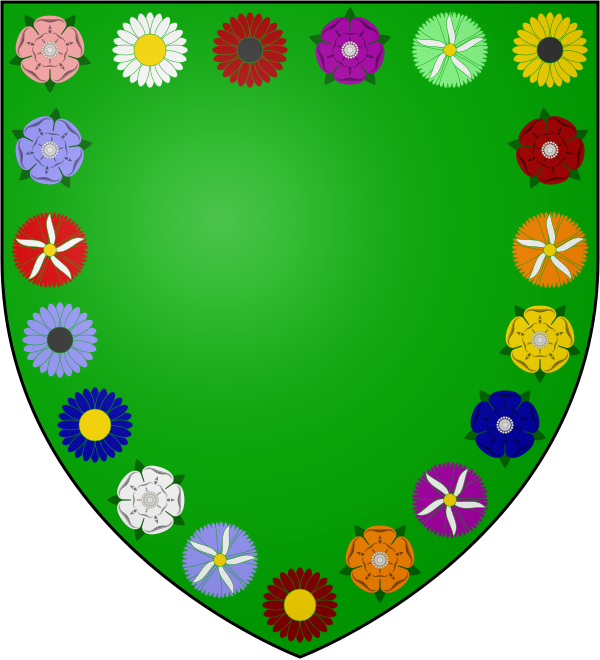 House Meadows of Grassy Vale
 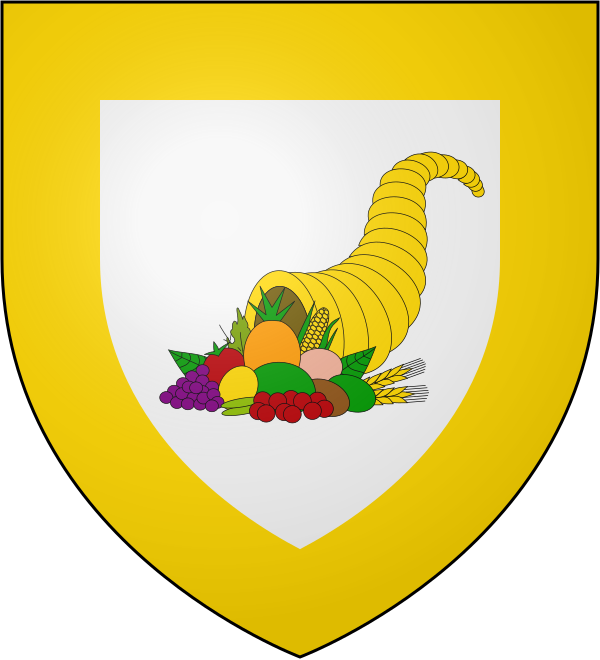 House Merryweather of Longtable
 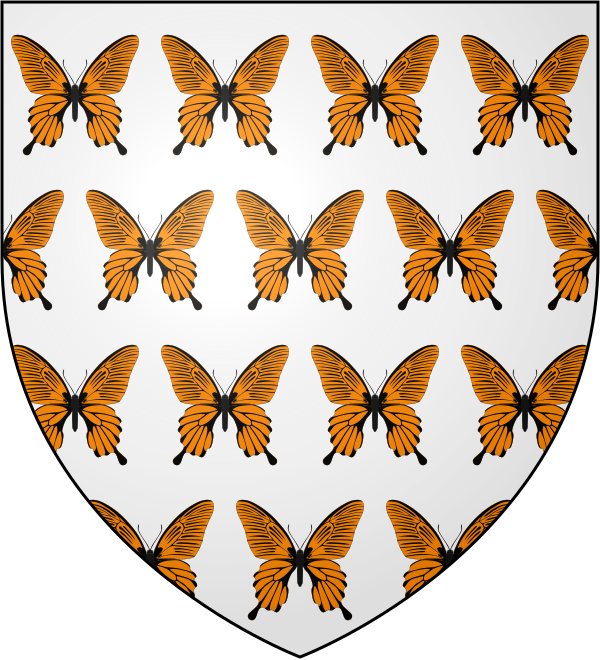 House Mullendore of Uplands
 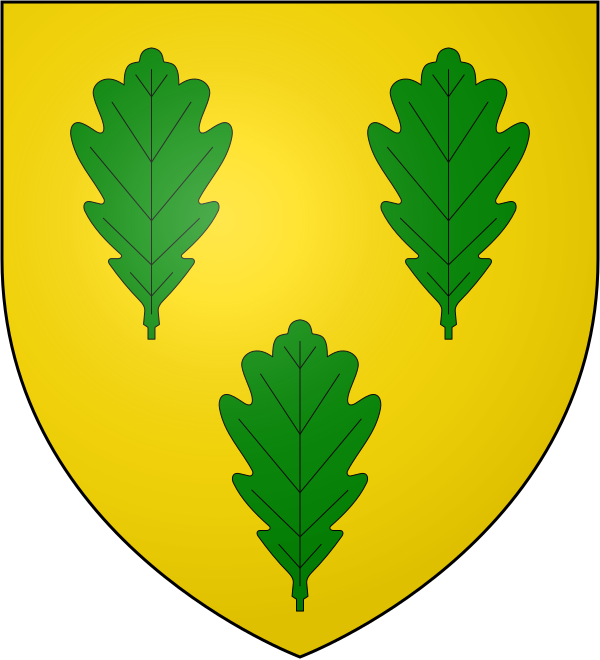 House Oakheart of Old Oak
 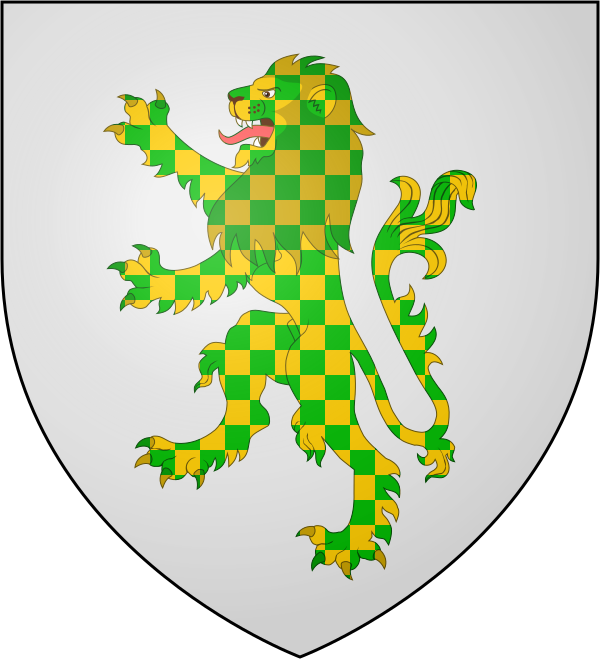 House Osgrey of Standfast
 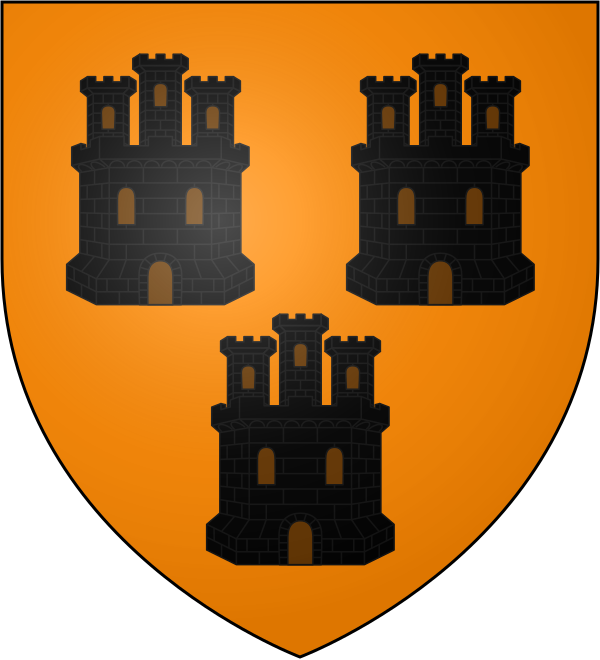 House Peake of Starpike
 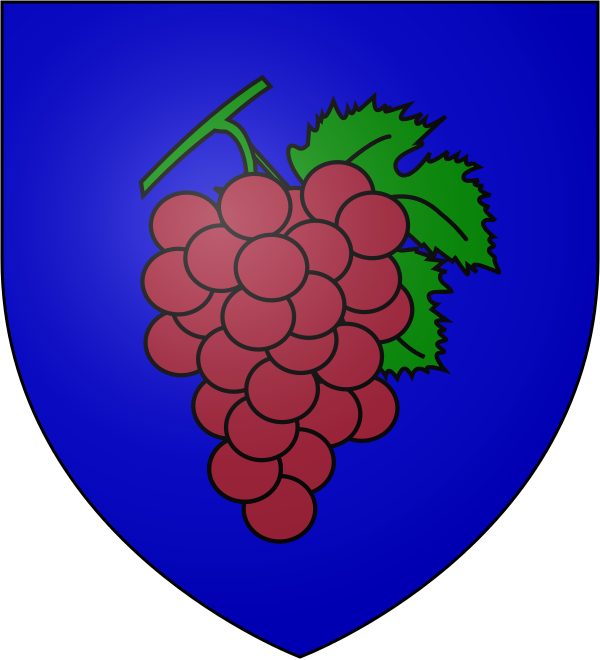 House Redwyne of the Arbor
 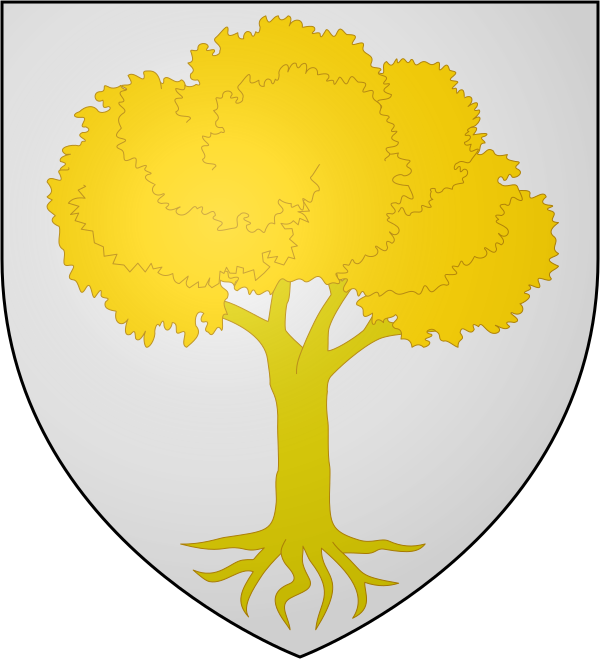 House Rowan of Goldengrove
 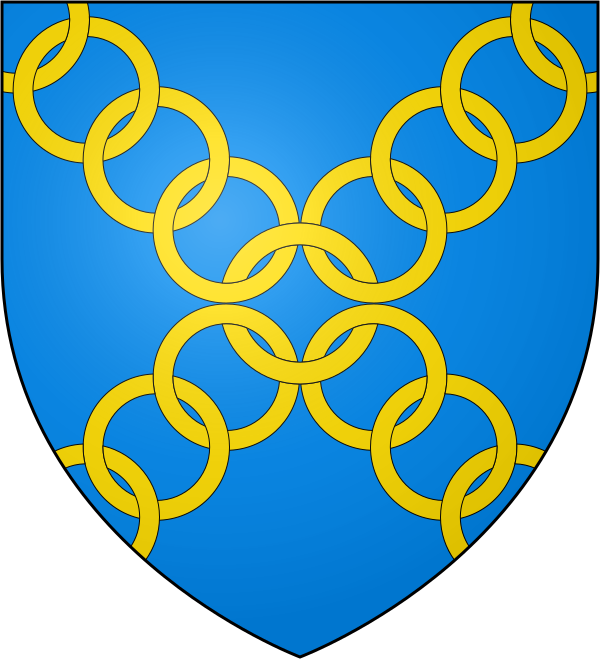 House Roxton of the Ring
 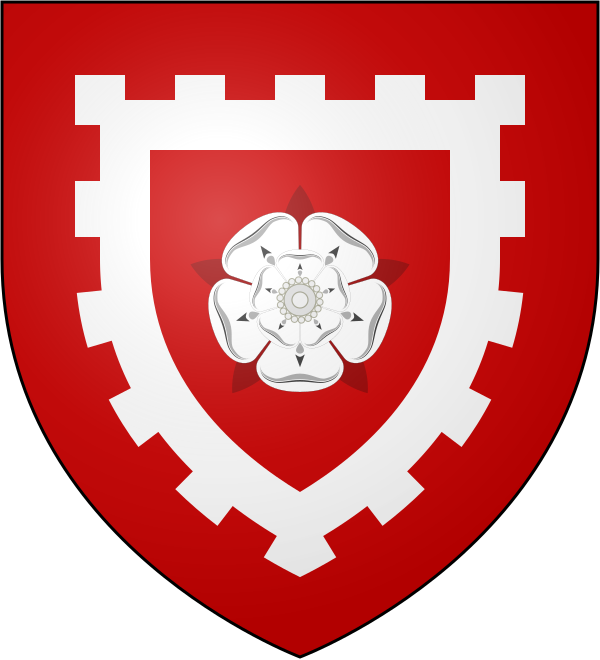 House Serry of Southshield
 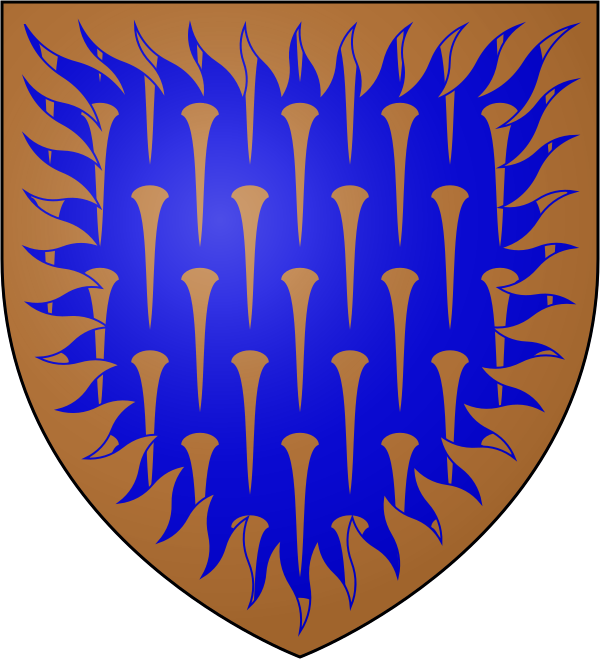 House Shermer of Smithyton
 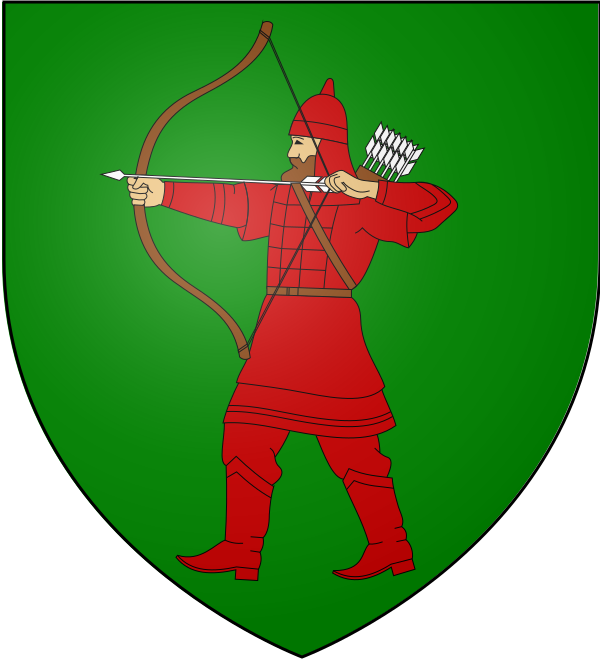 House Tarly of Horn Hill
 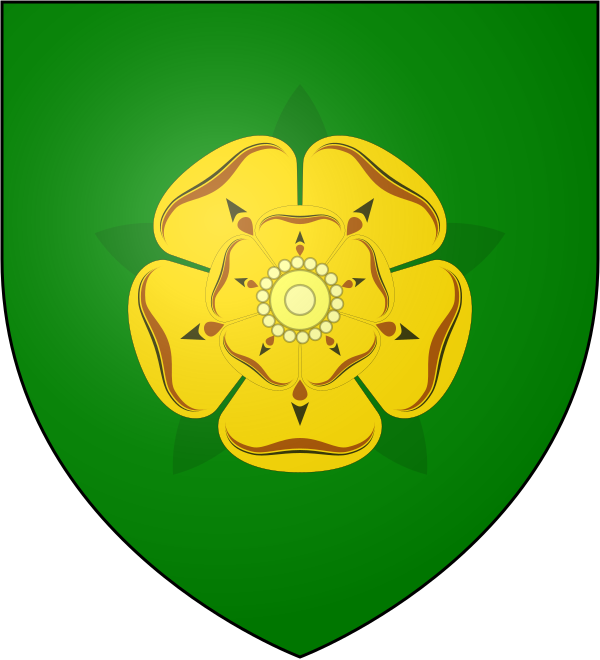 House Tyrell of Highgarden
 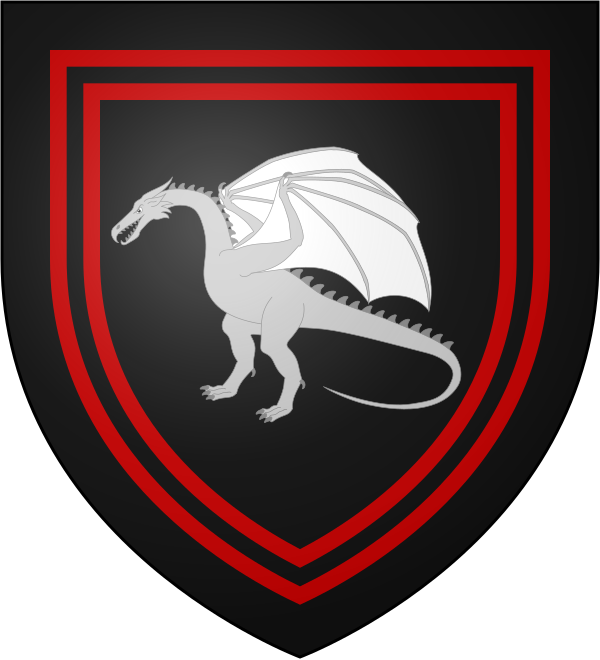 House Vyrwel of Darkdell
 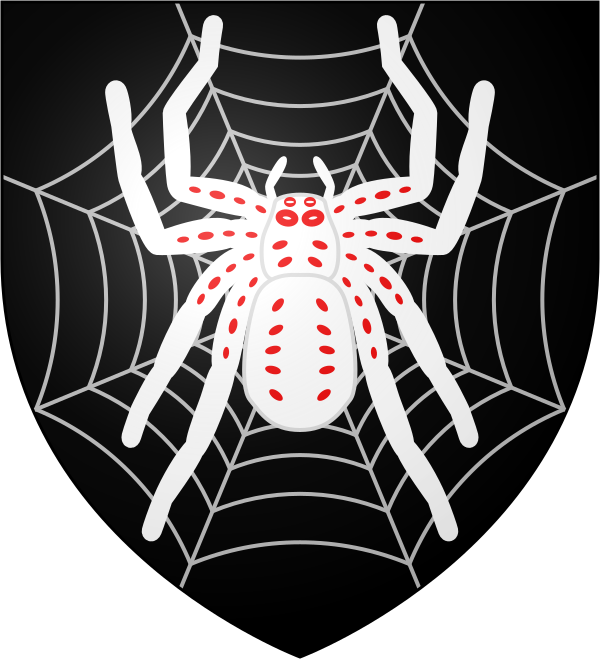 House Webber of Coldmoat
The stag of Storm’s End is older than the house that bears it. When Argilac the Arrogant, last of the Storm Kings, was defeated, Orys Baratheon married his daughter Argella and took the sigil and the words of House Durrandon for his own. House Baratheon is the youngest of the Great Houses; through the female line its crowned black stag reaches back to Durran Godsgrief.
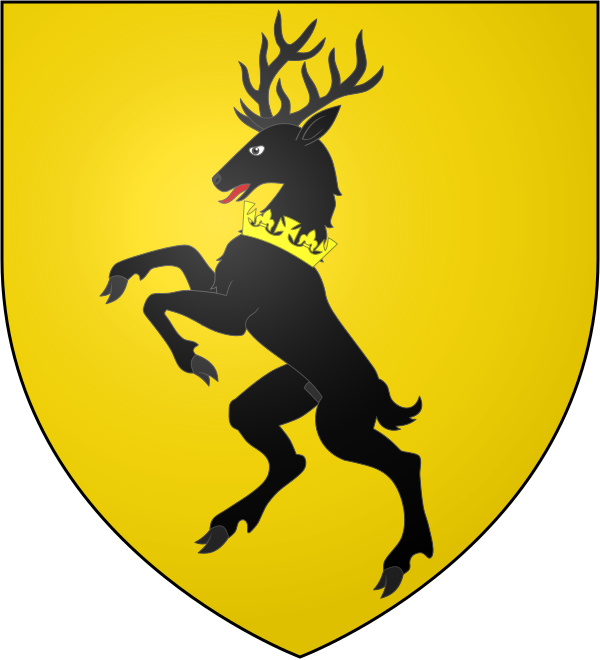 House Baratheon of Storm's End
 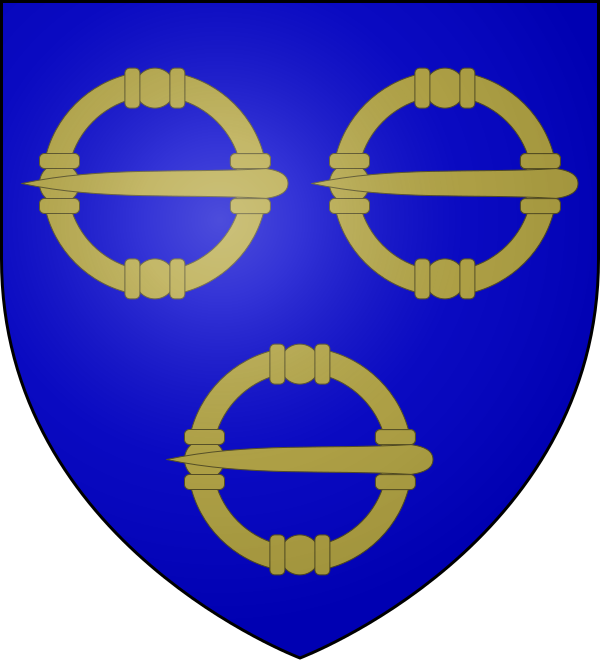 House Buckler of Bronzegate
 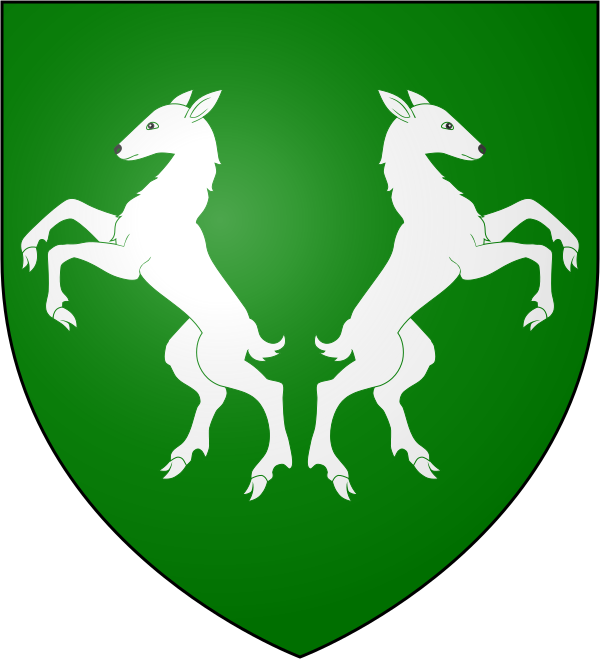 House Cafferen of Fawnton
 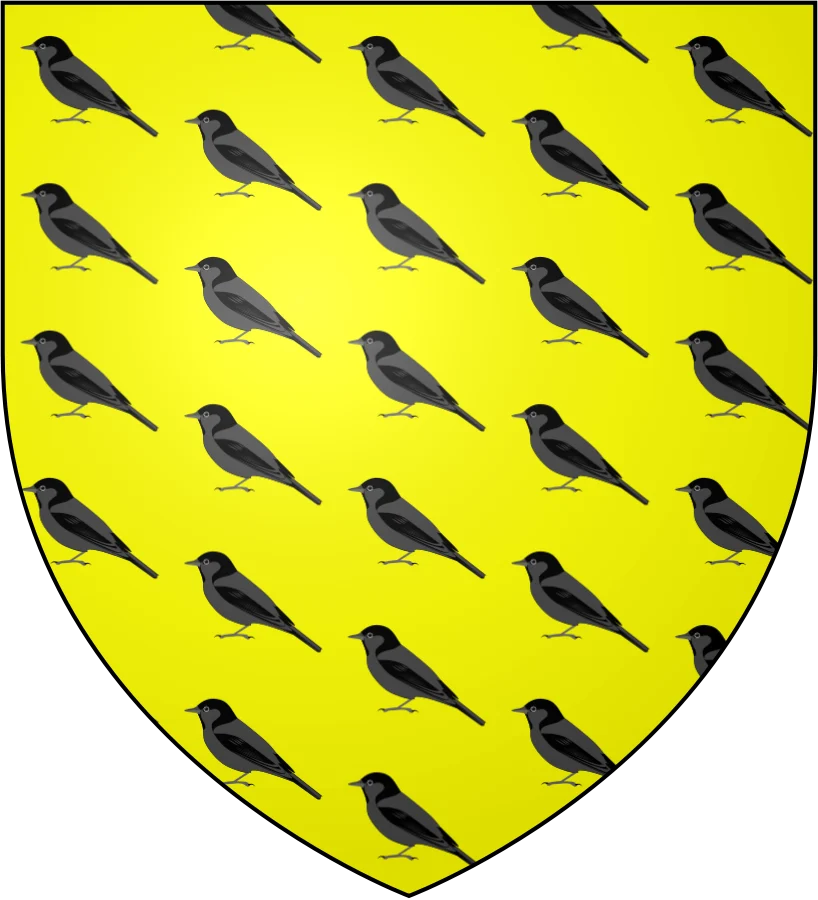 House Caron of Nightsong
 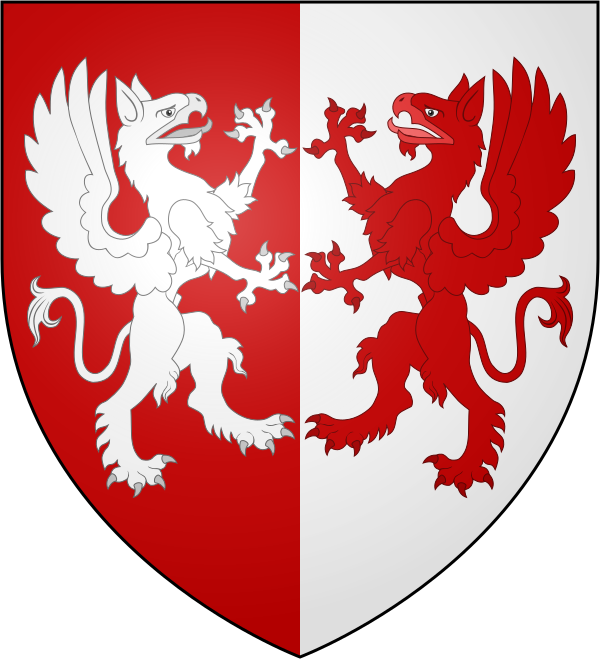 House Connington of Griffin's Roost
 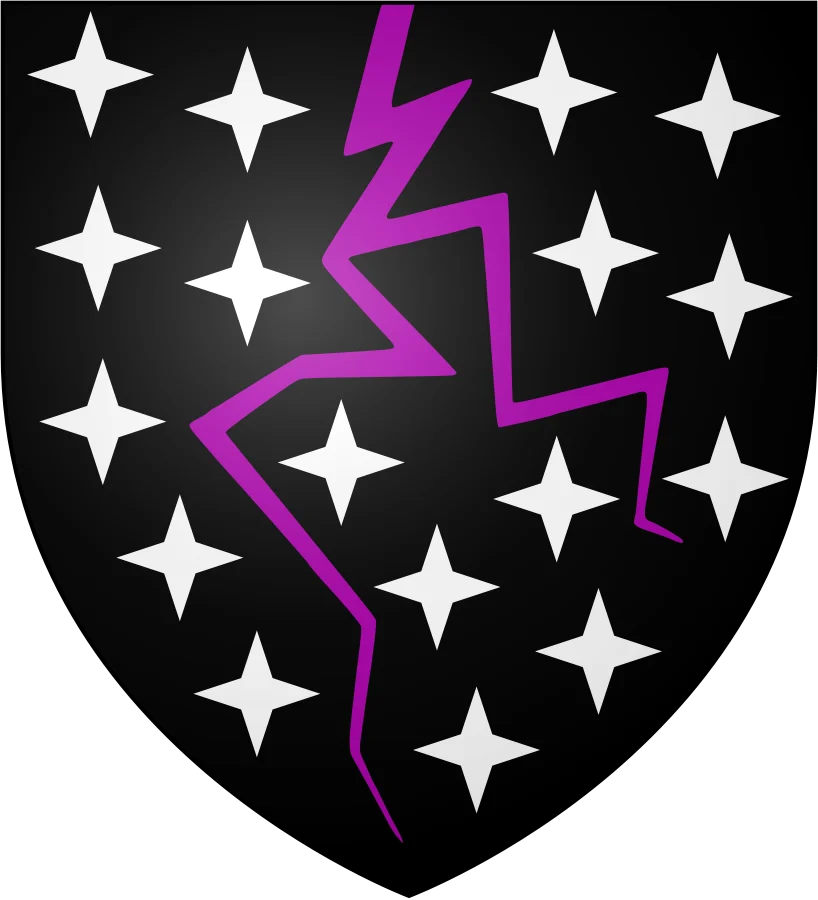 House Dondarrion of Blackhaven
 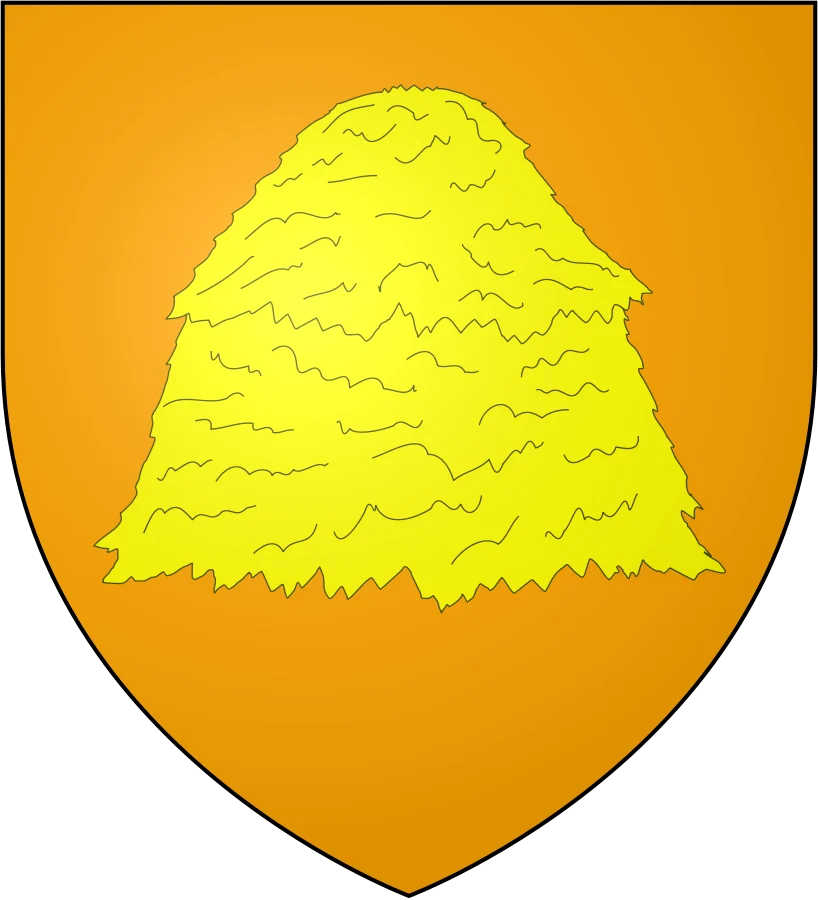 House Errol of Haystack Hall
 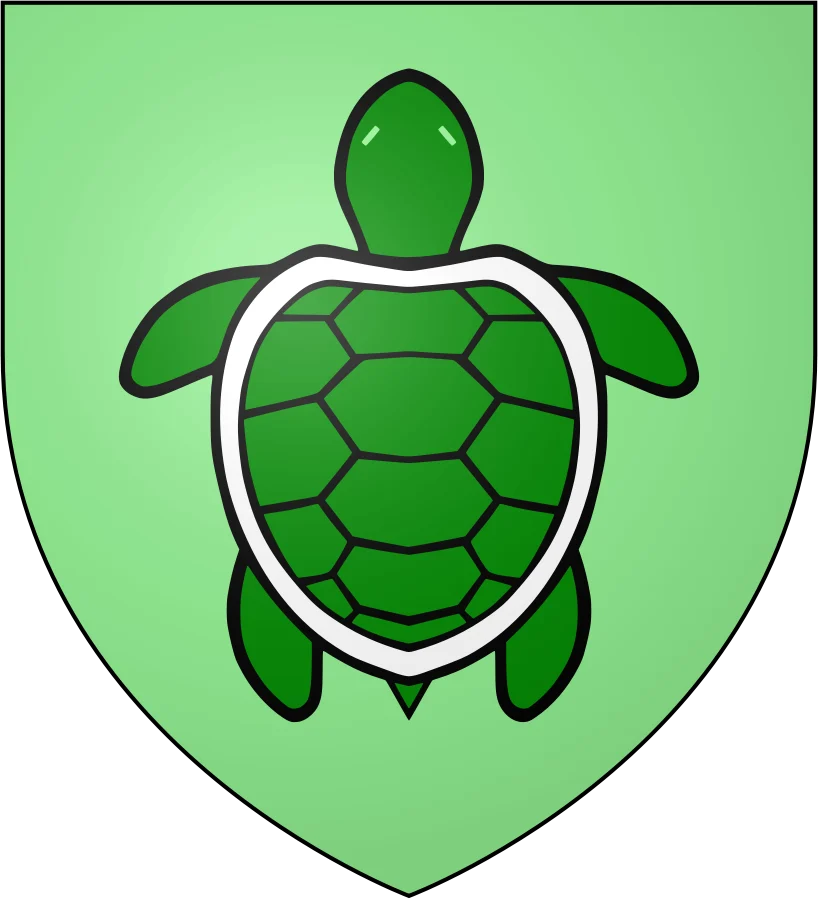 House Estermont of Greenstone
 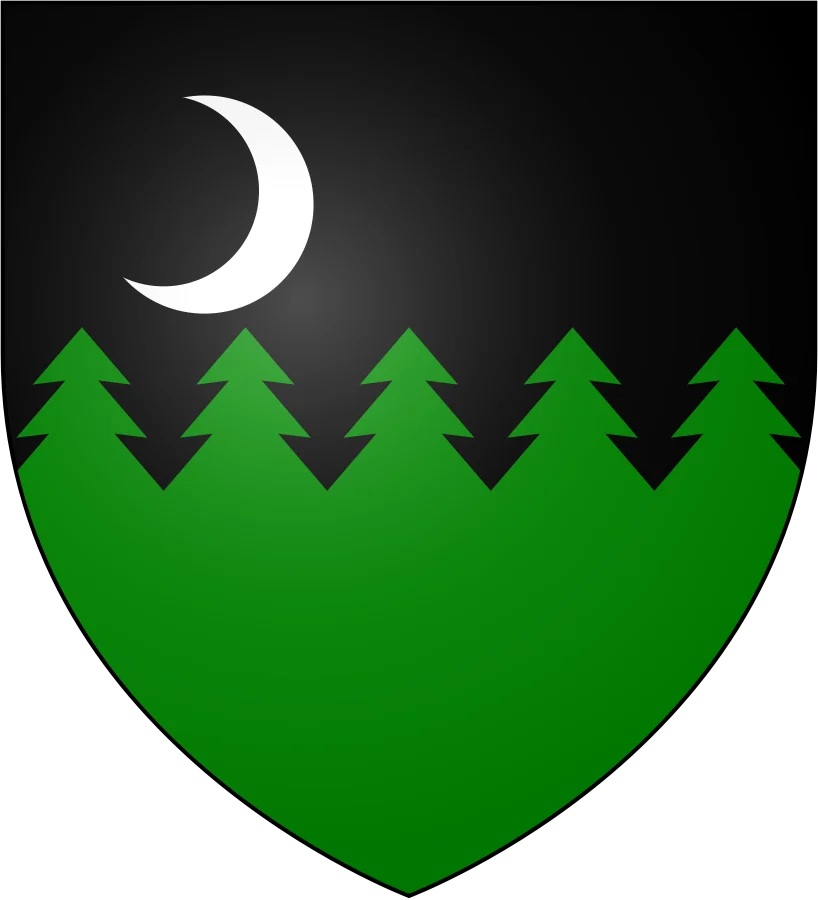 House Fell of Felwood
 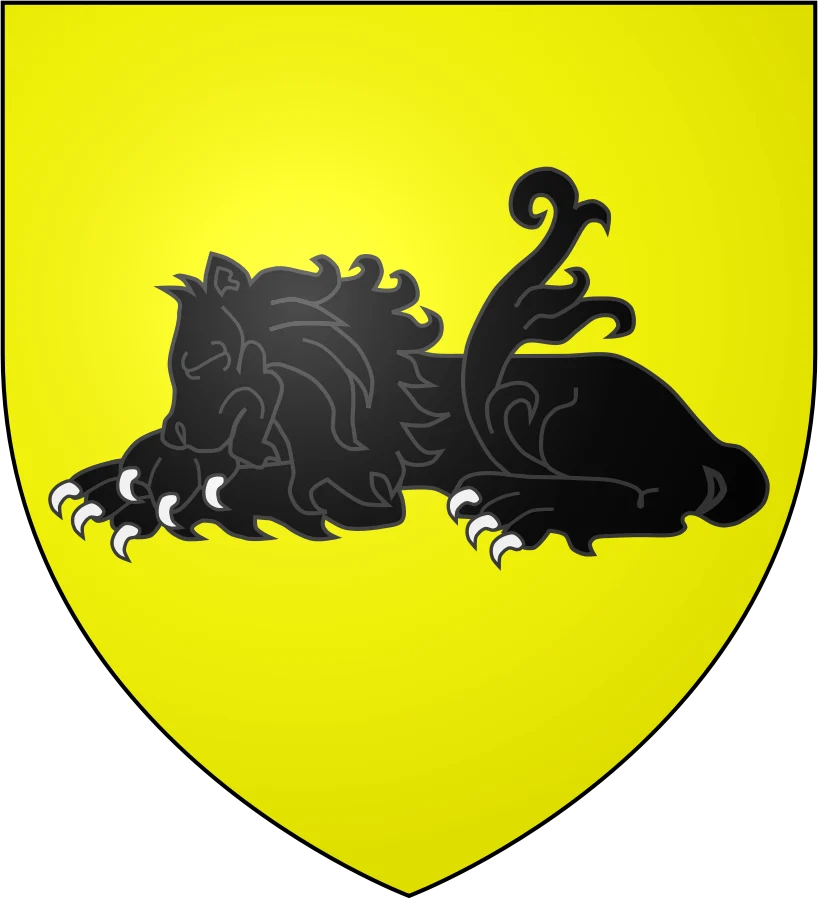 House Grandison of Grandview
 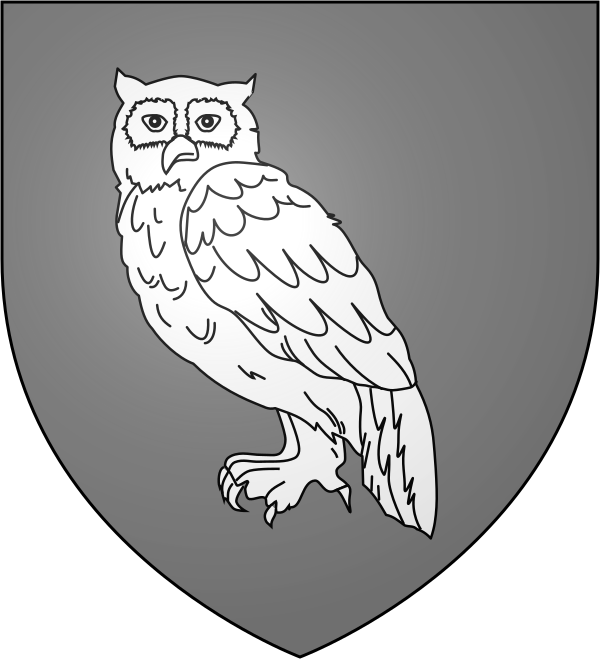 House Mertyns of Mistwood
 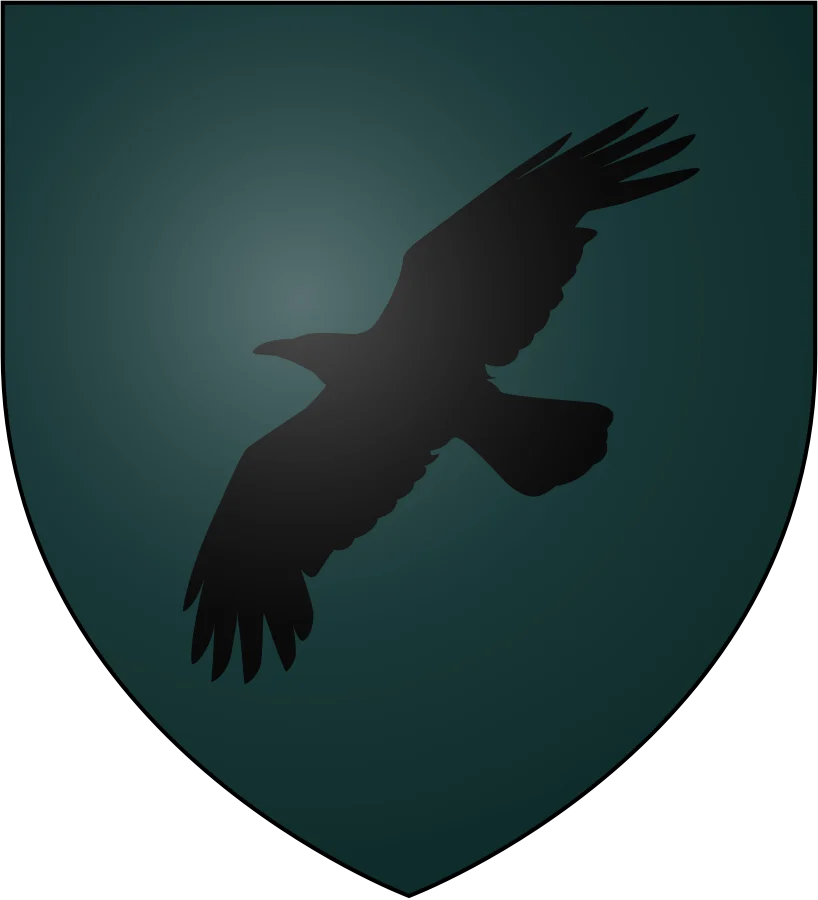 House Morrigen of Crow's Nest
 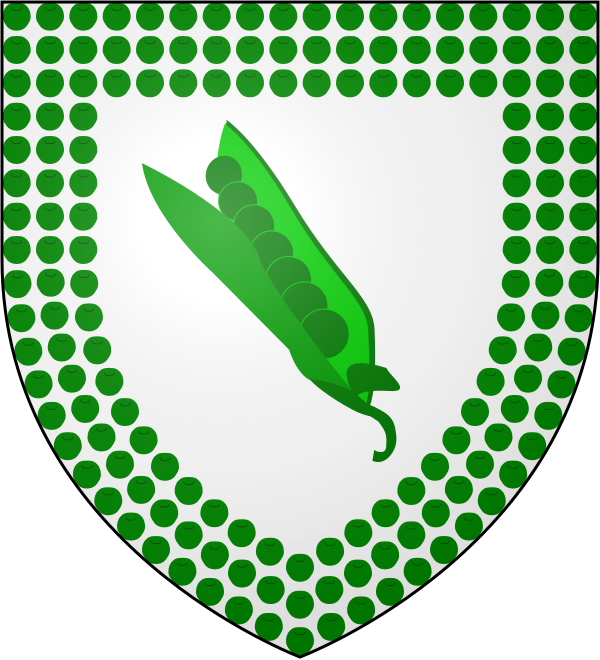 House Peasebury of Poddingfield
 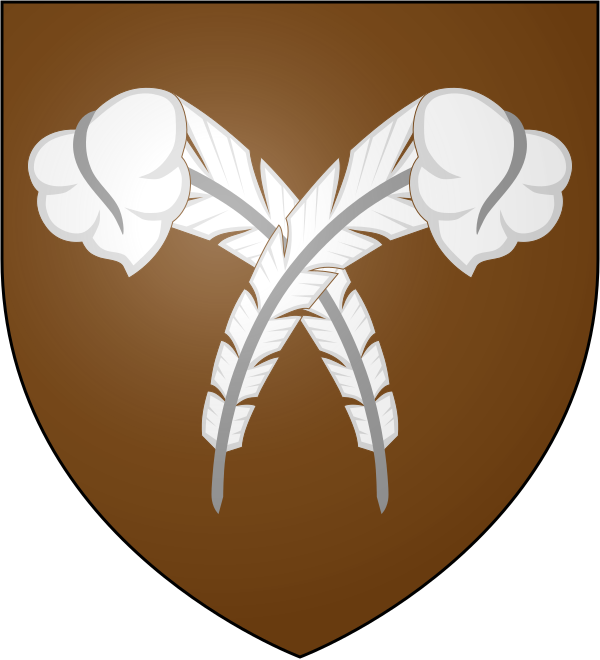 House Penrose of Parchments
 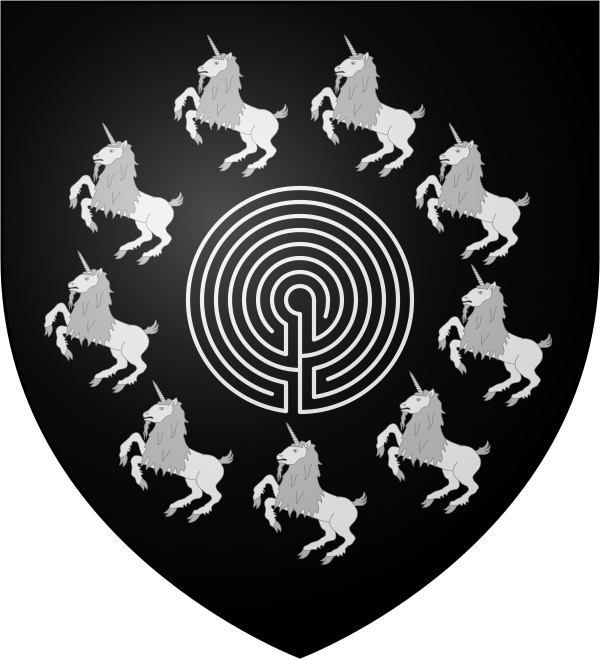 House Rogers of Amberly
 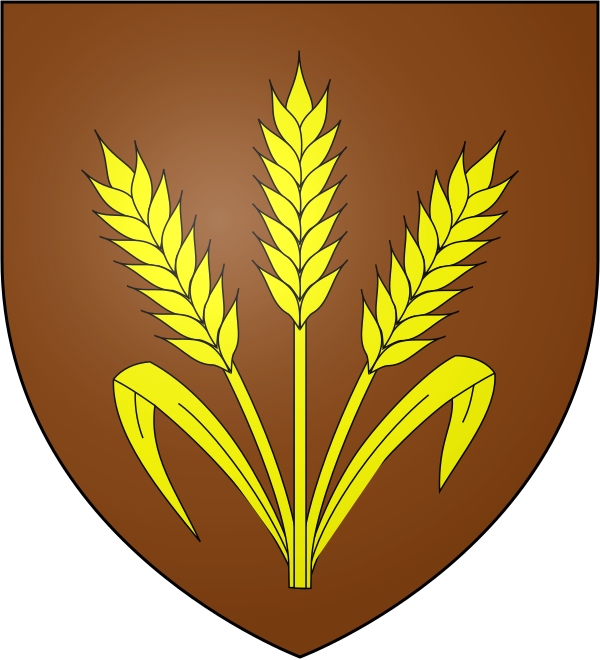 House Selmy of Harvest Hall
 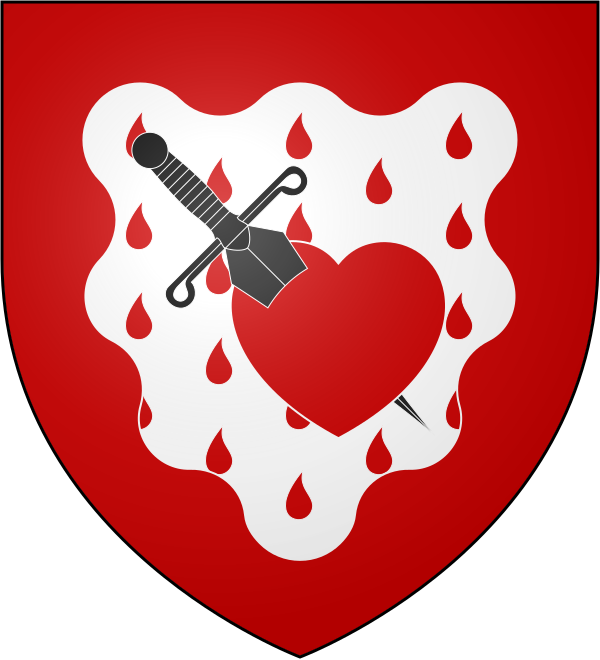 House Staedmon of Broad Arch
 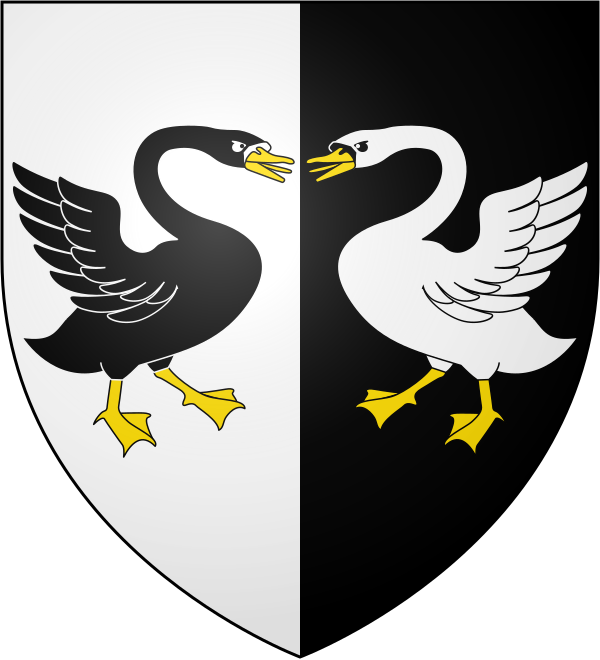 House Swann of Stonehelm
 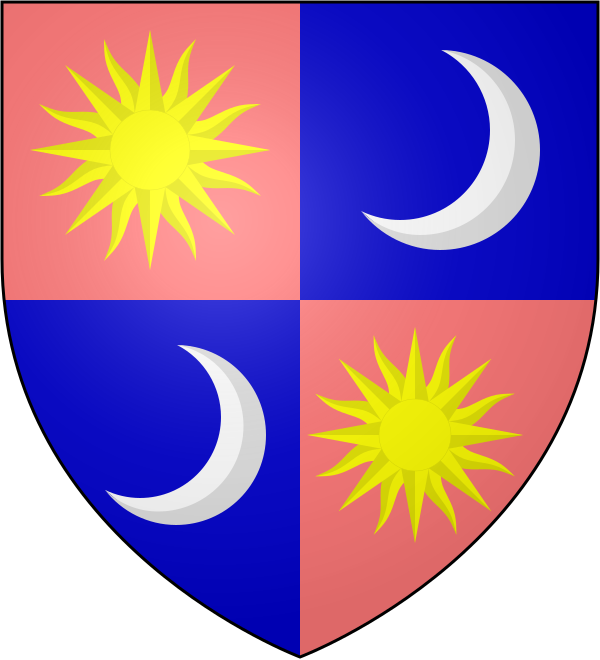 House Tarth of Evenfall Hall
 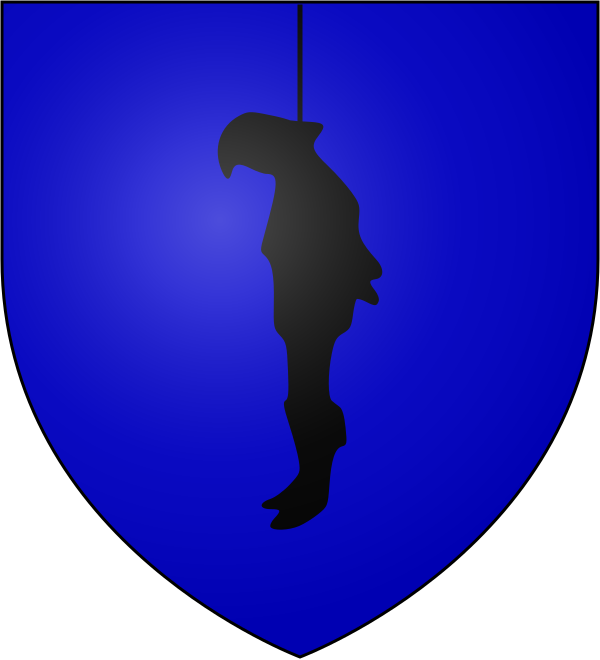 House Trant of Gallowsgrey
 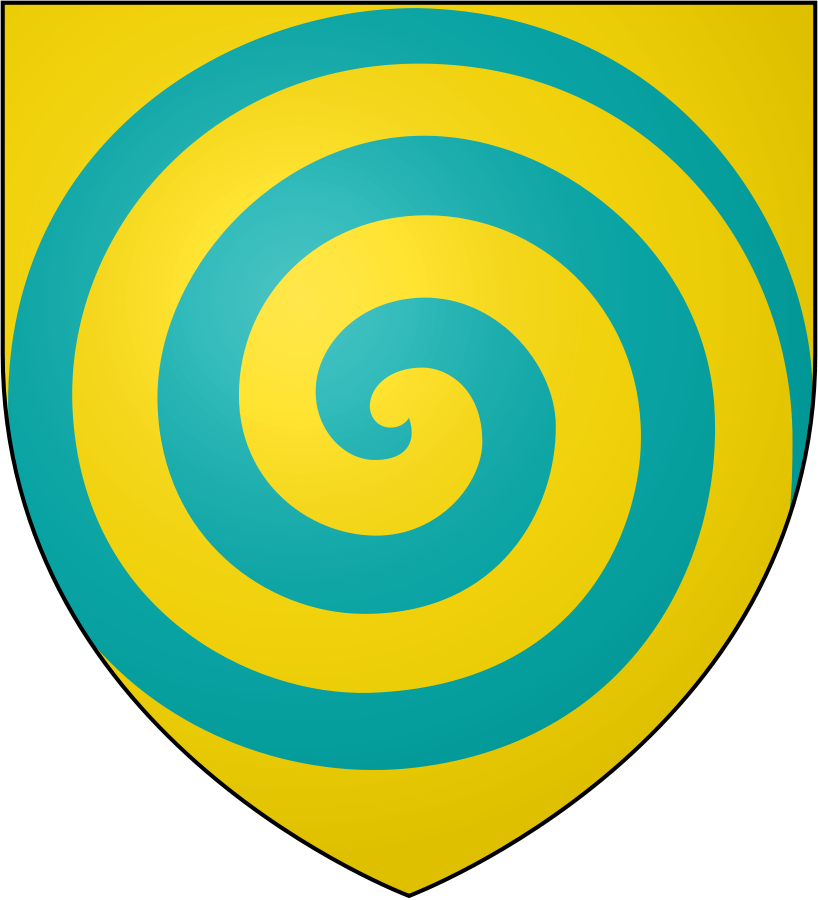 House Wylde of Rain House
The only region whose heraldry has a shape of its own: Dornish houses bear their arms on a round field, a form barely seen north of the Red Mountains. And the Martell sigil records a marriage. The Martells of old bore a gold spear; Nymeria and her Rhoynar bore a sun. When she wed Mors Martell around 700 BC the two were combined into a gold spear piercing a red sun on orange — marshalling, by any herald’s reckoning.
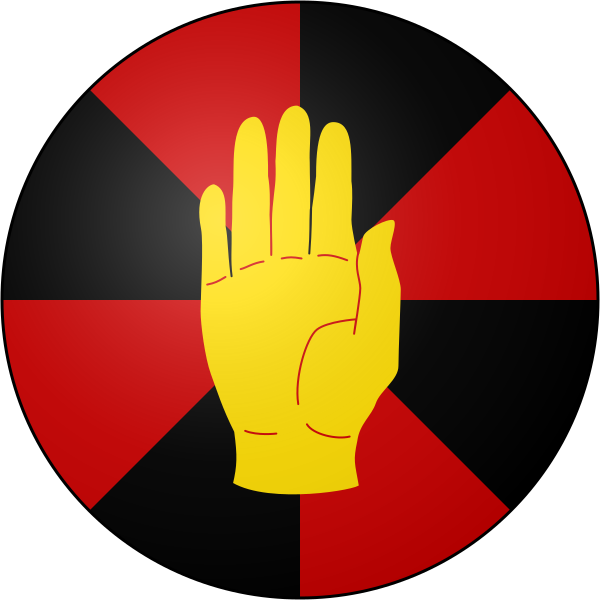 House Allyrion of Godsgrace
 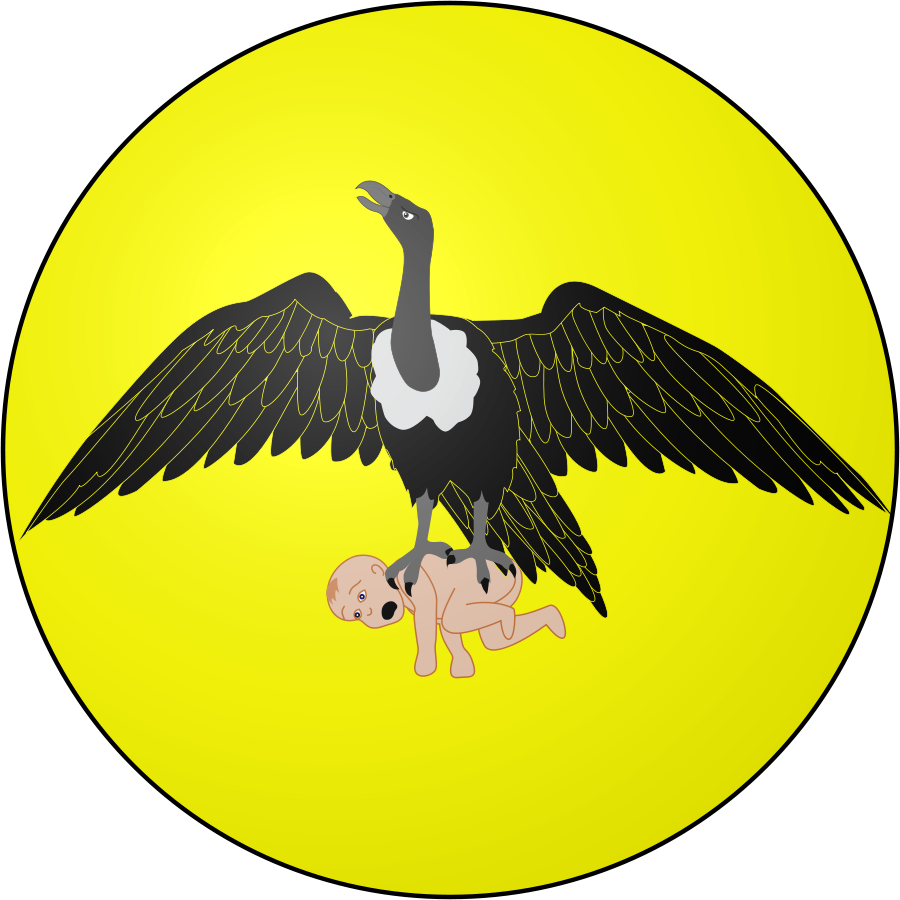 House Blackmont of Blackmont
 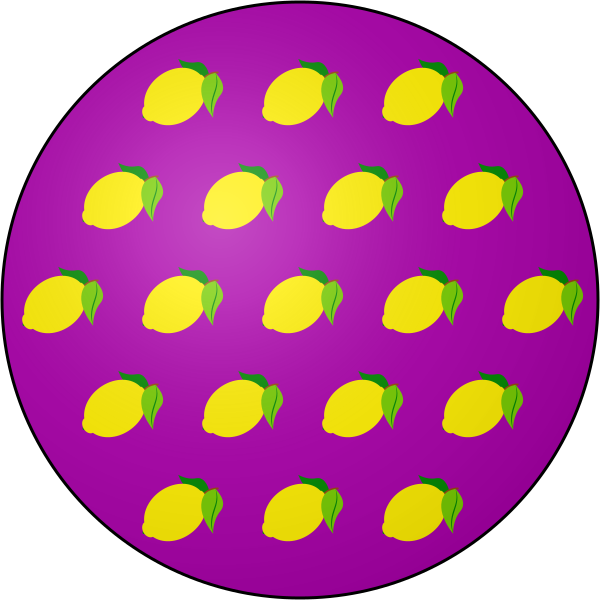 House Dalt of Lemonwood
 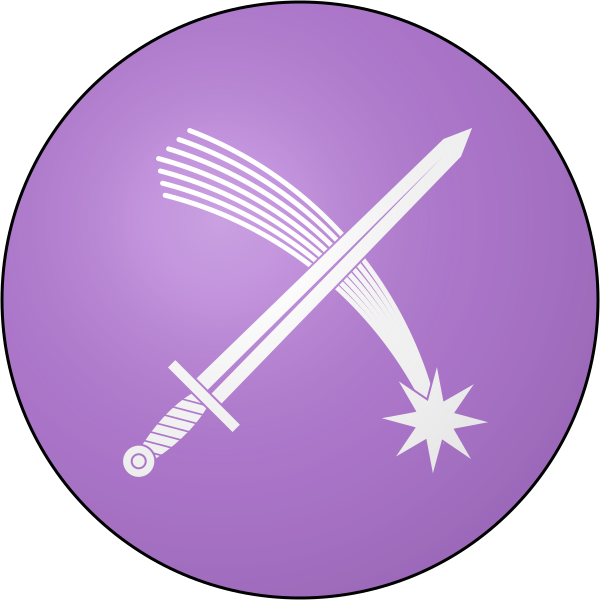 House Dayne of Starfall
 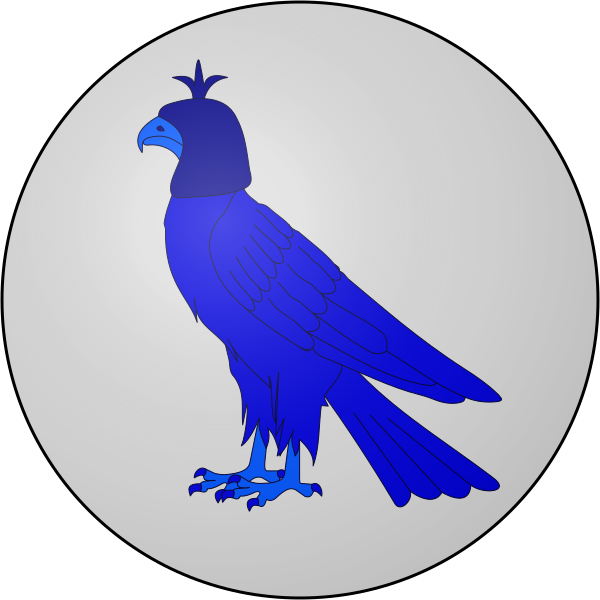 House Fowler of Skyreach
 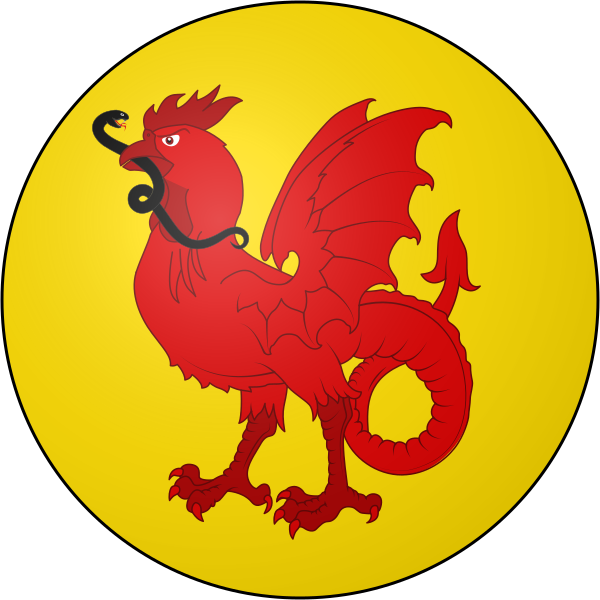 House Gargalen of Salt Shore
 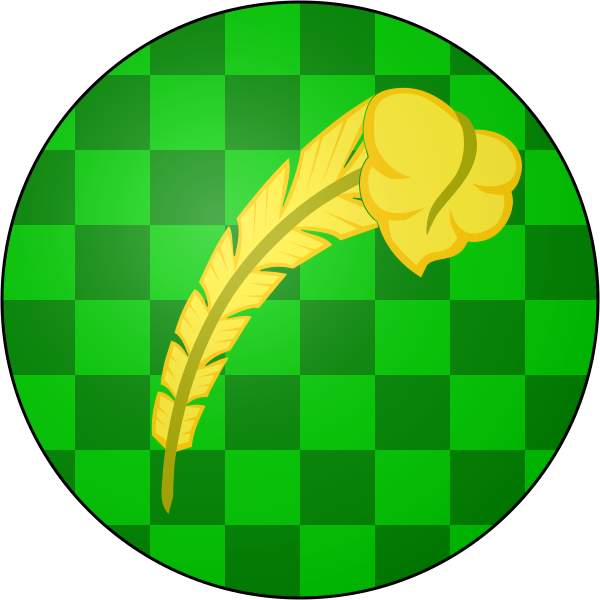 House Jordayne of the Tor
 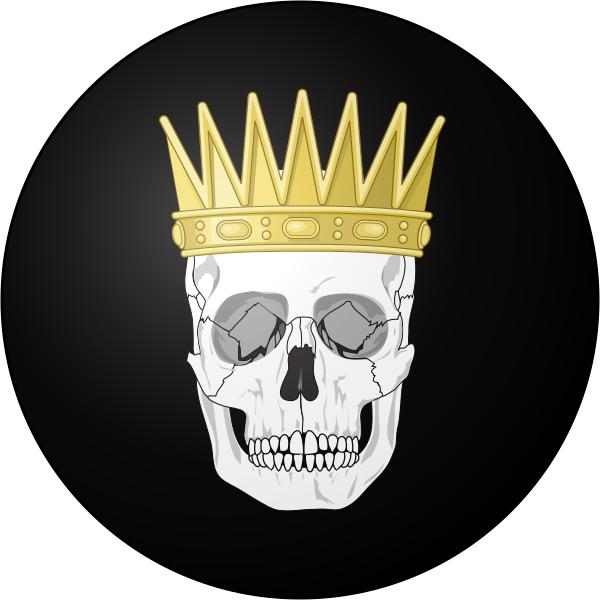 House Manwoody of Kingsgrave
 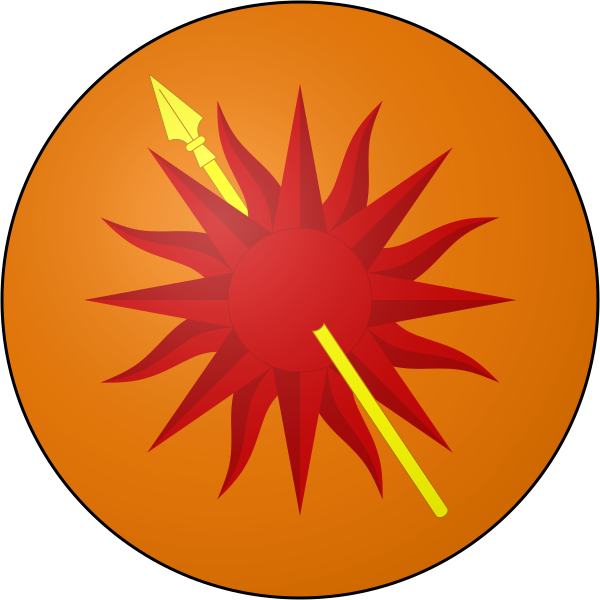 House Martell of Sunspear
 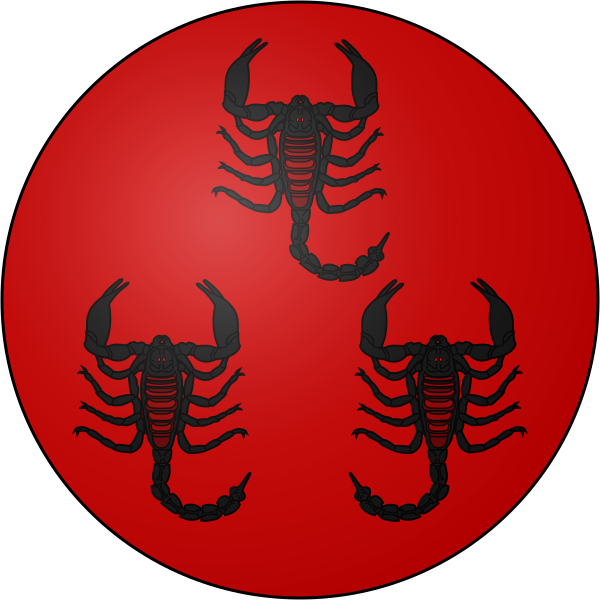 House Qorgyle of Sandstone
 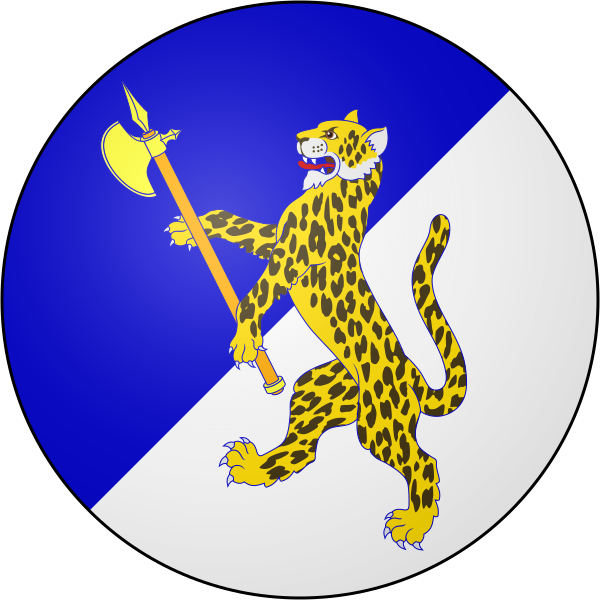 House Santagar of Spottswood
 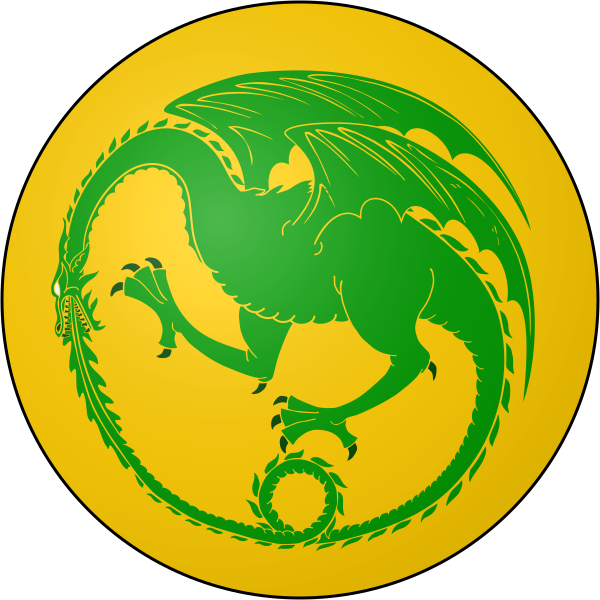 House Toland of Ghost Hill
 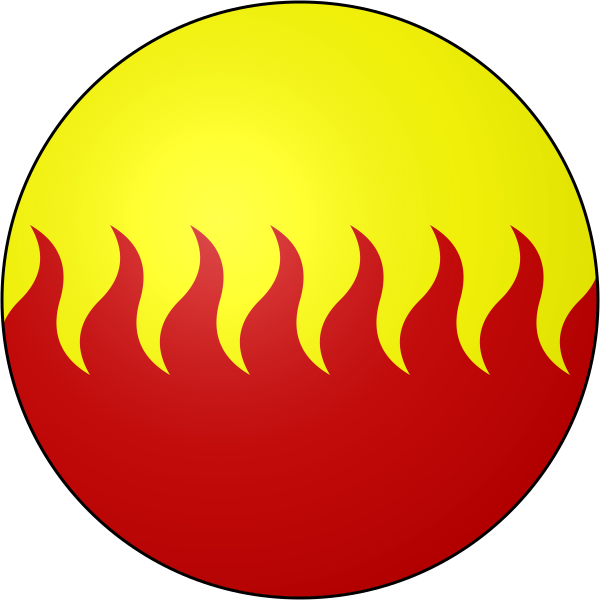 House Uller of the Hellholt
 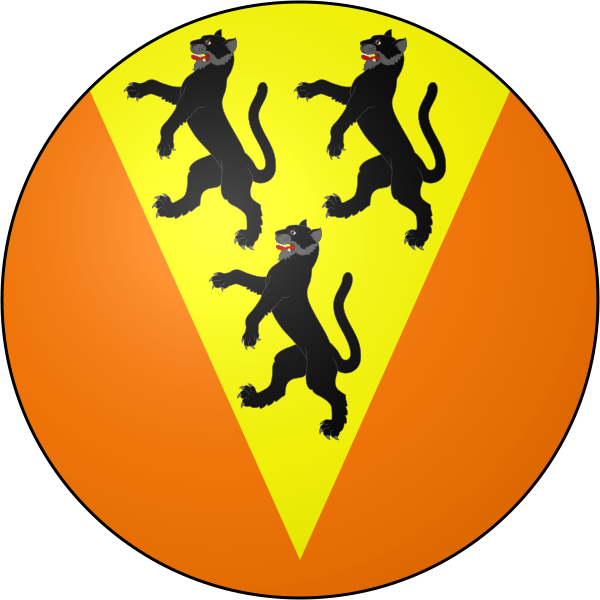 House Vaith of the Red Dunes
 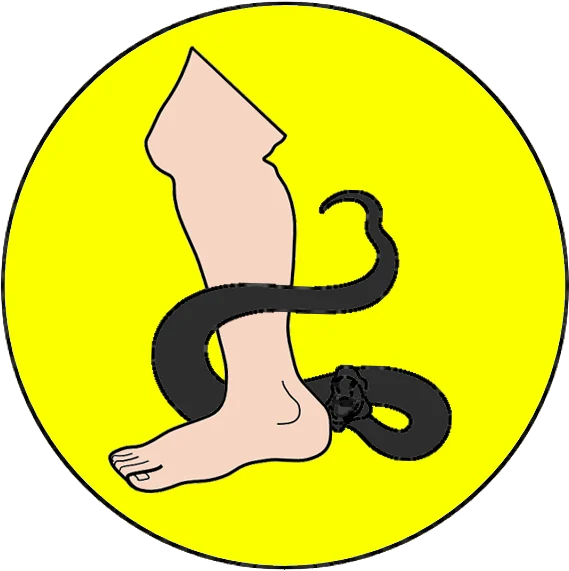 House Wyl of the Boneway
 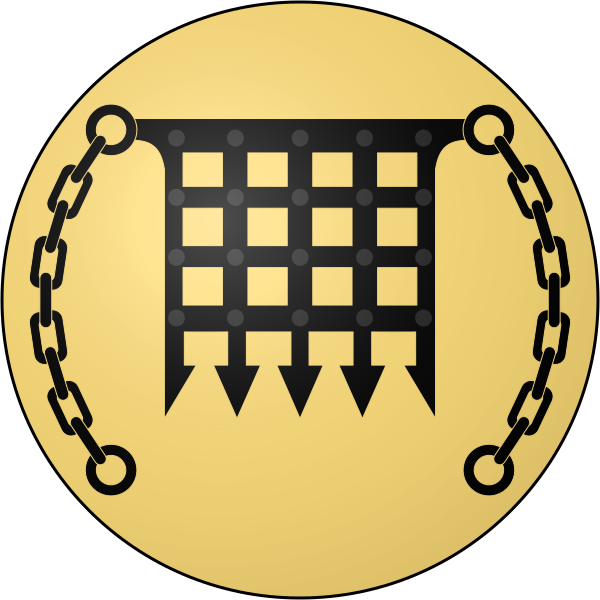 House Yronwood of Yronwood
The name is a leftover from the eve of Aegon’s Conquest, when Westeros south of the Wall was held by seven sovereigns. Aegon took only six of them; Dorne stayed independent for nearly two more centuries and joined by marriage in 187 AC. The realm that came out of the Conquest is divided into nine regions — the north, the Vale of Arryn, the Iron Islands, the riverlands, the westerlands, the crownlands, the Reach, the stormlands and Dorne — but the older name stuck.
A sigil is the heraldic device of a Westerosi house — the direwolf of House Stark, the merman of House Manderly — and it works much as a coat of arms does in Europe. The difference is one of law rather than picture: the arms belong to the family, as in Germany or Italy, so every trueborn member may bear them, where English practice grants arms to one person at a time.
Sometimes, and with a difference added. Bastards may use their father’s arms marked with a distinction — most often the colours reversed — which is close to the marks of cadency real heralds used to set younger sons and illegitimate lines apart.
Last reviewed by the Emblema Mundi editorial team on 22 September 2026.