Region of France
Centre-Val de Loire is one of France's thirteen administrative regions, stretching across the heart of the country along the Loire Valley — a UNESCO World Heritage landscape renowned for its Renaissance châteaux, royal history, and exceptional wines. The region encompasses the departments of Cher, Eure-et-Loir, Indre, Indre-et-Loire, Loir-et-Cher, and Loiret, with Orléans as its capital.
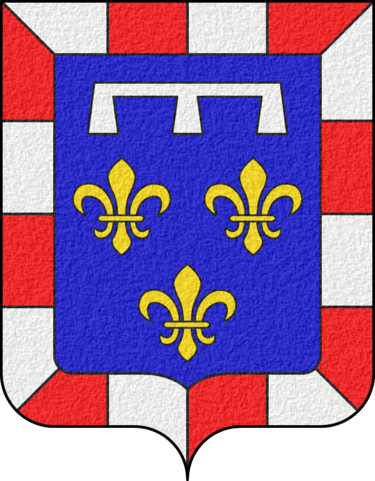
Coat of Arms
Not available
| Official name | Centre-Val de Loire |
|---|---|
| Capital | Orléans |
| Departments | Cher, Eure-et-Loir, Indre, Indre-et-Loire, Loir-et-Cher, Loiret |
| Notable cities | Orléans, Tours, Chartres, Bourges, Blois |
| UNESCO heritage | Loire Valley (inscribed 2000) |
| Historic association | Royal France; residence of François Ier |
Coat of Arms — Azure, three fleurs-de-lis Or, a label Argent; a bordure compony Argent and Gules.
Azure, three fleurs-de-lis Or, a label Argent; a bordure compony Argent and Gules.
The shield brings together two of the old provinces that make up the region: the label of the Orléanais and the border of Touraine, around the lilies common to both. The region has used other arms before. In the 1970s and 1980s it bore a quartered shield: the arms of Jeanne d’Arc, of Touraine, of the Berry and of the Orléanais. The departmental gendarmerie legion of the Centre has arms of its own, approved on 16 September 1968, that combine the same provinces with five fleurs-de-lis. The region itself now communicates with a logo.
Three golden fleurs-de-lis on blue, the arms of France, with a silver label and a border of silver and red pieces. The label comes from the arms of the Orléanais, the border from those of Touraine: two of the provinces that form the region.
The fleur-de-lis is the most iconic symbol of the French crown. The Loire Valley was home to many royal châteaux where kings such as François Ier, Charles VII, and Henri II resided, making the royal emblem the natural heraldic choice for the region.
Orléans is the capital of Centre-Val de Loire. It is historically famous as the city where Jeanne d'Arc lifted the English siege in 1429, turning the tide of the Hundred Years' War.
The region was originally simply named "Centre" when it was created in 1956. It was officially renamed "Centre-Val de Loire" in January 2016 to better reflect its geographical identity along the Loire River.
The Loire Valley between Chalonnes-sur-Loire and Sully-sur-Loire was inscribed on the UNESCO World Heritage List in 2000 under the category of "cultural landscape." It is recognised for its exceptional Renaissance châteaux, historic towns, and vineyard landscapes.
Last reviewed by the Emblema Mundi editorial team on June 29, 2026.