Country
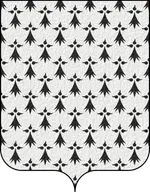
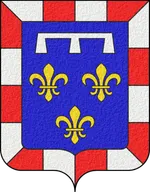
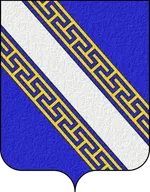
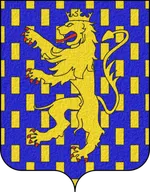
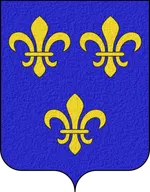
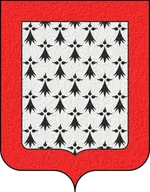
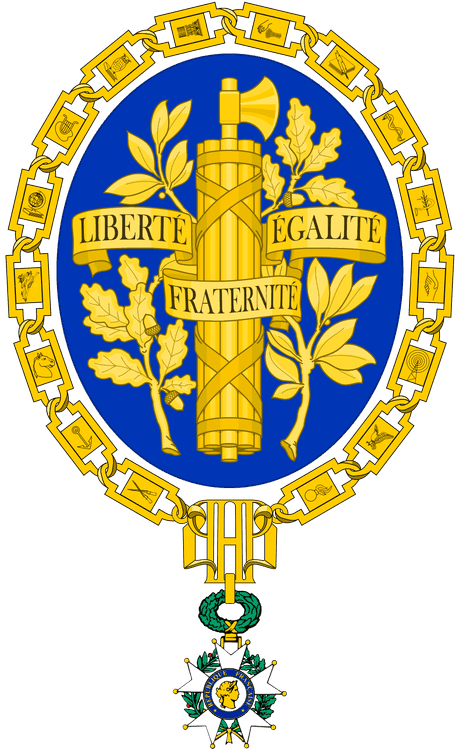
France holds a special place among European nations: the Republic has no official coat of arms. Since the Revolution swept away the royal arms, Azure, three fleurs-de-lis Or, no state blazon has replaced them. In their place, an unofficial emblem — a blue shield with a lictor’s fasces between branches of oak and olive, with the motto Liberté, égalité, fraternité and the collar of the Légion d’honneur — represents the Republic on some diplomatic occasions. Beside it flies the tricolour, born of a cockade presented to Louis XVI on 17 July 1789. Beneath this national story, 21 historic regions carry their own heraldry, from the ermine of Bretagne to the Moor’s head of Corse.

Flag
Not available
Coat of Arms
Not available
| Flag | Blue, white and red, since 1794 |
|---|---|
| Legal basis | Article 2 of the 1958 Constitution |
| Coat of arms | None since the Revolution |
| Emblem | The lictor’s fasces, unofficial (1953 version) |
| Motto | Liberté, Égalité, Fraternité |
France has not always flown the tricolour, and under the kings it had no national flag at all. From the banners of the Capetian kings to the Fifth Republic, these are the main stages: the Oriflamme of war, the fleur-de-lis banners, the king’s white, the first tricolour ensigns of the Revolution, the tricolour of the Convention and the Empire, the white flag of the Restoration, the return of the tricolour in 1830, the episode of 1848 and the two rival flags of the Second World War.
Click the thumbnails to browse.

12th c.
The oldest standard of the kings of France was not covered in lilies but red: the Oriflamme, the banner of the abbey of Saint-Denis. Louis VI was the first to have it carried in the royal army, in 1124. More a battle standard than a national flag, it went with the campaign of Bouvines in 1214 and with the armies of the Hundred Years’ War, until Charles VII gave it up.
13th c.
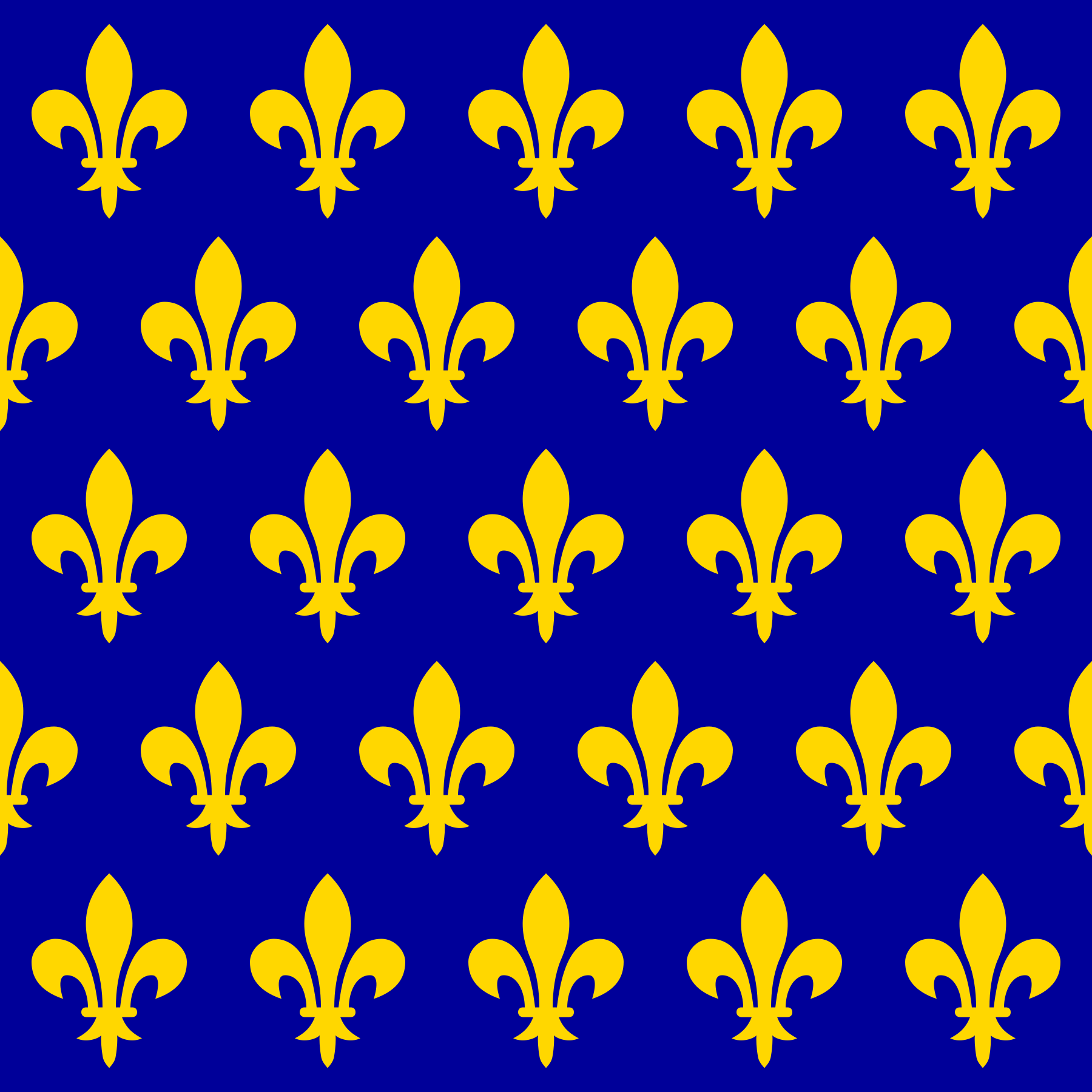
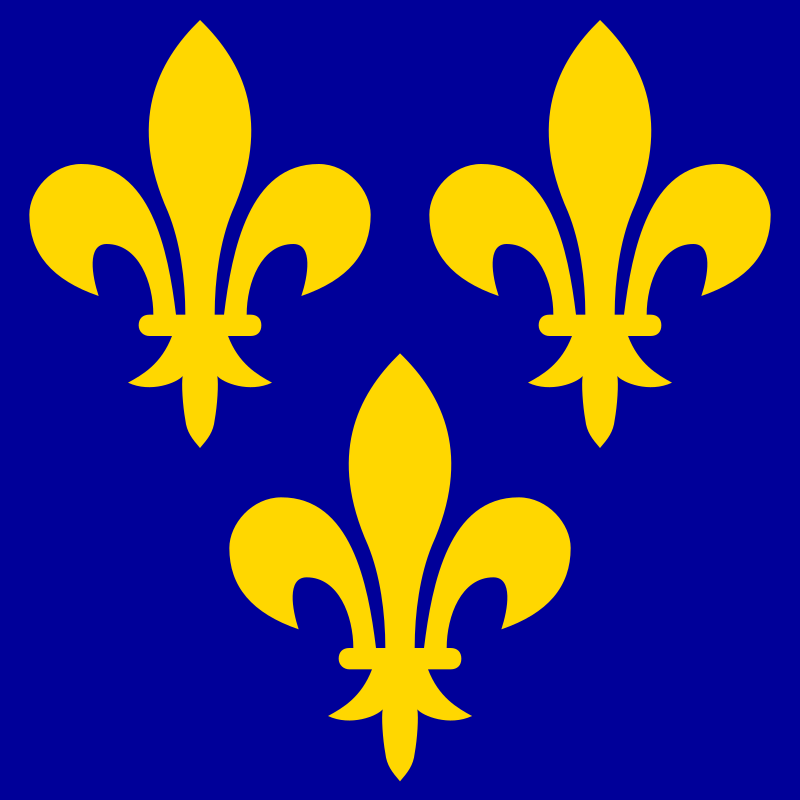
This is the flag most people associate with the French monarchy: the banner of the king’s arms, blue strewn with golden fleurs-de-lis. This version, known as France Ancient, appears early in the 13th century. In 1376 Charles V reduced the lilies to three, giving France Modern:
Azure, three fleurs-de-lis Or.
These blue banners carried the king’s arms rather than standing for a country: the kingdom had no national flag yet.
17th c.
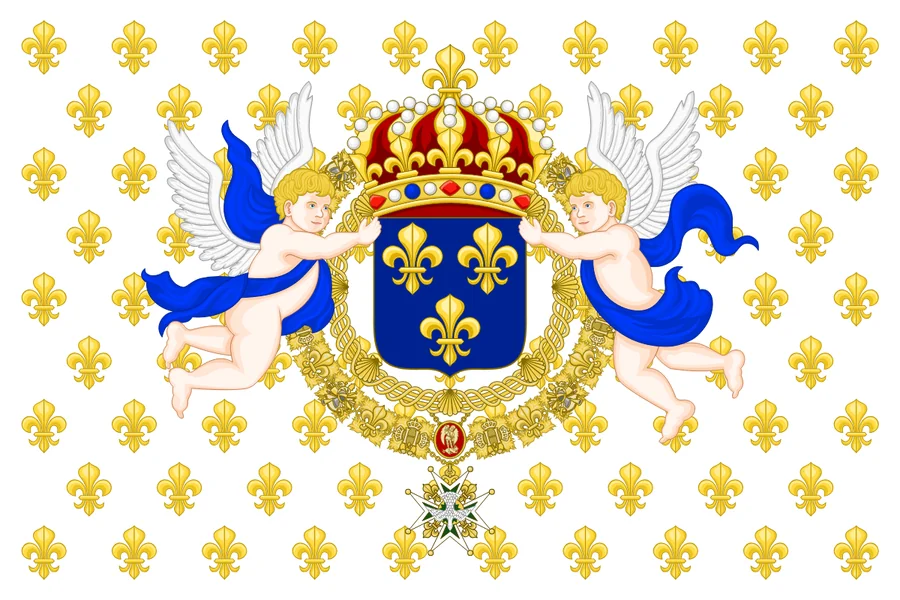
Under the Ancien Régime every regiment and every ship had its own colours, but white had been the colour of the king and of command since Henri IV. From 1638 the plain white ensign was reserved for the warships of the royal navy.
The standard shown here was the king’s own: raised in his presence, notably on the ships he boarded, it bears his full arms, held by two angels, on a field strewn with lilies. Charles VII had added the angels to the arms of France as a sign of the kingdom’s standing as the “eldest daughter of the Church”.

1790
In July 1789 the Paris militia wore a blue and red cockade, the colours of the city. White was added on 17 July, when Louis XVI came to the Hôtel de Ville; accounts credit the idea to La Fayette, to the mayor Bailly or to the king himself.
France still had no national flag: only ships received the new colours. The decree of 24 October 1790 kept a white stern ensign, with a red-white-blue tricolour in the upper corner, red nearest the mast, and created a tricolour jack, flown at the bow on ceremonial occasions.
1794
On 15 February 1794 (27 Pluviôse Year II) the National Convention adopted a new ensign of three equal bands — blue at the mast, white in the middle, red flying — and asked the painter Jacques-Louis David to supply the designs. It is today’s blue-white-red flag.
The Empire kept it until 1814. Regiments received army colours of their own: in 1804 a large white lozenge with blue and red corners, replaced in 1812 by three vertical bands. On top of each staff Napoléon I placed a gilded bronze eagle, inspired by the standards of the Roman legions and modelled by the sculptor Antoine-Denis Chaudet; he presented them to the regiments on 5 December 1804, three days after his coronation.

1814
When Napoléon fell, the provisional government restored the white ensign and the white cockade on 13 April 1814, and Louis XVIII had the imperial eagles destroyed. During the Hundred Days, from March to June 1815, Napoléon brought back the tricolour. The Second Restoration returned to the white flag from July 1815 to 1830.
In 1828 an ordinance of Charles X also gave the royal family its own white flag strewn with golden fleurs-de-lis.
1830
The July Revolution of 1830 brought back the blue-white-red flag, by an ordinance of 1 August. Article 67 of the Charter of 14 August 1830 put it in writing: “La France reprend ses couleurs” — France takes back her colours. Louis-Philippe made it the emblem of the July Monarchy, and a Gallic rooster now topped the flagstaffs.

1848
The February Revolution of 1848 overthrew Louis-Philippe. Some of the insurgents wanted the red flag; on 25 February, at the Hôtel de Ville, the poet Lamartine refused it, saying that the tricolour “had gone round the world with the Republic and the Empire”. For a few days, though, the official flag used another order: blue, red, white.
The decree of 5 March 1848 restored the order of 1794. The flag has not changed since, and Article 2 of the 1958 Constitution states: “L’emblème national est le drapeau tricolore, bleu, blanc, rouge” — the national emblem is the blue, white and red tricolour flag.
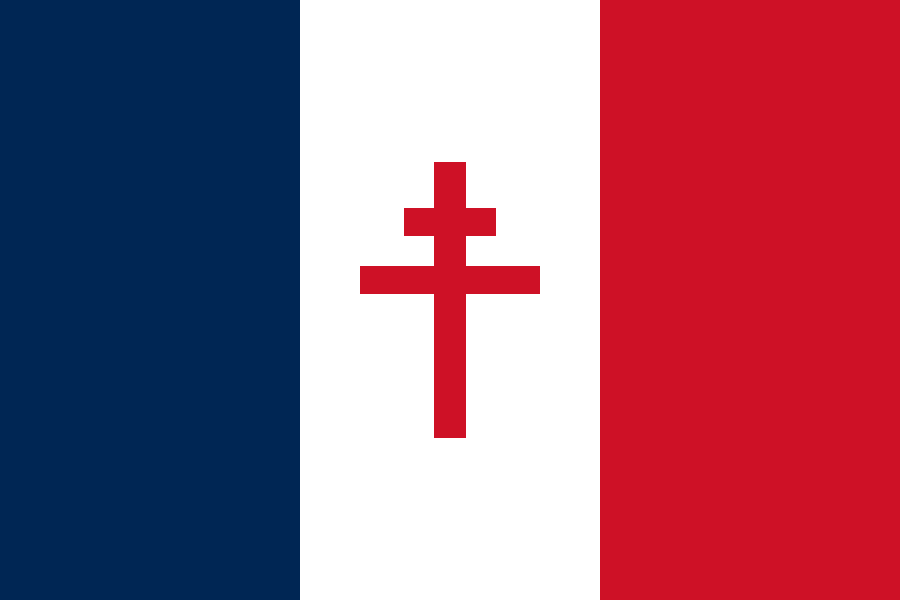
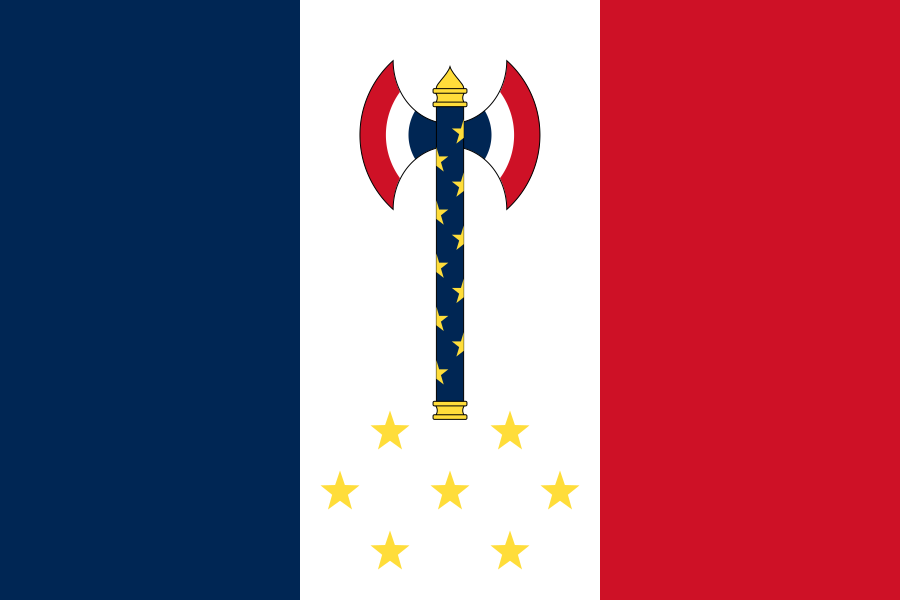
1940
Under the Occupation, two Frances faced each other, both under the tricolour but with opposite signs. In London, Free France adopted the red Cross of Lorraine, proposed to General de Gaulle by Vice-Admiral Muselier on 1 July 1940 “in opposition to the swastika”; it became the emblem of the Resistance.
In Vichy, Marshal Pétain’s “French State” kept the tricolour, but the Marshal’s personal standard carried on its white band a francisque, an axe whose handle is a star-studded marshal’s baton. The francisque, Pétain’s personal badge, appeared on official documents and on coins.
Unlike the flag, the arms of France changed with every regime — and the Republic has never adopted official ones. From the lilies of the Capetians to the eagle of the two Empires and the fasces of today, these are the arms that have stood for the country.
Click the thumbnails to browse.
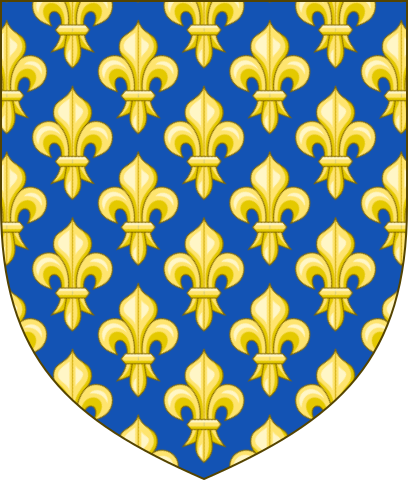
13th c.
The earliest arms of the kings of France appear early in the 13th century, and their use became systematic after 1211: a blue field strewn with golden fleurs-de-lis, with no fixed number.
Azure semé of fleurs-de-lis Or.
The fleur-de-lis, a Marian symbol, was linked with the monarchy as early as Louis VII, in the 12th century. This strewn pattern is called France Ancient.
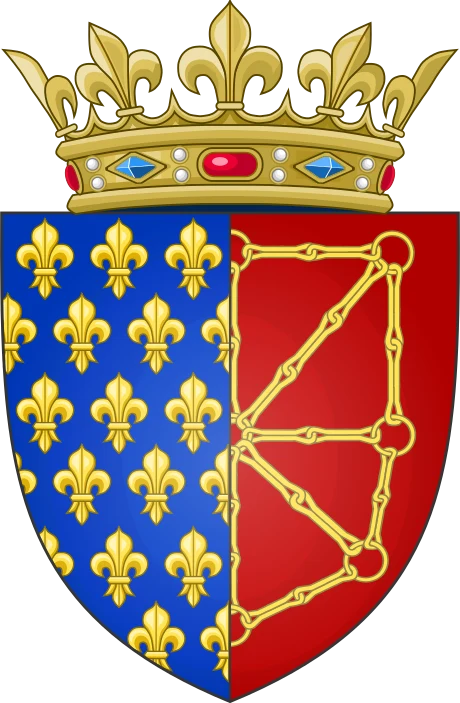
1305
In the early 14th century three kings — Louis X, Philippe V and Charles IV, sons of Philippe le Bel and Jeanne de Navarre — also wore the crown of Navarre and combined the two shields.
Per pale: Azure semé of fleurs-de-lis Or; and Gules, an escarbuncle pommetty and linked Or.
The dexter half carries the royal lilies, the sinister the golden escarbuncle of Navarre. The union of the two crowns ended in 1328, when the Valois came to the throne.
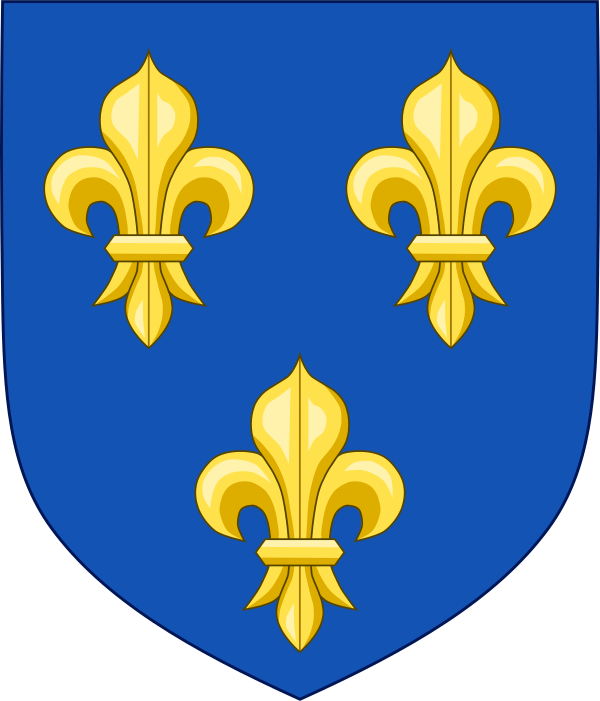
1376
In 1376 Charles V reduced the lilies to three, placing the kingdom under the double invocation of the Virgin and the Trinity.
Azure, three fleurs-de-lis Or.
Known as France Modern, these remained the arms of the kingdom until the Revolution, borne by the Valois and then the Bourbons. In the early 16th century the shield took a closed royal crown.
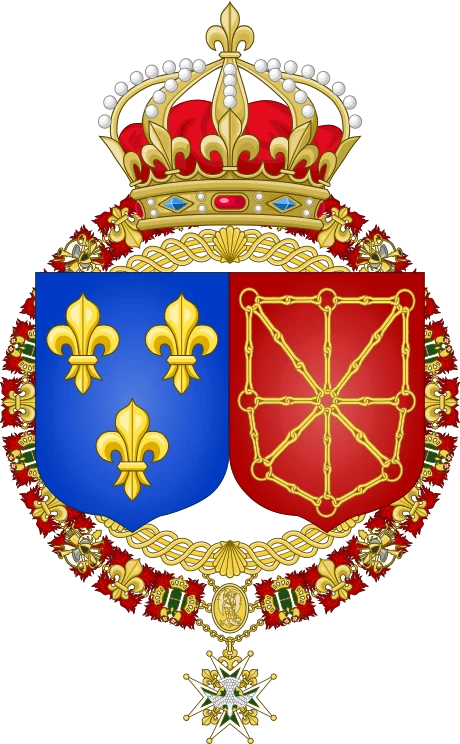
1589
With the accession of Henri IV in 1589, king of France and of Navarre, the two shields were set side by side, until the Revolution.
Two shields accolé: Azure, three fleurs-de-lis Or (France); and Gules, an escarbuncle pommetty and linked Or (Navarre).
The shields are ensigned with the closed royal crown and surrounded by the collars of the orders of Saint-Michel and Saint-Esprit. In the full achievement two angels support them, before a blue mantle strewn with golden lilies.
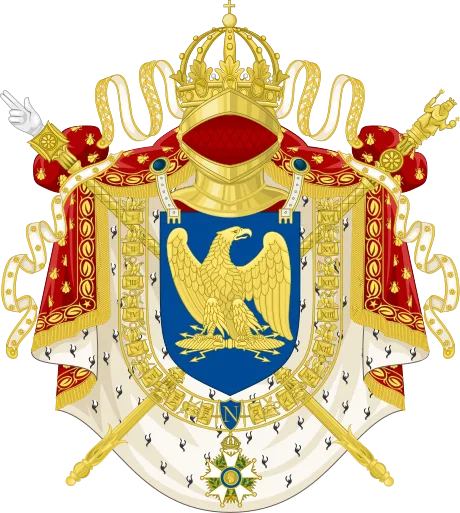
1804
In 1804 Napoléon I broke with the lily and took the eagle, inspired by the standards of the Roman legions.
Azure, an eagle Or grasping a thunderbolt of the same.
The mantle is strewn with golden bees, inspired by the bee-shaped jewels found in 1653 in the tomb of the Frankish king Childéric I. The imperial crown and the grand collar of the Légion d’honneur complete the achievement.
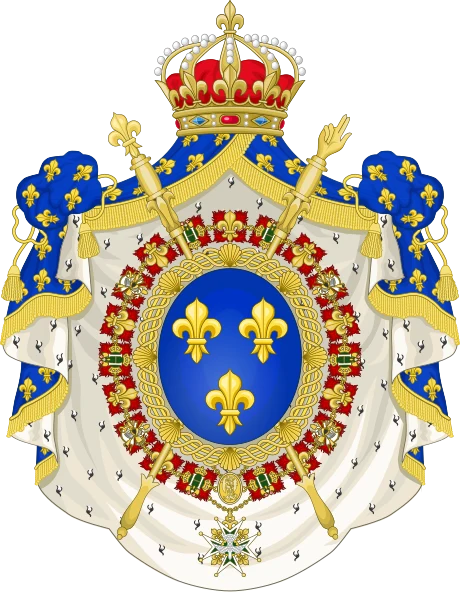
1814
With the return of the Bourbons — Louis XVIII, then Charles X — the eagle disappeared and the lilies came back.
Azure, three fleurs-de-lis Or.
The shield of France Modern recovered the closed royal crown and the collars of the orders of Saint-Michel and Saint-Esprit; the Bourbons sometimes added the arms of Navarre as well. These arms lasted until the July Revolution of 1830.
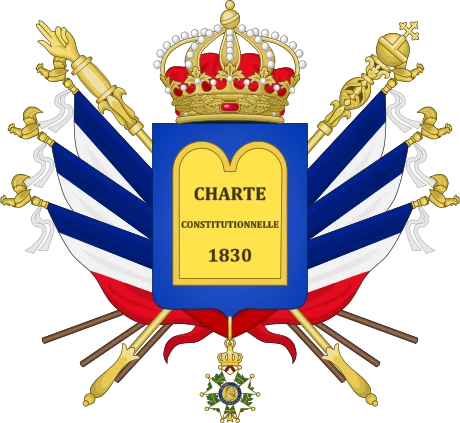
1831
Louis-Philippe, “king of the French” rather than “king of France”, first took the arms of his house of Orléans in August 1830: the three lilies with a silver label. In February 1831, after riots, they were replaced by the Constitutional Charter.
Azure, the Constitutional Charter of 1830 Or, inscribed Sable.
The open book of the Charter replaced the lilies: the monarchy presented itself as founded on a constitutional text. These arms disappeared with the revolution of 1848.
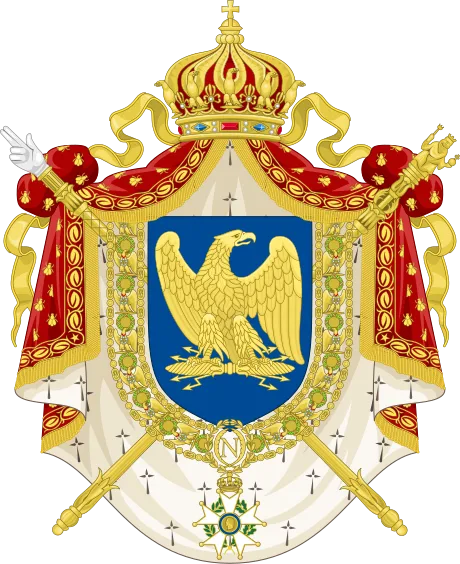
1852
In 1852 Napoléon III restored his uncle’s imperial eagle: the Second Empire took back the arms of the First.
Azure, an eagle Or grasping a thunderbolt of the same.
The eagle, the bee-strewn mantle, the imperial crown and the grand collar of the Légion d’honneur returned; only the external ornaments changed. These arms disappeared with the fall of the Empire in 1870.
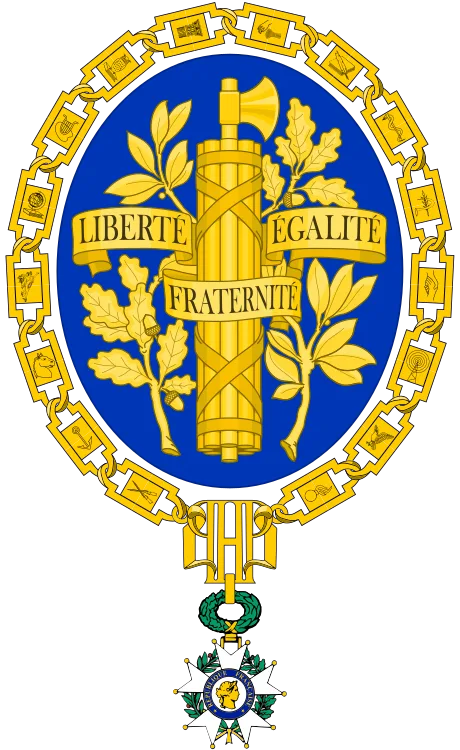
1953
The Republic has never adopted an official coat of arms. In 1953, to represent France at the United Nations, a commission meeting at the Quai d’Orsay chose an unofficial emblem designed by the heraldic artist Robert Louis:
Azure, a lictor’s fasces palewise upon two branches of oak and olive in saltire, all Or, bound with a ribbon of the same bearing the motto Liberté, Égalité, Fraternité in letters Sable.
This is the emblem the Republic uses today: it is described in detail below.
Emblem of the French Republic — the version chosen in 1953, with the grand collar of the Légion d’honneur.
France has no official coat of arms: the Constitution mentions only the tricolour flag. The emblem above has never been set down in law. It was chosen in 1953 by a commission meeting at the Ministry of Foreign Affairs, when every country was to be represented in the General Assembly hall of the United Nations in New York.
Azure, a lictor’s fasces palewise upon two branches of oak and olive in saltire, all Or, bound with a ribbon of the same bearing the motto Liberté, Égalité, Fraternité in letters Sable.
This is the design of the heraldic artist Robert Louis, as described by the Élysée. The shield is surrounded by the grand collar of the Légion d’honneur. English-language sources trace the composition back to a 1905 design by the painter-engraver Maurice de Meyère.
In ancient Rome the fasces — rods bound around an axe — were carried by lictors, the attendants of the magistrates. The Revolution recast them as the union and strength of citizens joined to defend liberty, and the Constituent Assembly made them an emblem of France as early as 1790. The fasces then appeared on the seals of the First and Second Republics.
French embassies and passports carry a different emblem: a fasces covered by a shield engraved RF, between a branch of oak, for justice, and a branch of olive, for peace. It is the work of the sculptor Jules-Clément Chaplain and has been used by the Quai d’Orsay since 1912 or 1913, depending on the source.
France played a founding role in European heraldry. The word blazon itself comes from Old French, and the earliest systematic treatises on heraldry were written in French. The fleur-de-lis, linked with the French crown at least since Louis VII in the 12th century, became perhaps the most recognisable charge in Western heraldry.
Unlike England or Scotland, France no longer has a state heraldic authority: the last royal officers of arms disappeared with the Ancien Régime. Civic heraldry is still very much alive, though: communes, départements and régions adopt and change their arms freely, often drawing on the blazons recorded in the Armorial général de France of d’Hozier (1696).
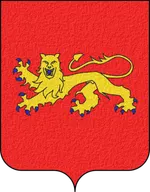
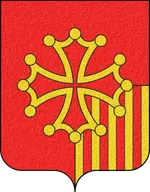
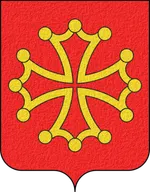
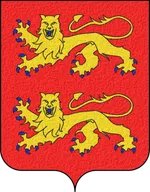
French heraldic style favours clarity: simple partitions, bold charges and a strict observance of the rule of tincture. Regional arms often reflect feudal history — the leopards of Normandie recall the Plantagenet link, the ermine of Bretagne the ducal house, the cross of Toulouse the Languedoc.
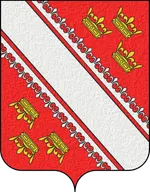
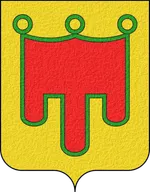
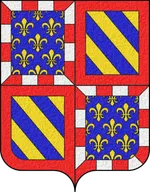
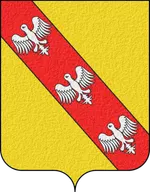
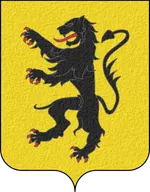
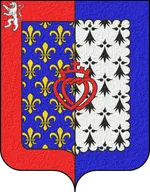
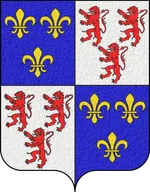
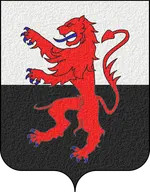
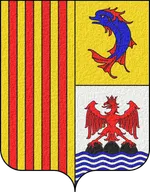
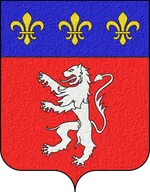
Below the national emblem, each historic region bears arms inherited from its feudal or provincial past: the plain ermine of Bretagne, the Moor’s head of Corse, the lion of Flanders of Nord-Pas-de-Calais, the alerions of the dukes of Lorraine. With no state heraldic authority, régions, départements and communes choose their arms freely.
These are the 21 regions shown on the map (pre-2016 divisions, with Normandie reunified), each with its own page.
No. Since the fall of the monarchy France has had no official coat of arms: only the tricolour flag is written into the Constitution. The Republic uses unofficial emblems, including a blue shield with a lictor’s fasces between branches of oak and olive, with the motto Liberté, Égalité, Fraternité and the collar of the Légion d’honneur, chosen in 1953 for the General Assembly hall of the United Nations.
According to the traditional explanation, blue and red are the colours of the city of Paris and white the colour of the monarchy: brought together in the cockade of July 1789, they stood for the union of the king and the nation. White is said to have been added on 17 July 1789, when Louis XVI came to the Hôtel de Ville; accounts credit the idea to La Fayette, to the mayor Bailly or to the king himself. The origin remains debated.
The blue-white-red order dates from 15 February 1794, for the ensign of the National Convention. The white flag replaced it during the Restoration, from 1814 to 1830, and the tricolour returned with the July Revolution. After a few days in blue, red and white in 1848, the decree of 5 March 1848 restored the order of 1794. Only the shade has changed since: a lighter blue, used by the presidency from 1974, was dropped in 2020 in favour of navy blue.
According to the Élysée, the version chosen in 1953 for the United Nations is the design of the heraldic artist Robert Louis; English-language sources trace it back to a 1905 composition by the painter-engraver Maurice de Meyère. The emblem on embassies and passports, with its shield engraved RF, is the work of the sculptor Jules-Clément Chaplain.
The fasces come from ancient Rome, where lictors carried them in the service of the magistrates. The Revolution made them a symbol of the union and strength of citizens joined to defend liberty, and the Constituent Assembly adopted them as an emblem of France in 1790. They have remained one of the symbols of the Republic, “one and indivisible”, ever since.
The royal arms were Azure, three fleurs-de-lis Or. Known as France Modern, they were set in 1376 by Charles V, who reduced to three the lilies strewn across the shield, in honour of the Virgin and the Trinity. Before him, France Ancient showed fleurs-de-lis scattered over the whole field.
Vice-Admiral Muselier proposed it to General de Gaulle on 1 July 1940, “in opposition to the swastika”. The likely reasons were Muselier’s own Lorraine origins and the Cross of Lorraine in the arms of the 507th Tank Regiment, which de Gaulle had commanded before the war.
Flag illustrations: Wikimedia Commons (public domain), except the royal standard, © Sodacan, CC BY-SA 3.0; the 1790 ensign, © Rama, CC BY-SA 2.0 FR; the 1848 flag, © Titimaster, CC BY-SA 3.0. Arms: Wikimedia Commons — France Ancient © Saltspan; France Modern, France and Navarre, royal arms (France-Navarre 1305, Restoration, July Monarchy) and imperial arms © Sodacan and Louis de Lauban (CC BY-SA); emblem of the Republic © Hans-Ulrich Herzog (public domain).
Last reviewed by the Emblema Mundi editorial team on 2 October 2026.