Country
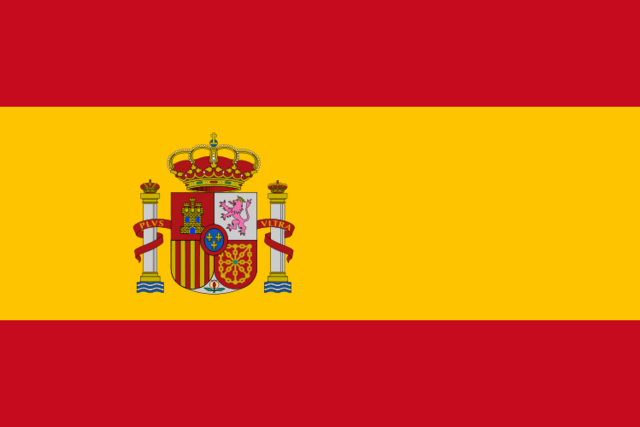
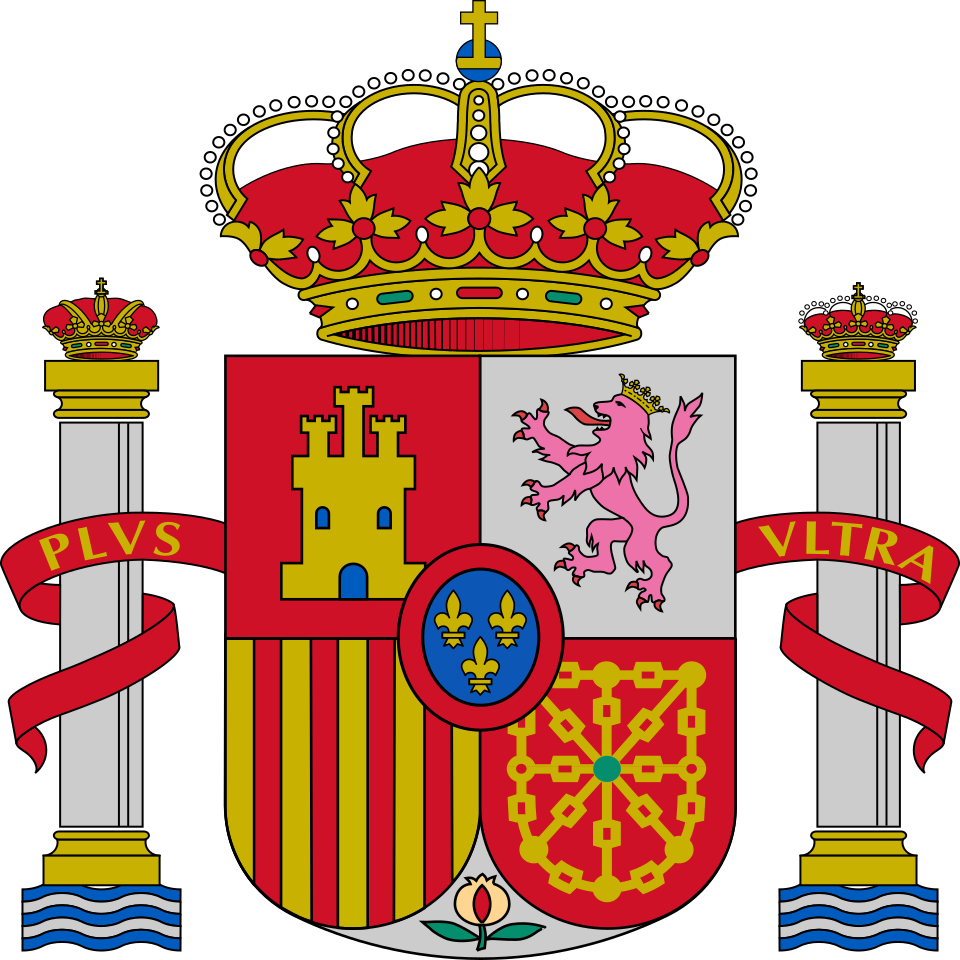
The flag of Spain was born at sea: in 1785, Carlos III chose red and yellow so that his ships would not be mistaken for those of the other Bourbon monarchies. The arms, for centuries those of its kings, became national in 1868, and their present form is set by Law 33/1981: the kingdoms of Castile, León, Aragon, Navarre and Granada, the fleurs-de-lis of the Bourbons and the Pillars of Hercules with the motto Plus Ultra.
Flag
Not available
Coat of Arms
Not available
| Flag | Red, yellow and red, the yellow twice as wide |
|---|---|
| Origin | Navy, 1785; the whole armed forces, 1843 |
| Arms | Law 33/1981 of 5 October |
| Motto | Plus Ultra |
| Legal basis | 1978 Constitution, Article 4.1 |
The rojigualda was born at sea, so that Spanish ships would not be mistaken for those of the other Bourbon monarchies. Before it, Spain flew the Cross of Burgundy and the white of the Bourbons; after it came the Republican tricolour and the flags of the eagle. These are its stages, from the Catholic Monarchs to the 1978 Constitution.
Click the thumbnails to browse the flags.
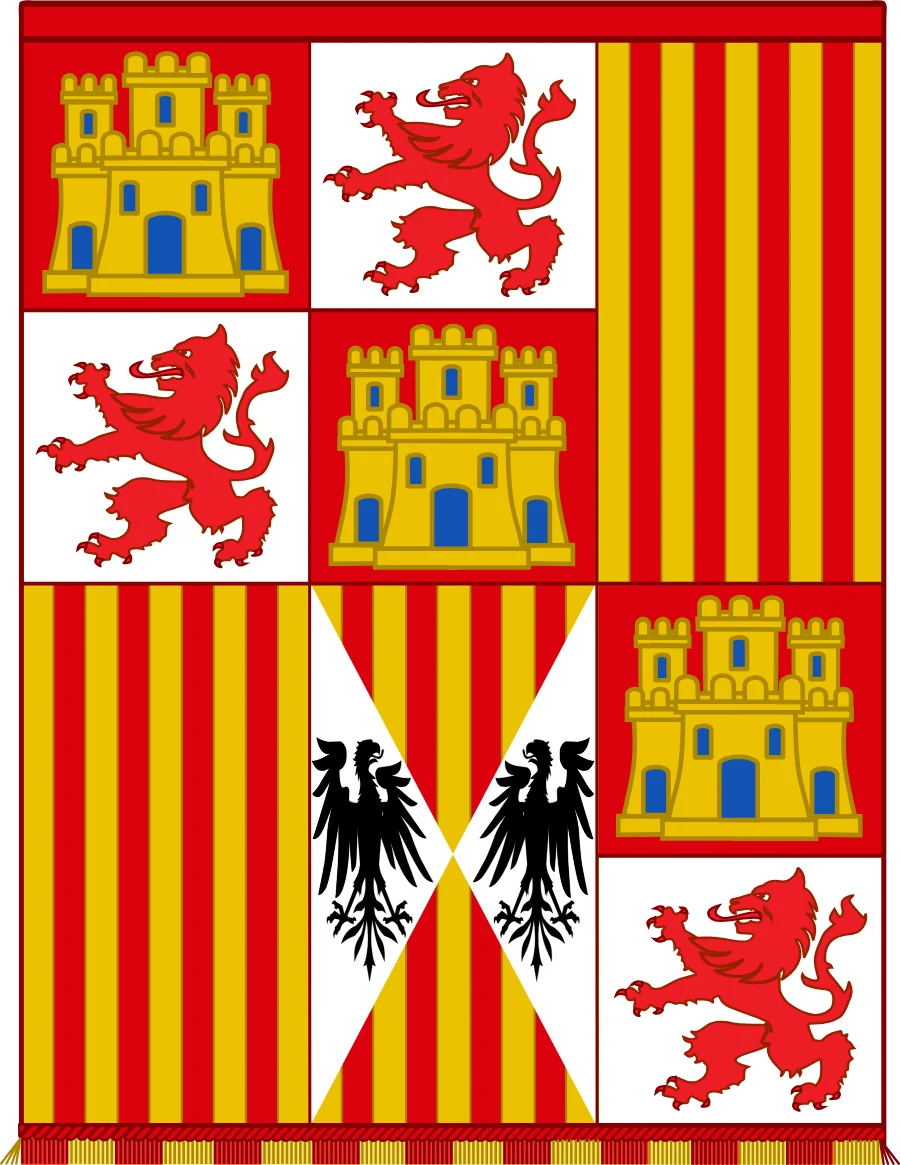
1475
For centuries, flags stood for kings and their lineages rather than for a territory. From 1475, the infantry of the Catholic Monarchs fought under their joint arms, in which Castile and León are quartered with Aragon and Sicily.
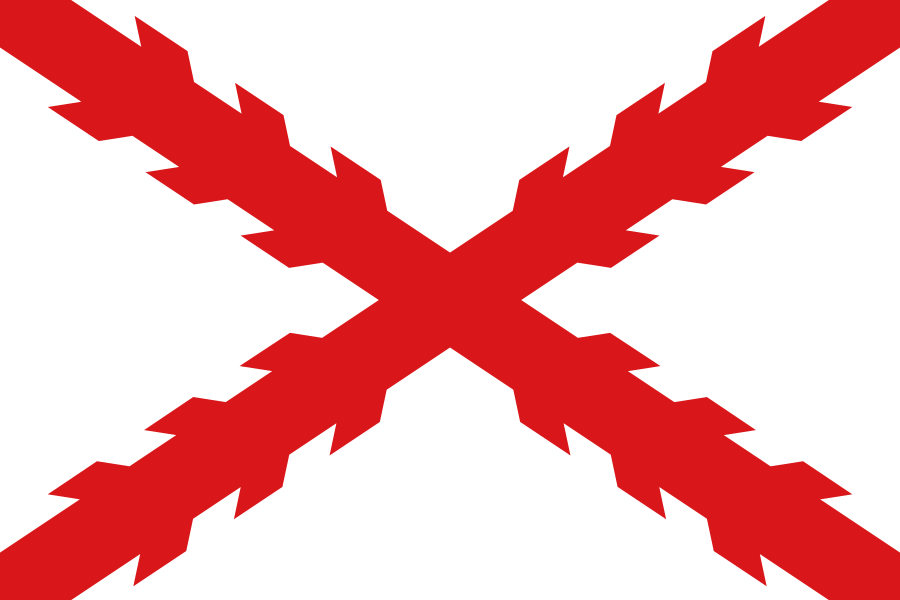
1506
The Cross of Burgundy came with the marriage of Juana I of Castile to the Archduke Felipe el Hermoso. The state flag from 1506 to 1701, it became the defining Spanish symbol in vexillology. The tercios and regiments kept carrying it until 1843.
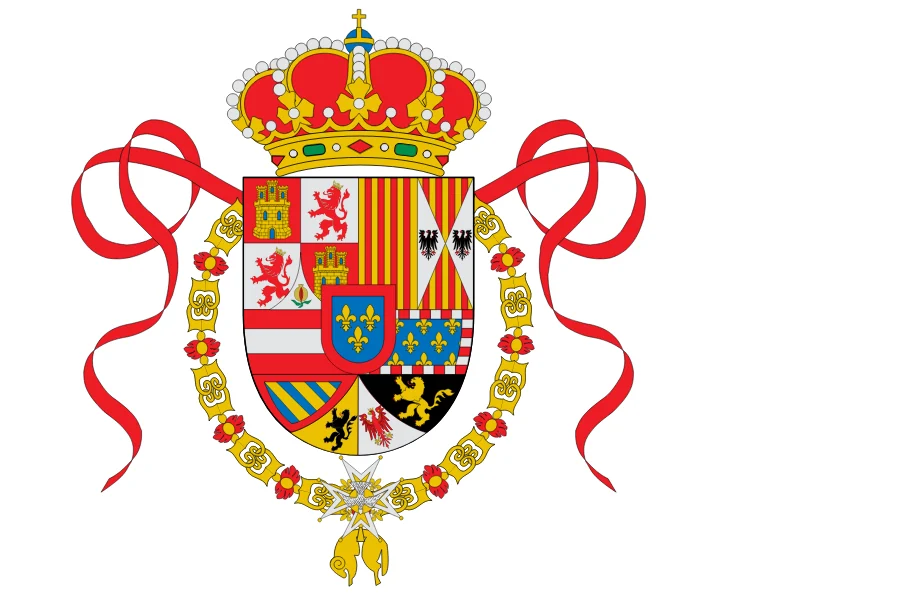
1701
Under Felipe V, the first Bourbon, the royal arms moved onto a white field, the colour of the dynasty. This was the ensign of the navy from 1701 to 1760. But the Bourbon branches of France, Naples, Tuscany, Parma and Sicily also flew white, and at sea their ships were mistaken for Spanish ones.
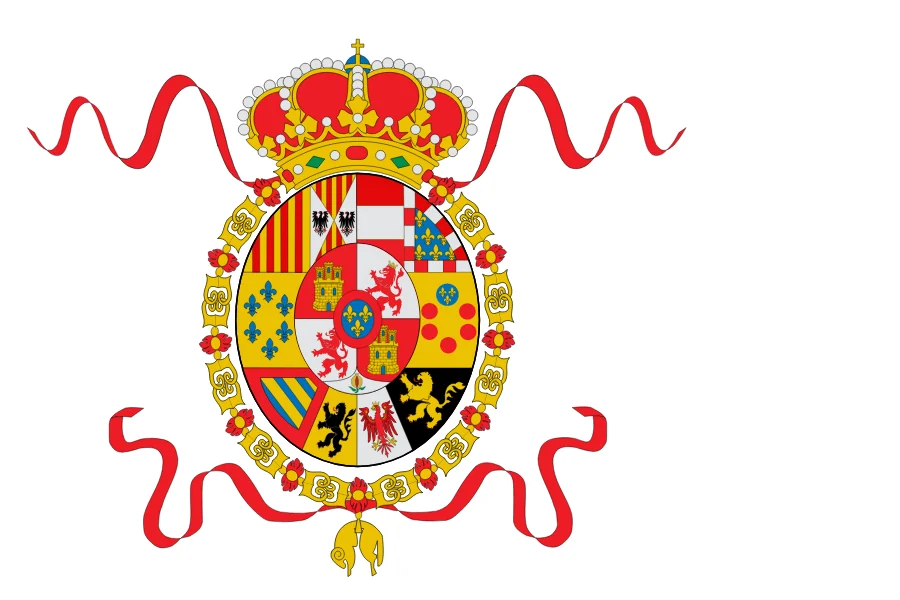
1760
Carlos III reformed the royal arms in 1760, and the navy ensign followed, still on a white field, until 1785.
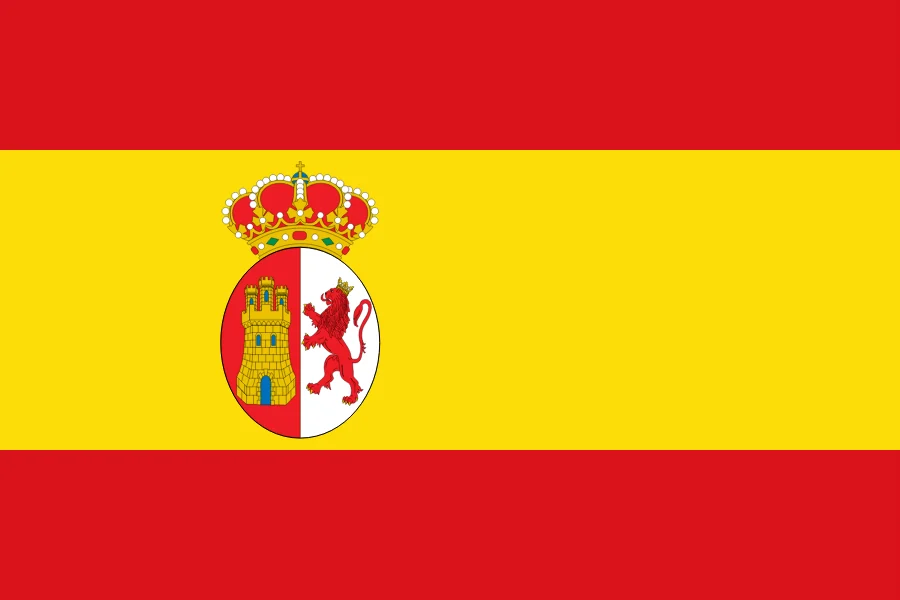
1785
Carlos III asked his navy minister, Antonio Valdés, for a flag that would not be confused with the sails, would stand out against sky and sea, could be seen in bad weather and would not resemble any other nation’s. Valdés submitted twelve versions, and the Royal Decree of 28 May 1785 chose the red and yellow one:
«he resuelto, que en adelante usen mis Buques de guerra de Bandera dividida á lo largo en tres listas, de las que la alta, y la baxa sean encarnadas, y del ancho cada una de la quarta parte del total, y la de en medio amarilla»
“I have resolved that henceforth my warships shall fly a flag divided lengthwise into three stripes, the top and bottom red, each a quarter of the whole, and the middle yellow.” The yellow stripe carried the arms reduced to Castile and León, under the royal crown. It was the state flag from 1785 to 1808.
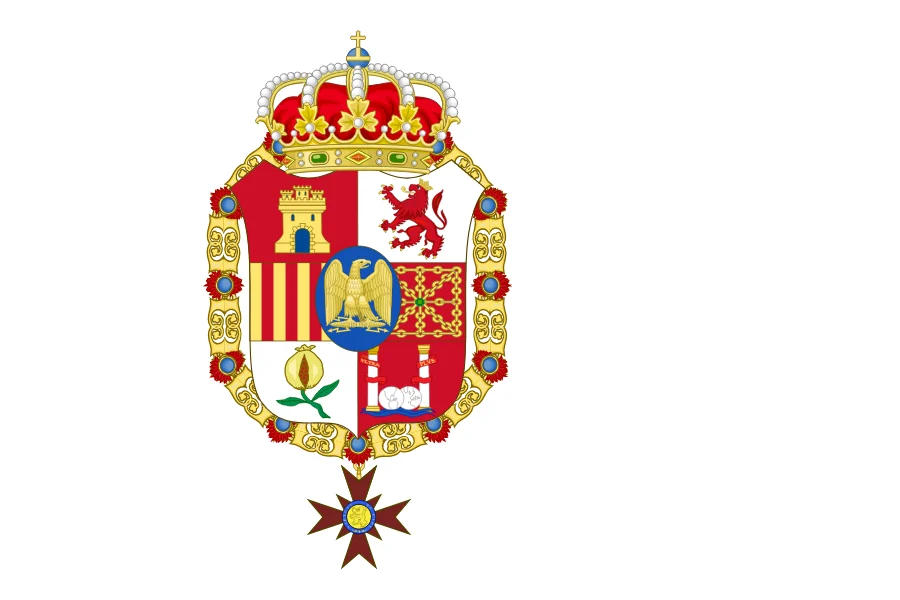
1808
José I went back to a white field, with his own arms: a shield of six quarters — Castile, León, Aragon, Navarre, Granada and the Indies — with the Bonaparte eagle at its centre. Meanwhile, in the Peninsular War, red and yellow became the colours of the people, of the Cortes of Cádiz and of the National Militia.
1813
With the return of Fernando VII, the 1785 flag was again the state flag, from 1813 to 1873. It also spread to army camps, and the decree of 13 October 1843 brought every flag of the army, the navy and the National Militia under its colours.
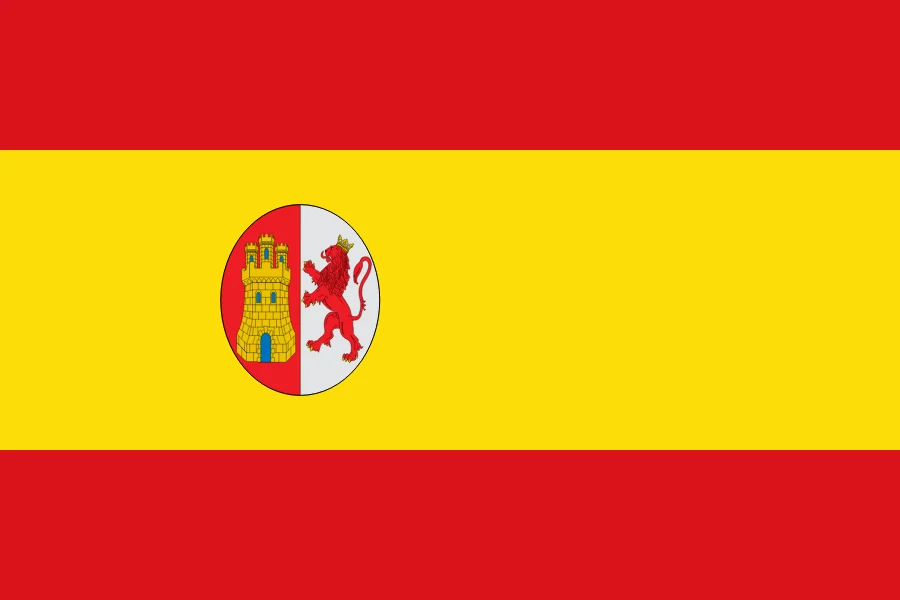
1873
The First Republic (1873-1874) kept the colours of the flag, but removed the symbols of the monarchy from the arms.
1875
With the Bourbon Restoration the 1785 flag came back, and it remained the state flag from 1875 to 1931. From 1908, a royal decree required it to fly on every public building on national holidays.
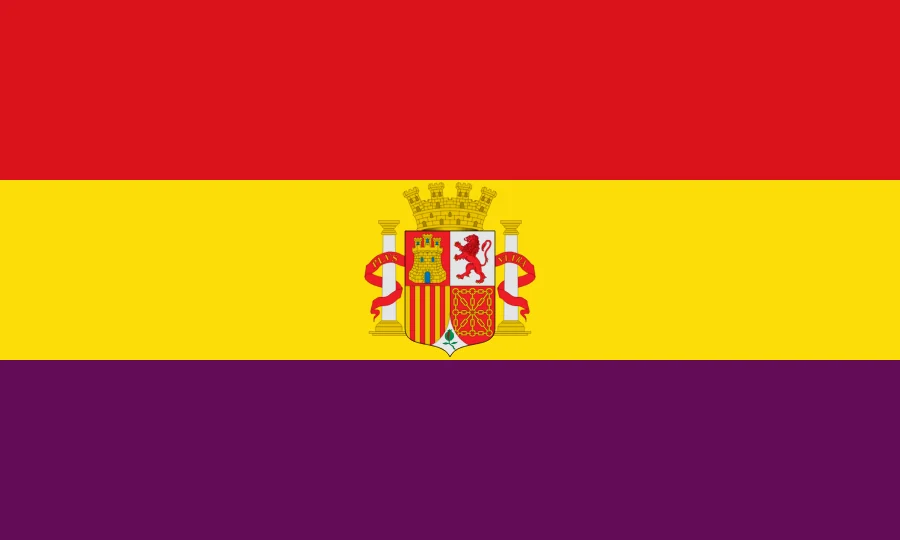
1931
The Second Republic adopted a flag of three equal stripes — red, yellow and purple — with the arms from the five-peseta coins of 1869-1870 in the centre. The Republican government flew it throughout the Civil War, and the rebel side until 29 August 1936.
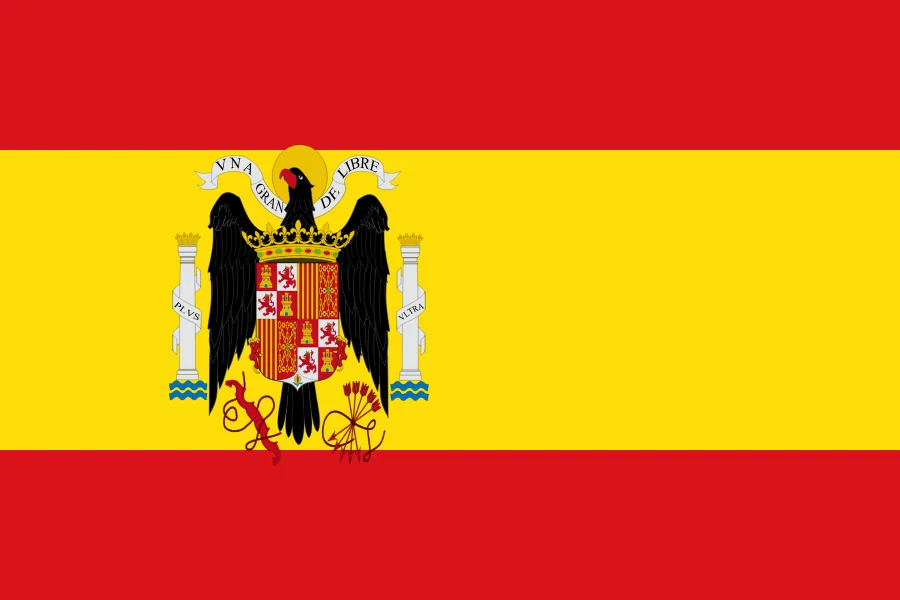
1938
The decree of 2 February 1938 gave the red and yellow flag of the rebel side new arms with the eagle of Saint John. After the war, it was the flag of Spain from 1 April 1939 to 11 October 1945.
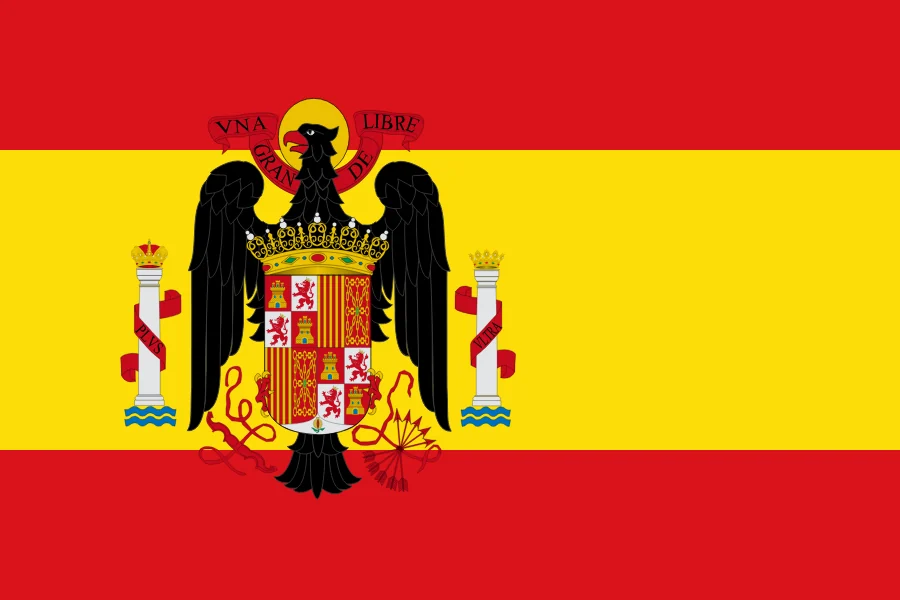
1945
The Regulation of Flags, Ensigns and Badges of 11 October 1945 set a new design for the arms, which the flag carried until 1977.
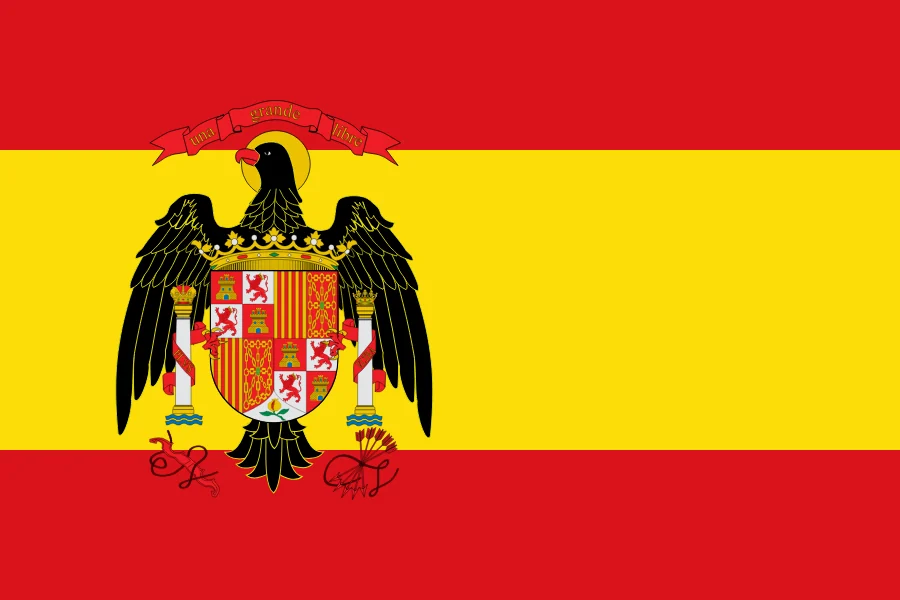
1977
On 21 January 1977, in the middle of the Transition, a new model of the arms was approved, still with the eagle. The flag carried it until 5 October 1981.
1981
The 1978 Constitution defines it in Article 4.1: “three horizontal stripes, red, yellow and red, the yellow twice as wide as each red one”. Law 39/1981 regulates its use, and the arms are those of Law 33/1981 of 5 October.
For centuries the arms of Spain were those of its kings, changing with each dynasty and each inheritance. The first truly national arms date from 1868, and they are the basis of today’s. These are their stages, from the Catholic Monarchs to the 1981 law.
Click the thumbnails to browse the arms.
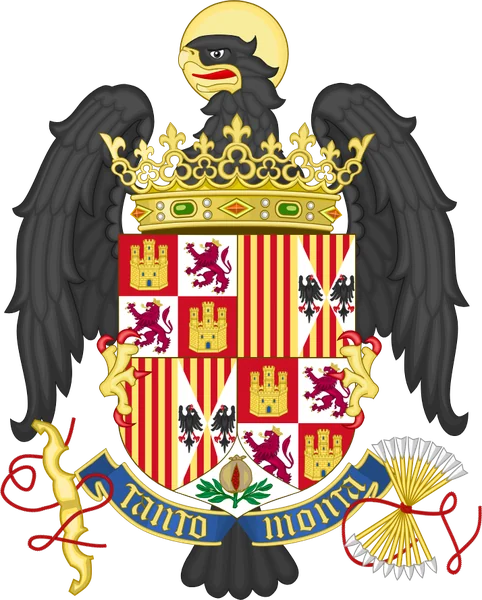
1492
Fernando II of Aragon and Isabel I of Castile chose joint arms in 1475, held by the eagle of Saint John: Castile and León quartered with Aragon and Sicily. After the conquest of Granada in 1492, the pomegranate was added. Beside them stood Fernando’s yoke, with the motto Tanto monta, and Isabel’s bundle of arrows.
1530
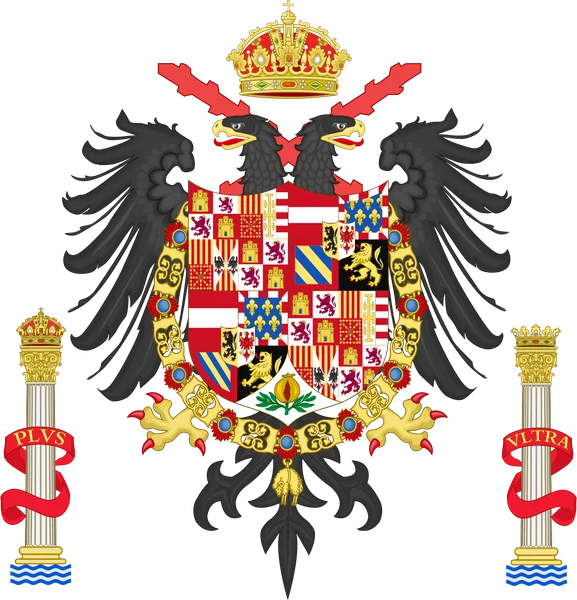
Their grandson Carlos I added the arms of his inheritance: Austria, Burgundy, Brabant, Flanders and Tyrol. He brought in the Pillars of Hercules with the motto Plus Ultra and the collar of the Golden Fleece; crowned emperor, he set the imperial crown on the shield and placed it on the double-headed eagle of the Holy Roman Empire.
1556
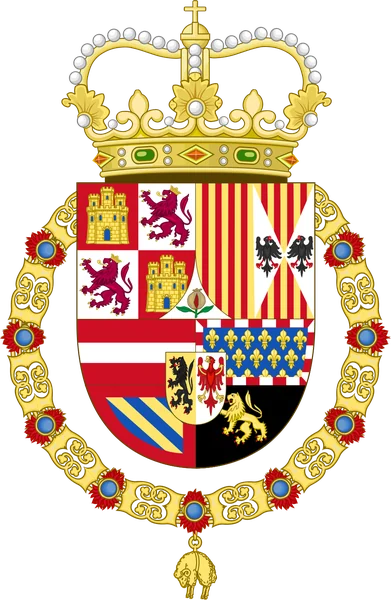
The successors of Carlos I dropped the imperial ornaments: the open royal crown replaced the imperial one, and the Golden Fleece remained. These were the arms of Felipe II until 1580.
1580
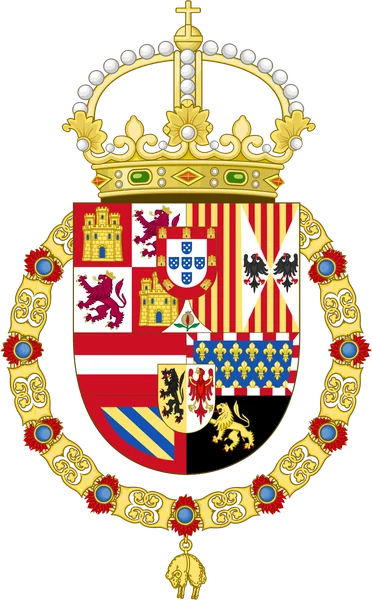
In 1580 Felipe II was proclaimed king of Portugal and added its arms to the shield, which kept them until Portuguese independence was recognised in 1668.
1668
Once Portugal’s independence was recognised in 1668, under Carlos II, its arms disappeared and the shield returned to the pre-1580 model, until the end of the Habsburgs in 1700.
1700
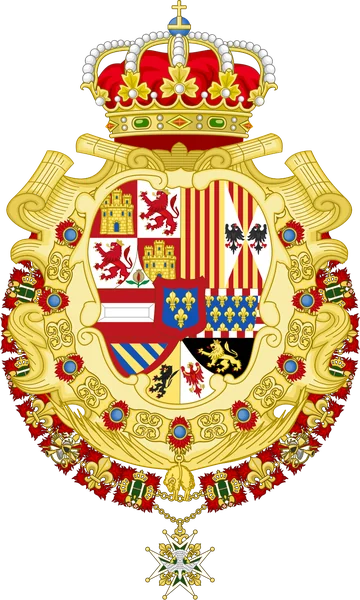
The first Bourbon kept the Habsburg quarters but rearranged the shield and set in the centre the fleurs-de-lis of his house with a red bordure, that of the dukes of Anjou, which set him apart from the Bourbons of France. To the Golden Fleece he added the collar of the Holy Spirit.
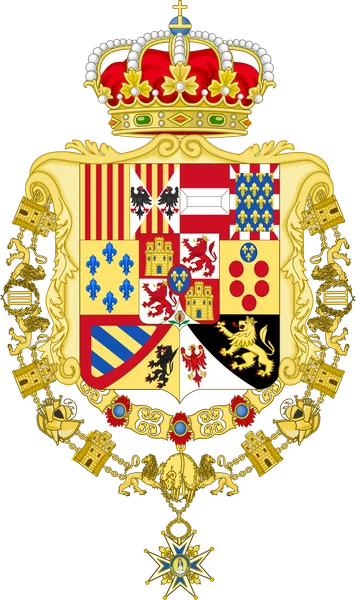
1760
In 1760 Carlos III added the arms of Parma and Tuscany, for his Italian inheritance, and replaced the collar of the Holy Spirit with that of the order he founded himself, the Order of Carlos III.
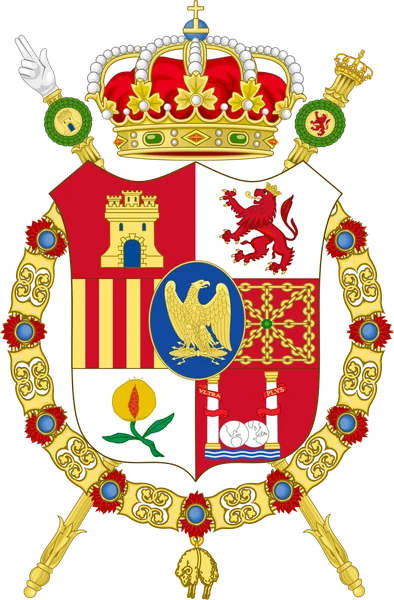
1808
José I divided the shield into six quarters: Castile, León, Aragon, Navarre, Granada and the Indies, shown as two globes between the Pillars of Hercules. Over all, a blue inescutcheon with the golden eagle of the Bonapartes.
1813
With the Bourbons restored in 1813, Fernando VII took back the full arms of Carlos III, which his daughter Isabel II kept until 1868. A simplified version, with Castile, León and Granada and the dynastic inescutcheon, was often used.
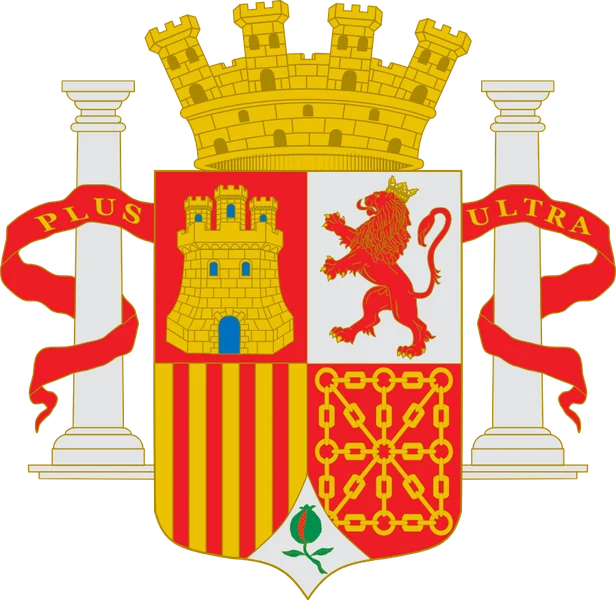
1868
After the revolution of 1868, the Provisional Government asked the Royal Academy of History for arms of a national character, the first that were not the monarch’s. The quarters foreign to Spain — Naples-Sicily, Austria, Burgundy, Brabant, Flanders, Tyrol, Parma and Tuscany — and the Bourbon inescutcheon were removed, Navarre was restored, and a mural crown replaced the royal one. The Pillars of Hercules flank the shield. This is the model of today’s arms.
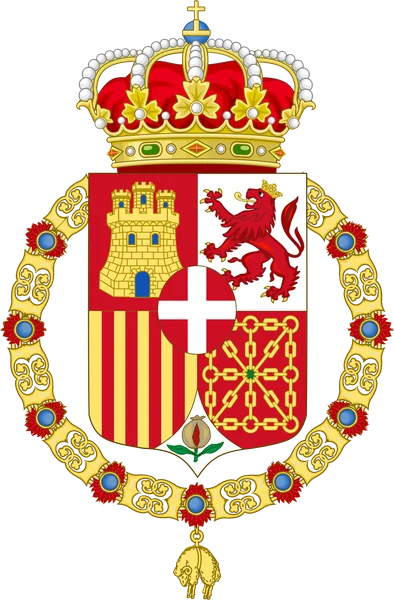
1871
With Amadeo de Saboya, king from 1871 to 1873, the royal crown returned, and the silver cross on red of the House of Savoy took the centre of the shield.
1873
The First Republic (1873-1874) went back to the arms of the Provisional Government, with the mural crown.
1874
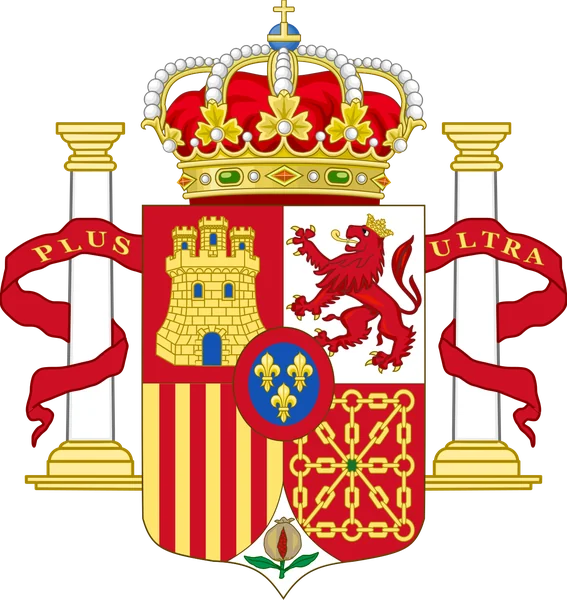
With the dynasty restored in 1874, its inescutcheon returned to the centre of the 1868 quarters. Alongside it lived the great royal arms and many variants, with pillars, Golden Fleece, mantle or laurel. In 1923, a report of the Royal Academy of History held these to be the true arms of the nation.
1931
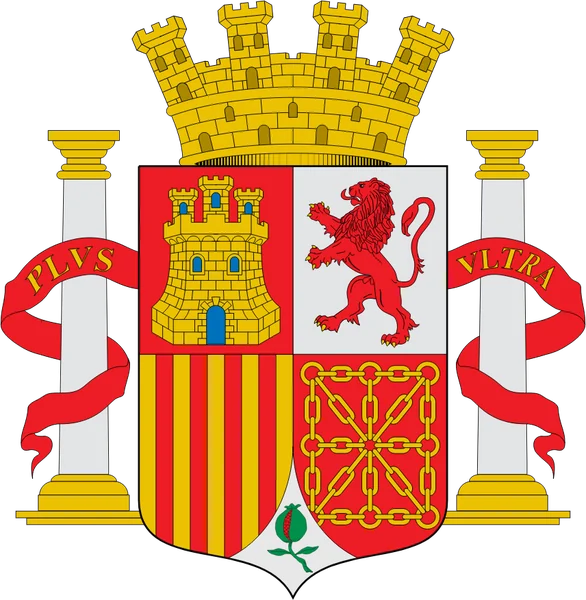
The Second Republic adopted as national arms those on the five-peseta coins minted by the Provisional Government, without setting a blazon; depending on the design, the mural crown appears or not.
1938
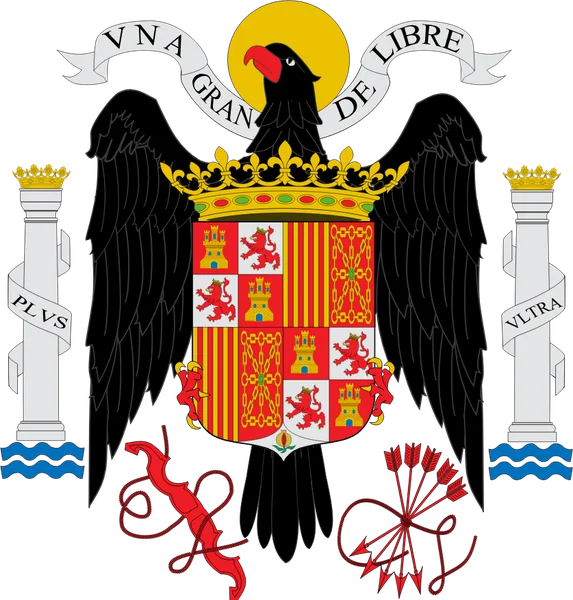
Decree no. 470 of 2 February 1938 went back to the model of the Catholic Monarchs with the eagle of Saint John. Navarre replaced Sicily, the pillars returned with Plus Ultra, and Tanto monta gave way to Una, Grande, Libre.
1945
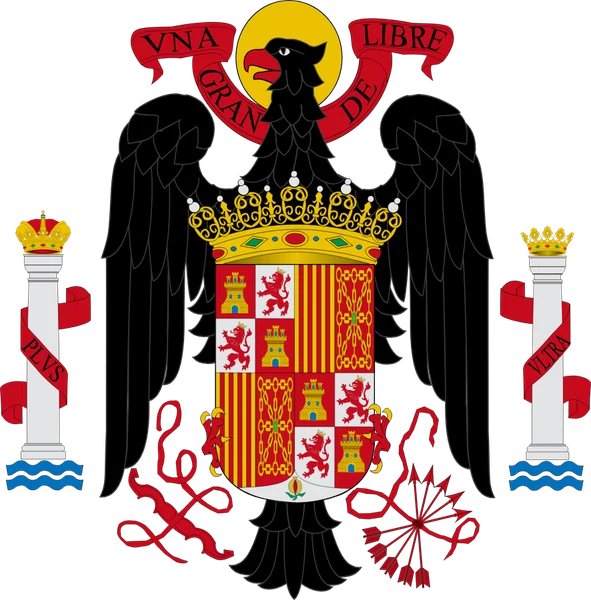
A new official model, approved on 11 October 1945, remained in use for the rest of the dictatorship.
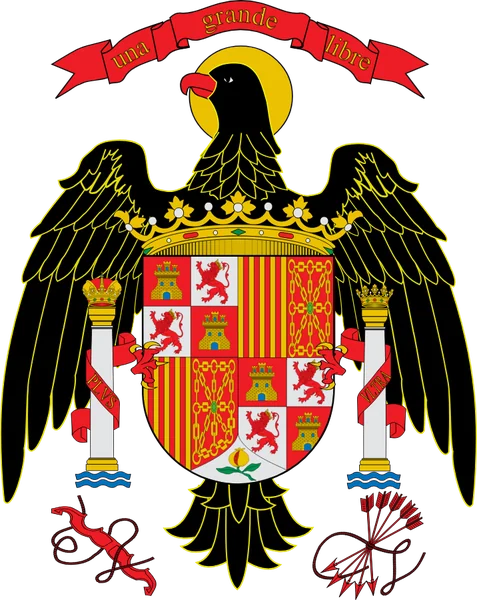
1977
Approved on 21 January 1977, in the middle of the Transition, these were the last arms with the eagle of Saint John.
1981
Law 33/1981 of 5 October set today’s arms: the quarters of 1868, with the Bourbon-Anjou inescutcheon and the royal crown. They are described in detail below.
Coat of arms of Spain — the model of Law 33/1981 of 5 October.
Quarterly: first, Gules, a castle Or, embattled with three merlons, masoned Sable and windowed Azure (Castile); second, Argent, a lion rampant Purpure, crowned Or, langued and armed Gules (León); third, Or, four pallets Gules (Aragon); fourth, Gules, a chain Or in cross, saltire and orle, charged in the centre with an emerald proper (Navarre); enté en point, Argent, a pomegranate proper seeded Gules, stalked and leaved of two leaves Vert (Granada). An inescutcheon Azure, three fleurs-de-lis Or, a bordure Gules (Bourbon-Anjou). The shield ensigned with the Royal Crown of Spain, between two pillars Argent with bases and capitals Or, on waves Azure and Argent, the dexter surmounted by an imperial crown and the sinister by a royal crown, entwined with a ribbon Gules bearing in letters Or the motto Plus Ultra.
The design rests on the arms proposed by the Royal Academy of History to the Provisional Government in 1868, to which the dynastic inescutcheon and the royal crown were added. The official text, in Spanish, is that of Law 33/1981.
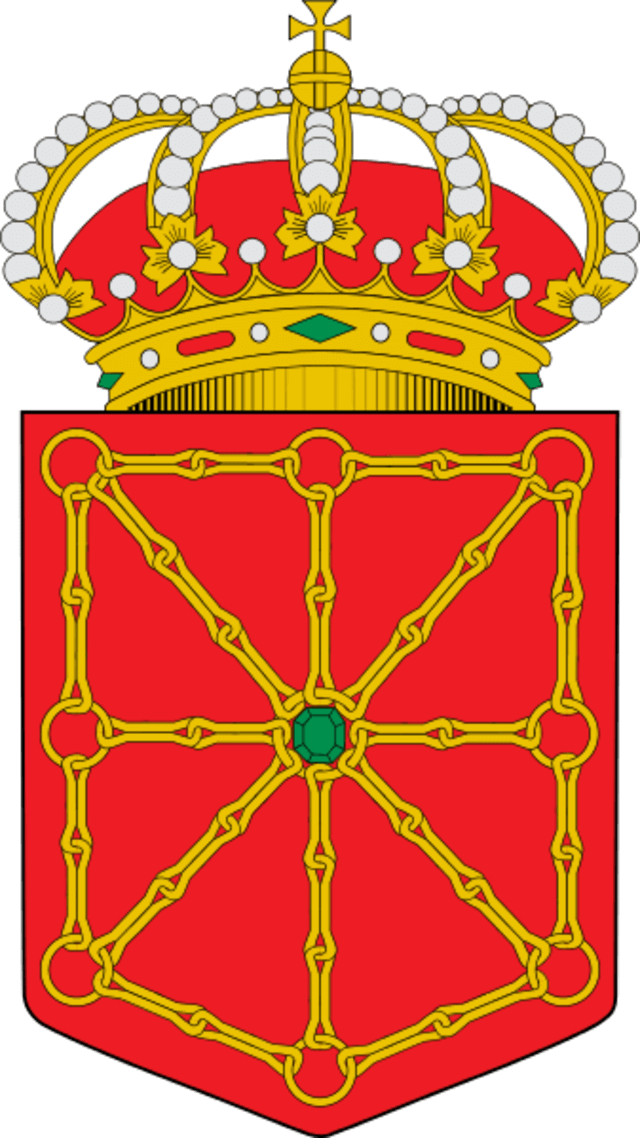
Each quarter is a kingdom. Castile and León, united by Fernando III in 1230, take the first two. The four red pallets on gold are the royal sign of the Crown of Aragon. The chains of Navarre, by tradition, recall those Sancho VII el Fuerte broke at Las Navas de Tolosa in 1212. In base, the pomegranate of the kingdom conquered by the Catholic Monarchs in 1492.
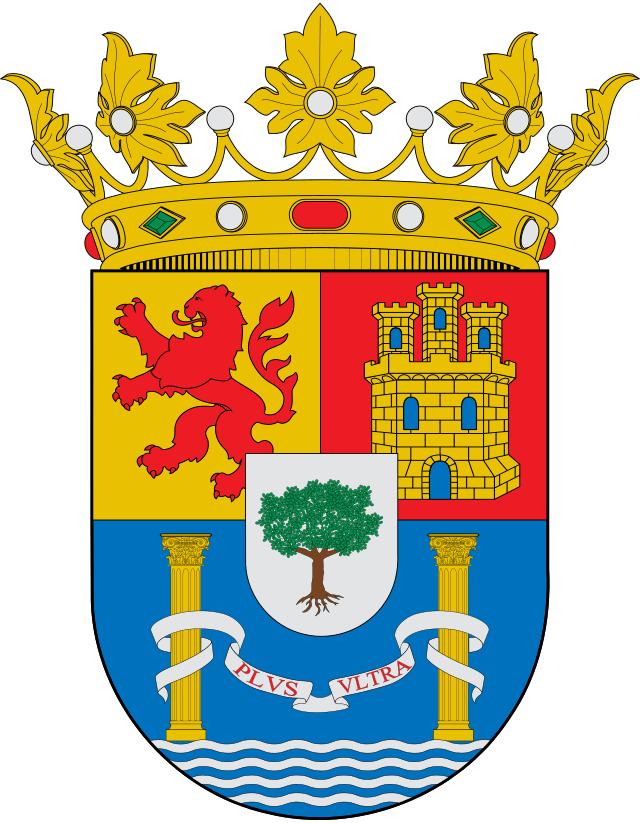
In the centre, three golden fleurs-de-lis on blue with a red bordure are the arms of the Bourbons of Spain, the branch of the dukes of Anjou, who came to the throne with Felipe V. On either side, the Pillars of Hercules with the motto Plus Ultra, “further beyond”, recall Carlos I: it was his personal device from 1516, first in French, Plus oultre, and he brought the pillars into his arms.
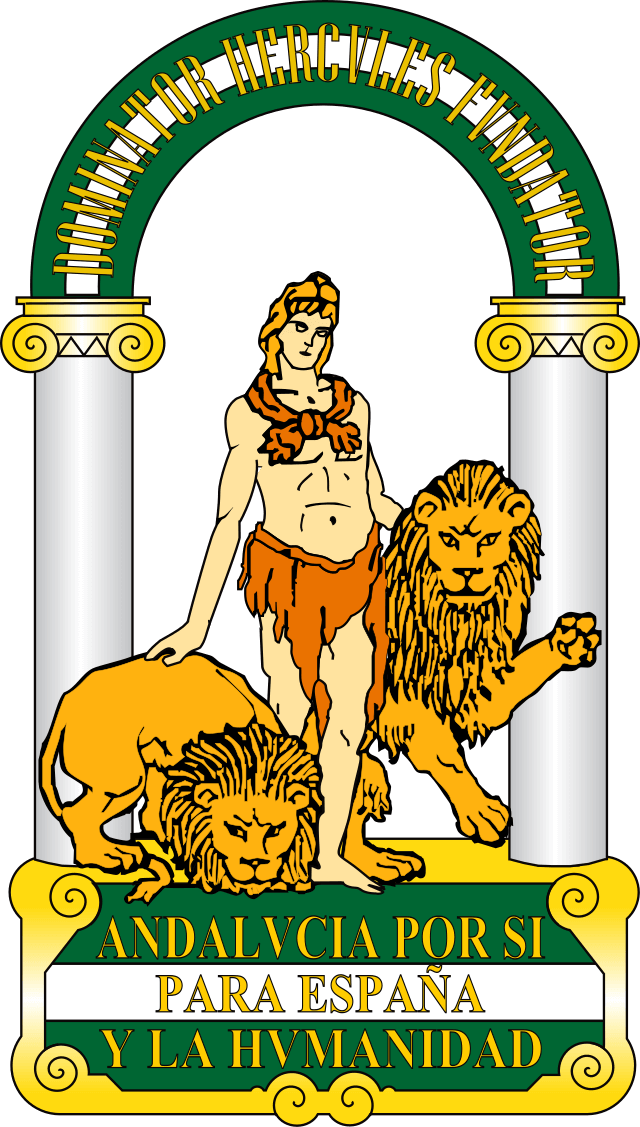
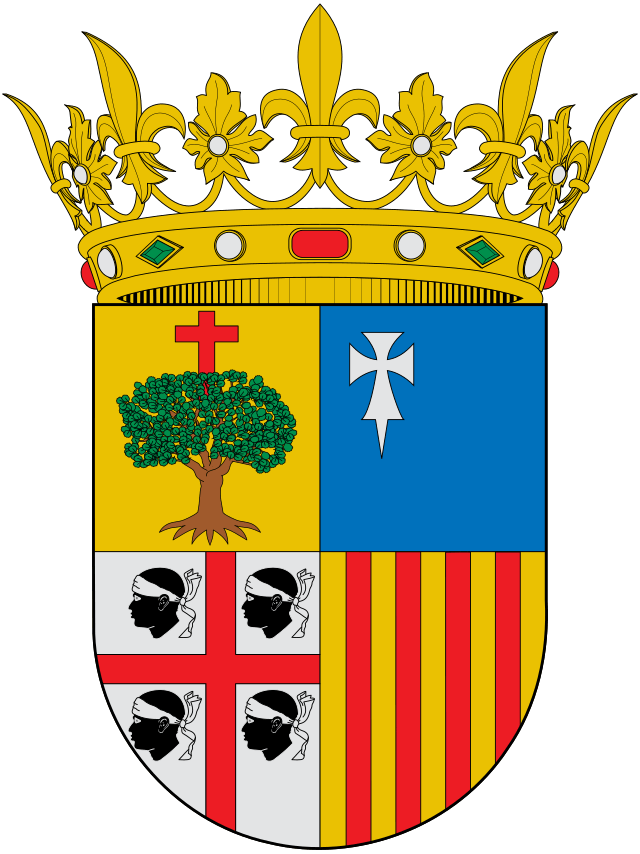
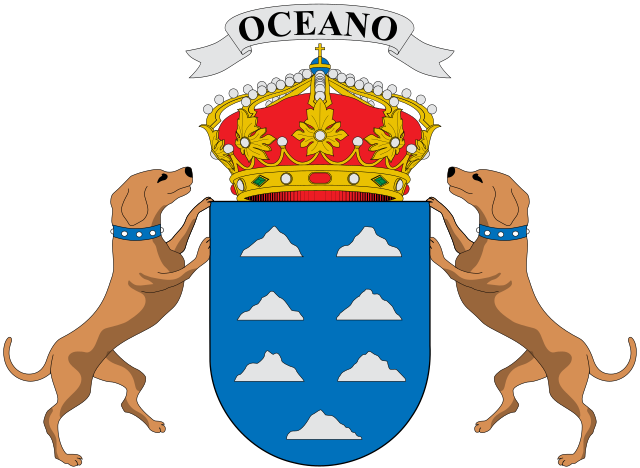
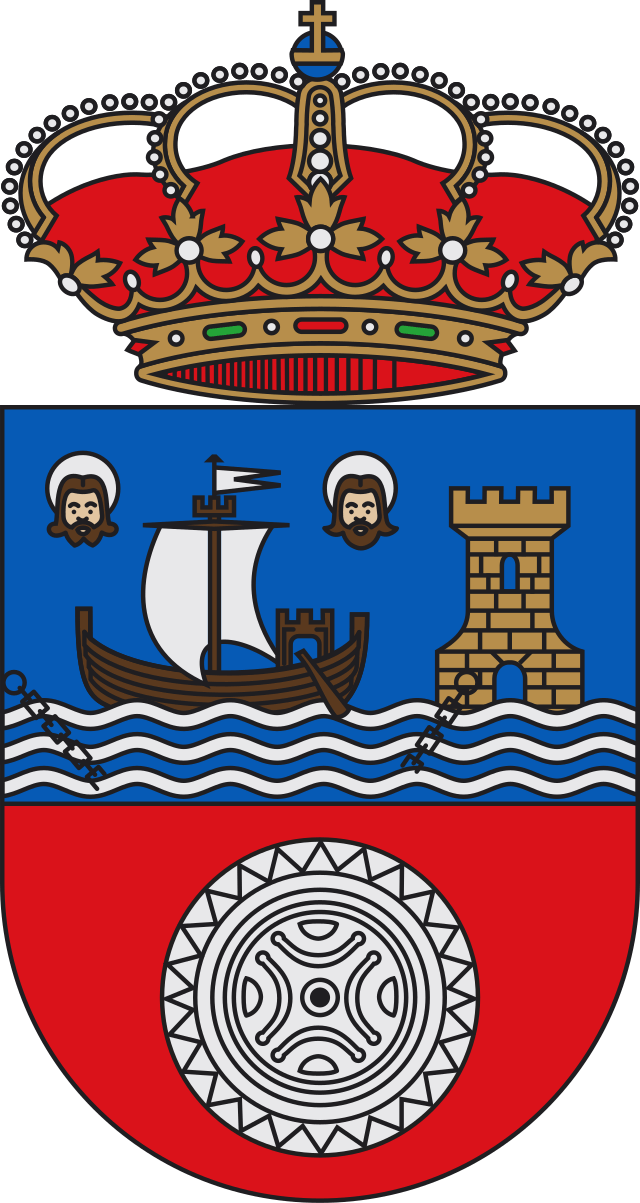
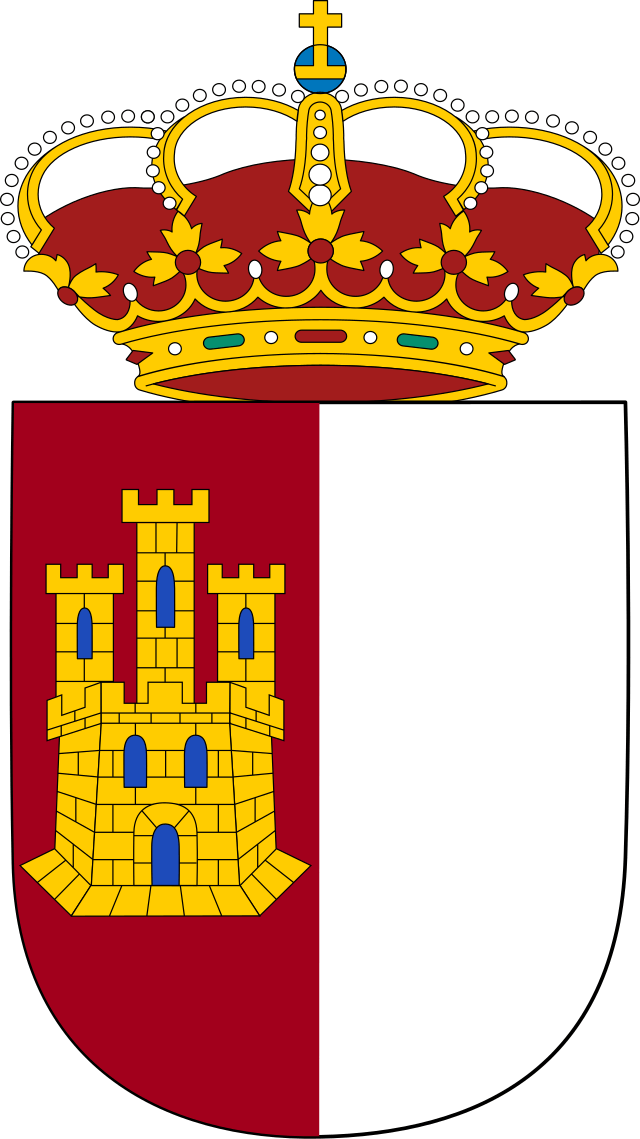
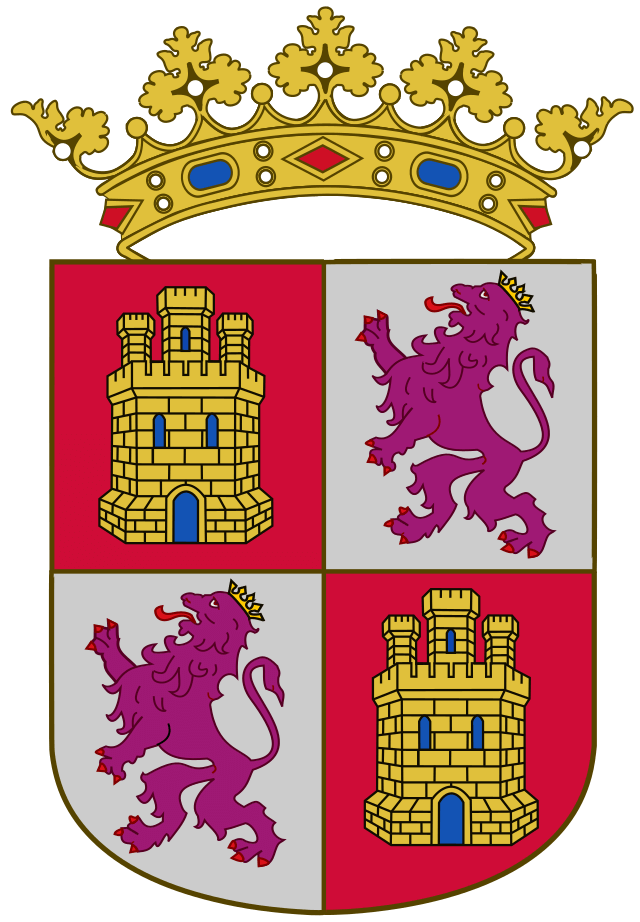
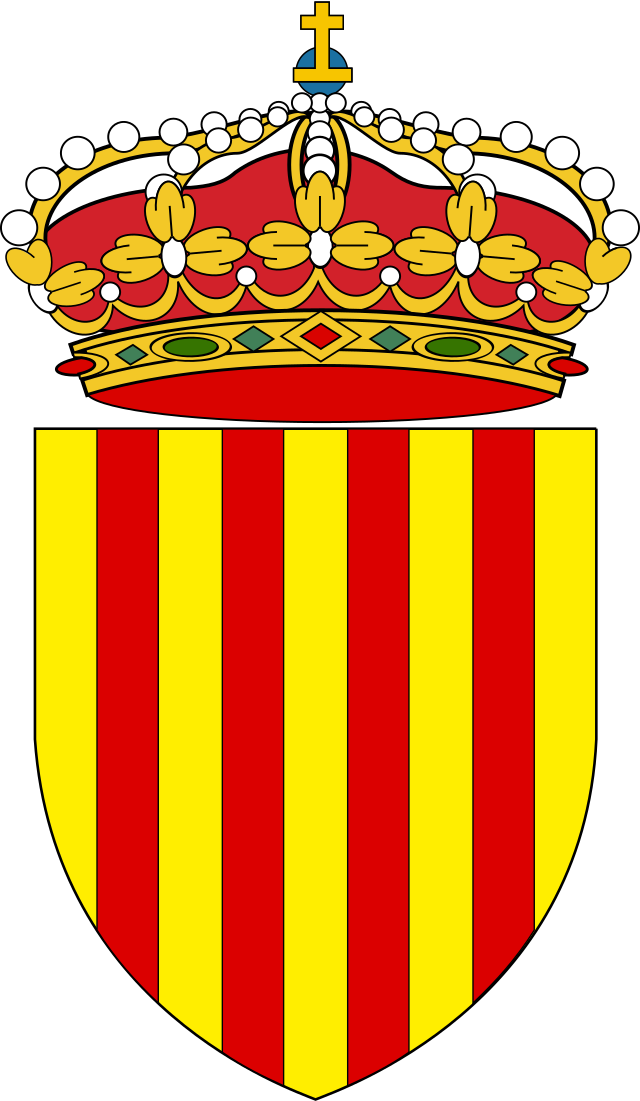
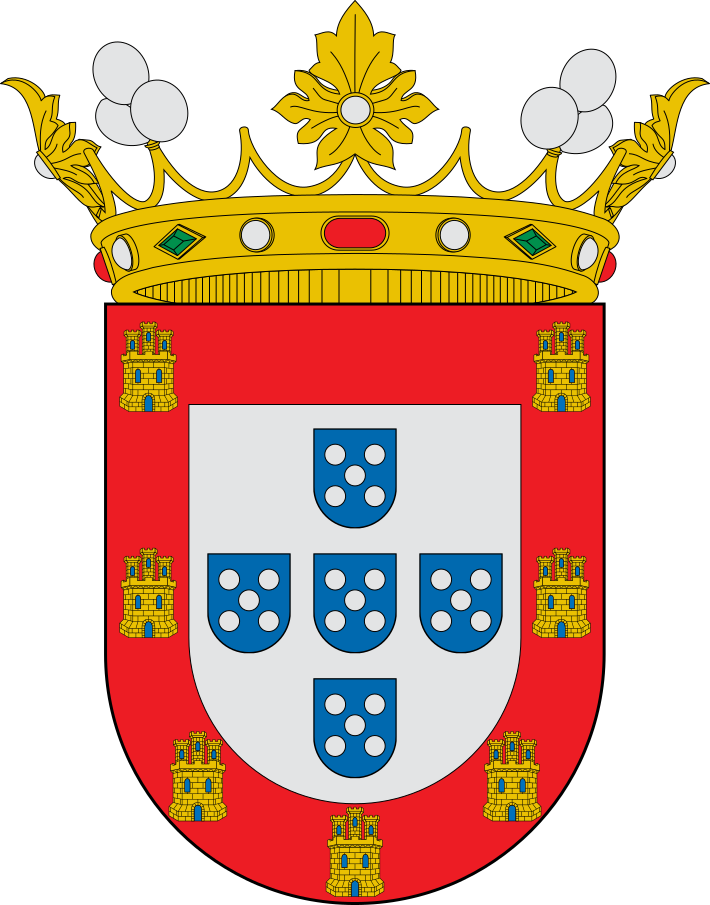
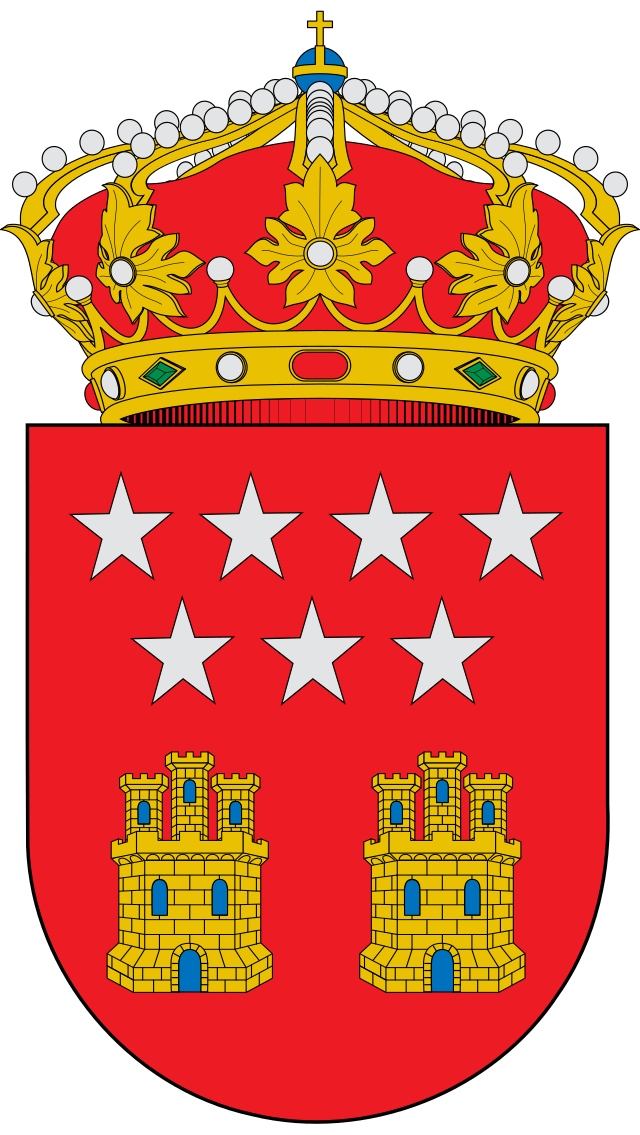
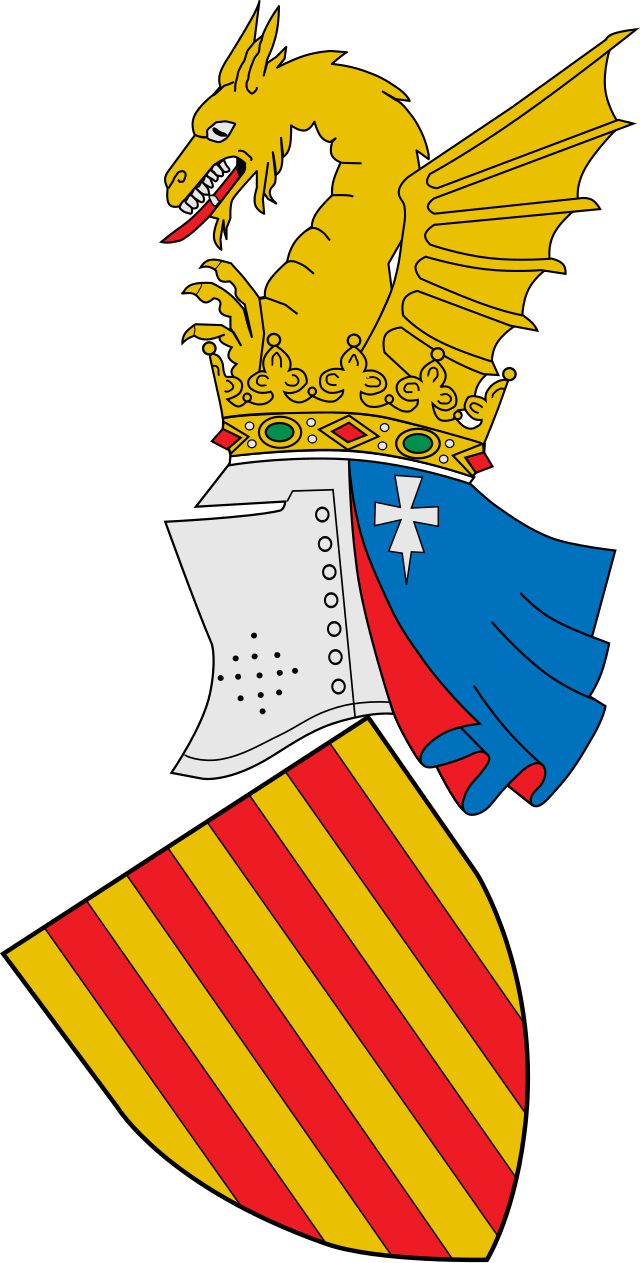
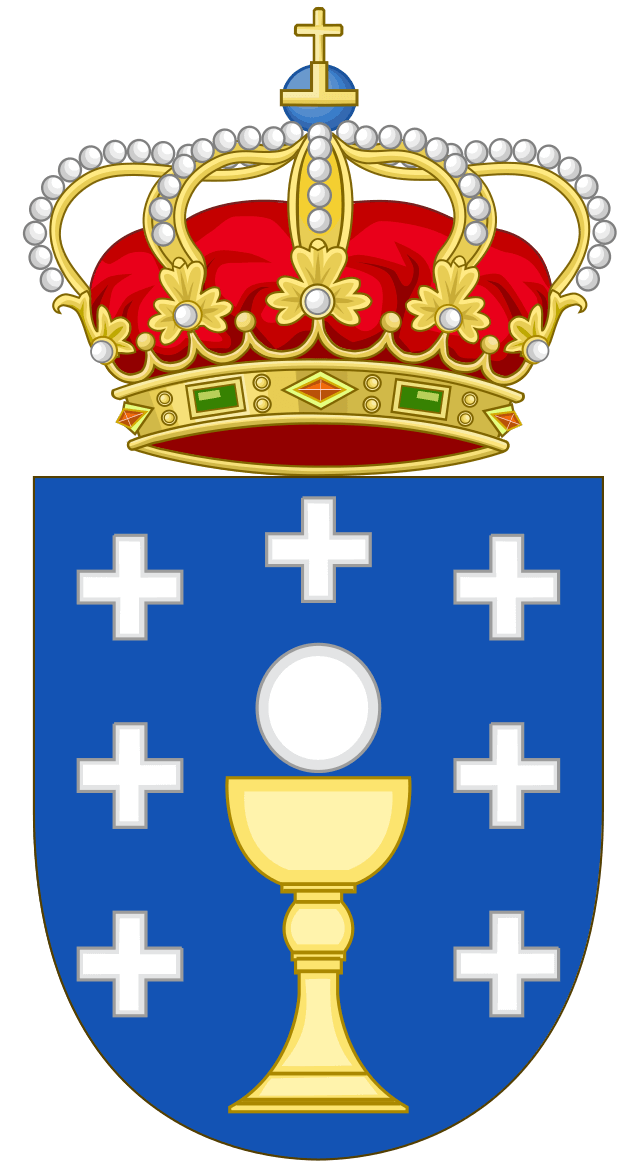
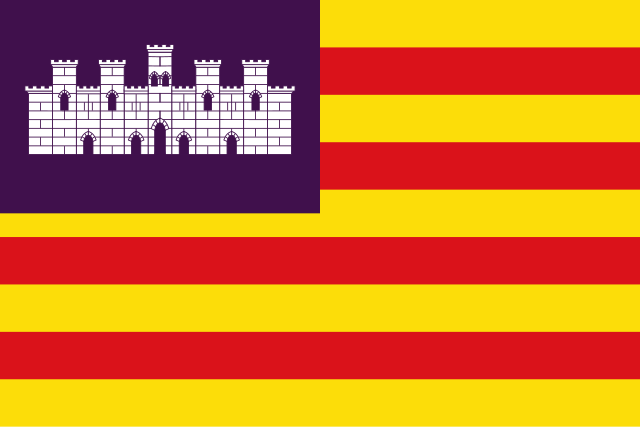
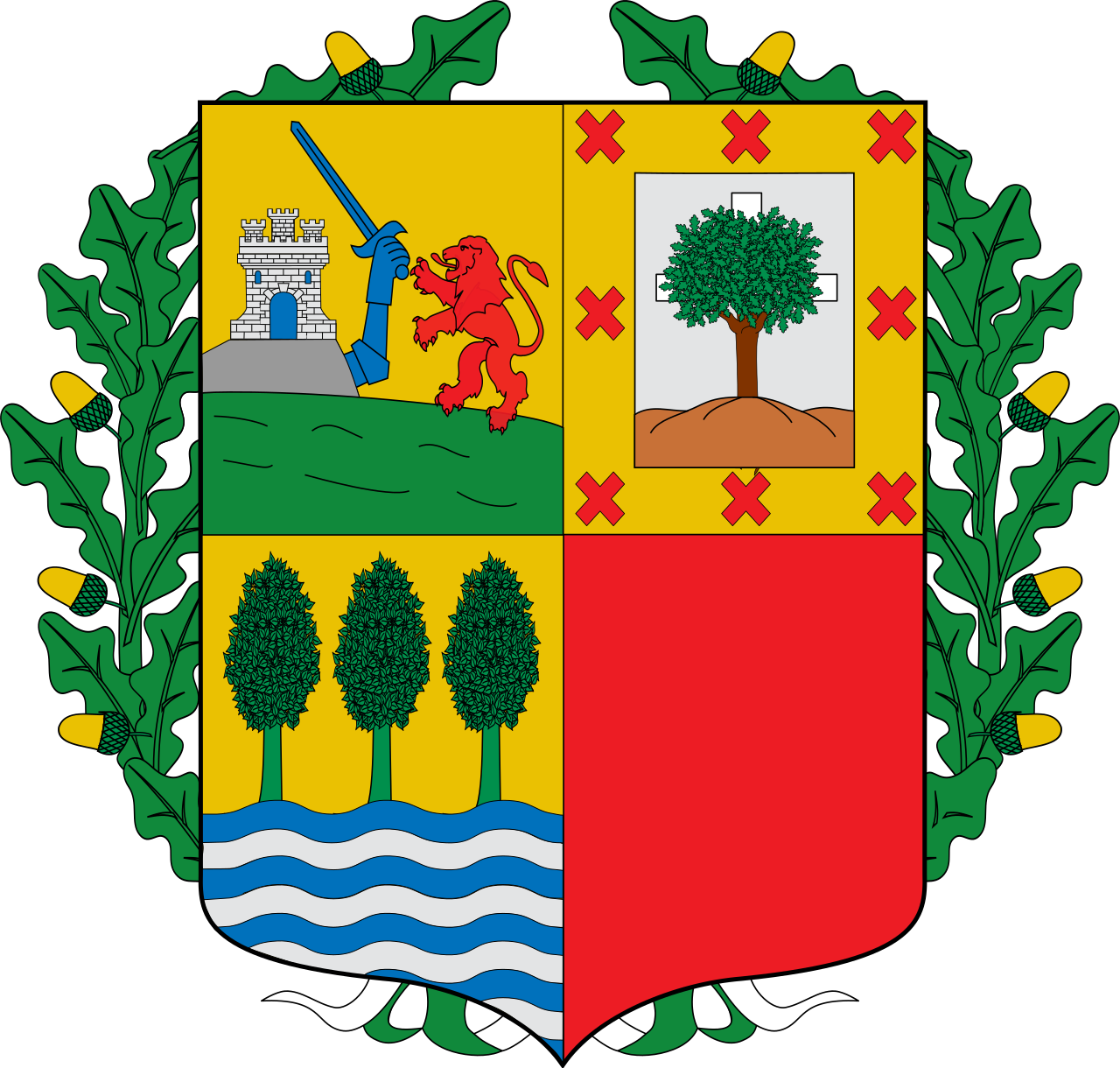
The autonomous communities and the cities of Ceuta and Melilla adopted their arms and flags with their Statutes of Autonomy, often drawing on medieval precedents: the four pallets of Aragon in Catalonia, Aragon, Valencia and the Balearic Islands; the chain of Navarre; the castle and lion of Castile and León. The arms of the Basque Country bring together Álava, Bizkaia and Gipuzkoa, and keep a fourth quarter of plain red: the chains of Navarre were removed after a ruling of the Constitutional Court in 1986.
These are the 17 communities and 2 autonomous cities, each with its own page.
Because Carlos III wanted a flag that could be told apart at sea. The royal arms on a white field were easily mistaken for those of the other Bourbon monarchies, so his minister Antonio Valdés looked for colours visible at a distance and in bad weather. The Royal Decree of 28 May 1785 chose red and yellow. Some authors also see in it the colours of Aragon with the arms of Castile.
Since 1785 in the navy, and since the decree of 13 October 1843 in all the armed forces. Only José Bonaparte’s white flag (1808-1813) and the tricolour of the Second Republic (1931-1939) replaced it.
It had three equal horizontal stripes, red, yellow and purple, with the arms in the centre, taken from the five-peseta coins of 1869-1870. It was the flag of Spain from 1931 to 1939.
The kingdoms that formed Spain: Castile (a gold castle on red), León (a purple lion on silver), Aragon (four red pallets on gold), Navarre (gold chains on red) and, in base, Granada. In the centre, the fleurs-de-lis of the Bourbons of Spain.
It means “further beyond”. It was the personal device of Carlos I from 1516, first in French, Plus oultre, and it has stood with the Pillars of Hercules on the arms of Spain ever since.
The decree of 2 February 1938 went back to the model of the Catholic Monarchs with the eagle of Saint John, put Navarre in place of Sicily and replaced Tanto monta with Una, Grande, Libre. There were models in 1938 and 1945, and another in 1977, during the Transition, until the 1981 law.
Law 33/1981 of 5 October, on the Coat of Arms of Spain. The flag is defined in Article 4.1 of the 1978 Constitution, and its use is regulated by Law 39/1981.
Illustrations: Wikimedia Commons. Flags © Heralder, Durero, Ignaciogavira and HansenBCN, B1mbo, SanchoPanzaXXI, Miguillen (CC BY-SA); Cross of Burgundy, public domain. Arms © Heralder, SanchoPanzaXXI and other Wikimedia Commons authors (CC BY-SA).
Last reviewed by the Emblema Mundi editorial team on 3 October 2026.