Country
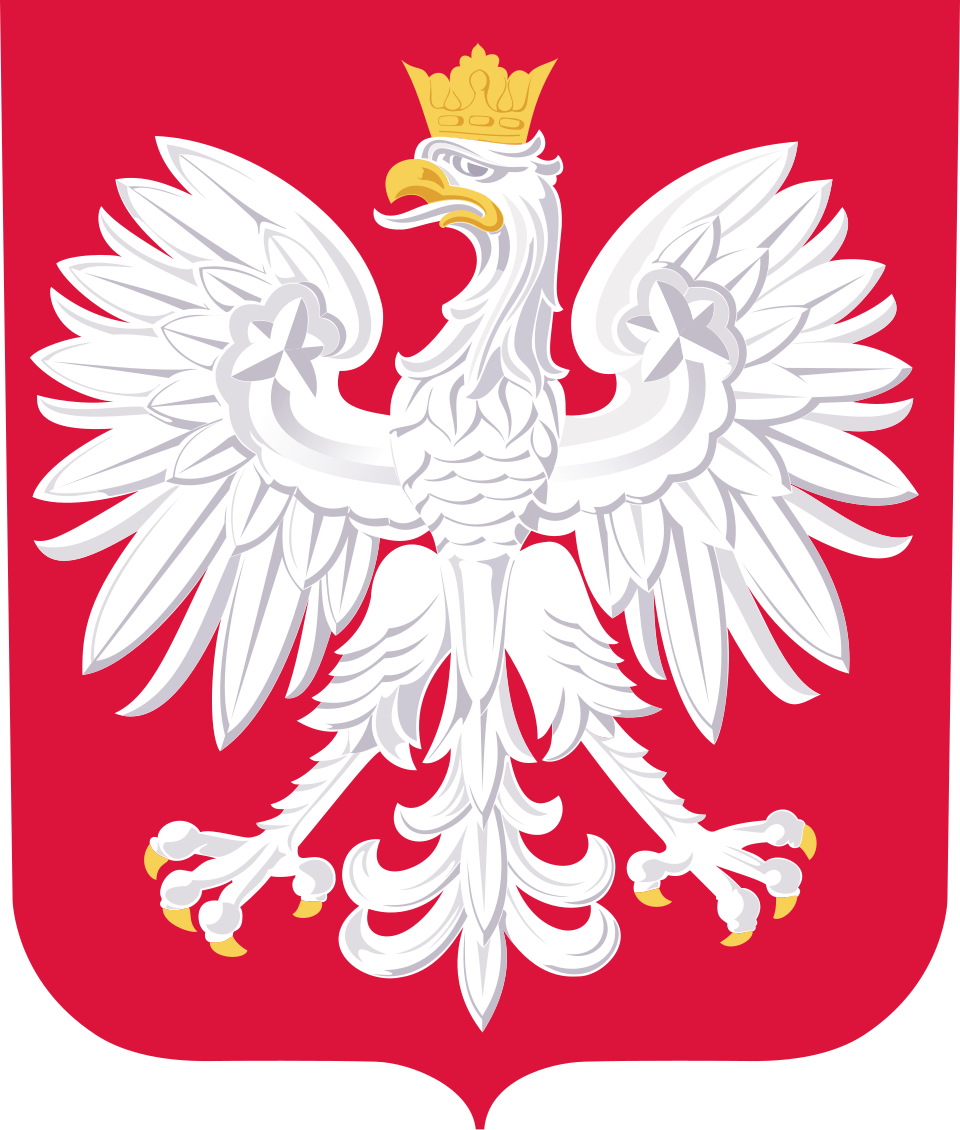
The White Eagle — Orzeł Biały — is one of the oldest and most revered state symbols in Europe. A crowned white eagle with golden beak and talons on a red shield, it traces its origins to the Piast dynasty and first appeared on coins of Bolesław I Chrobry around the year 1000. By 1295, King Przemysł II had elevated the eagle from a personal emblem to the coat of arms of the Polish kingdom. The national flag — white over red, the biało-czerwona — derives directly from the eagle’s tinctures: Argent on Gules. Both symbols survived the partitions, two world wars, and the removal of the eagle’s crown under communism — restored on 31 December 1989. Below, 16 voivodeships carry their own coats of arms, many rooted in the ducal heraldry of mediaeval Poland.

Flag
Not available
Coat of Arms
Not available
| Official name | Rzeczpospolita Polska |
|---|---|
| Coat of arms | Orzeł Biały — White Eagle crowned on red shield |
| Blazon | Gules, an eagle Argent crowned, beaked and armed Or |
| Arms adopted | c. 1295 (Przemysł II); current version 1990 |
| National flag | Horizontal bicolour — white over red |
| Flag adopted | 1 August 1919; Constitution Article 28 (1997) |
| Capital | Warszawa |
| Voivodeships | 16 (17 NUTS 2 regions) |
Coat of Arms of Poland — Gules, an eagle Argent crowned, beaked and armed Or
English has one word, coat of arms, where Polish has two — and Polish heraldists insist on the difference.
The godło is the eagle alone: the heraldically stylised figure, the crowned White Eagle. The herb is that figure placed on a shield — the eagle together with its red field.
Polish law calls the national symbol the godło Rzeczypospolitej Polskiej, but the text that follows describes the whole herb: “the image of a white eagle with a golden crown… set in the red field of a shield”. Heraldists point to this as a drafting error in the statute: once there is a shield, you are describing a herb, not a godło.
The distinction is not academic. Some states really do use a godło with no shield — the emblem of the USSR was one. Others, such as Russia, use a herb. Poland uses a herb and calls it a godło.
The Orzeł Biały (White Eagle) is the heraldic heart of Polish identity. Its blazon is elegantly simple:
Gules, an eagle Argent crowned, beaked and armed Or.
A white eagle, facing dexter, with a golden crown, golden beak, and golden talons, on a red shield. Few coats of arms in Europe carry as much historical weight in as few charges.
The eagle motif first appears on a coin of Bolesław I Chrobry (the Brave), Poland’s first crowned king, minted around the year 1000. Through the fragmented Piast period, various ducal lines used eagle charges on their seals and banners. The decisive moment came with King Przemysł II in 1295, who raised the eagle to the state coat of arms of the reunited Polish kingdom — no longer a personal or dynastic emblem, but the symbol of the Corona Regni Poloniae.
Under the Jagiellonian dynasty (1386–1572), the White Eagle was quartered with the Pogoń (Pursuer) of the Grand Duchy of Lithuania, creating the combined arms of the Polish-Lithuanian Commonwealth. The eagle gained increasingly elaborate stylisation — spread wings, ornate crown — reflecting the Renaissance and Baroque tastes of successive courts.
When Poland became a communist People’s Republic in 1944, the golden crown was removed from the eagle — officially to symbolise the break with monarchy, but widely seen as a political desecration. The crownless eagle served as the state emblem throughout the communist period. On 31 December 1989, days after the fall of the regime, the crown was restored by the law of 29 December amending the constitution. Polish sources are careful to separate two dates here: the crown returned on 31 December 1989, but the new design of the crowned emblem only came in on 22 February 1990, under the law of 9 February 1990. The arms are now enshrined in Article 28 of the 1997 Constitution.
It does not. The rule — zasada alternacji in Polish — forbids colour on colour and metal on metal. The metals are silver and gold; the colours include gules and azure.
White in heraldry stands for silver. The eagle is therefore a metal on a colour, not a colour on a colour, and the arms are perfectly regular. That is why the blazon reads srebrny orzeł, a silver eagle, even though the symbol’s own name is the White Eagle.
In Western European heraldry, crowning an animal on a shield did often mark feudal dependence. In Poland it is the opposite: the crowned White Eagle has signified sovereignty from the beginning.
Which is why removing the crown in 1945 and restoring it in 1989 was never an argument about decoration.
Flag of Poland — Biało-czerwona, adopted 1 August 1919
The Polish flag — the biało-czerwona — is a horizontal bicolour of white over red, two colours that derive directly from the tinctures of the coat of arms: the White Eagle (Argent) on the red shield (Gules).
White and red first emerged as national colours at the celebrations marking the adoption of the Constitution of 3 May 1791 — one of the first modern constitutions in the world. Polish civilians wore white-and-red cockades and ribbons, though no official flag existed at that time.
On 7 February 1831, during the November Uprising against Russian rule, the Sejm formally adopted white and red — the tinctures of the Polish and Lithuanian coats of arms — as the national cockade. White-and-red was worn by soldiers and patriots through the insurrections of the 19th century: the 1831 uprising, the Kraków Uprising of 1846, and the January Uprising of 1863.
The white-and-red bicolour became the official national flag of the restored Polish state on 1 August 1919. A variant with the White Eagle centred on the white stripe is legally reserved for official use abroad and at sea. Article 28 of the 1997 Constitution confirms white and red as the national colours.
Polish heraldry is one of the most distinctive systems in Europe, shaped by the unique institution of the szlachta (Polish nobility). Unlike Western European heraldry, where arms are typically individual, Polish heraldry is organised around clan arms (herby) — shared by entire groups of noble families who may bear different surnames but trace their allegiance to a common heraldic charge.
There are over 200 named Polish clan arms, each with a distinctive charge and name — such as Jastrzębiec (horseshoe and cross), Leliwa (crescent and star), Abdank (letter W), and Topór (axe). This system extended across the entire Polish-Lithuanian Commonwealth and influenced the heraldry of Lithuania, Ukraine, and Belarus.
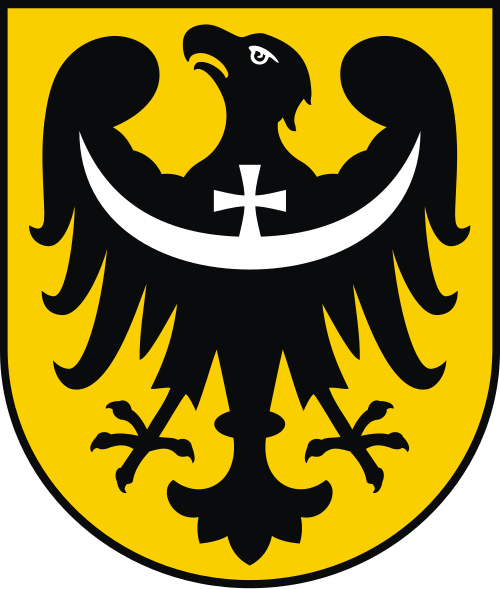
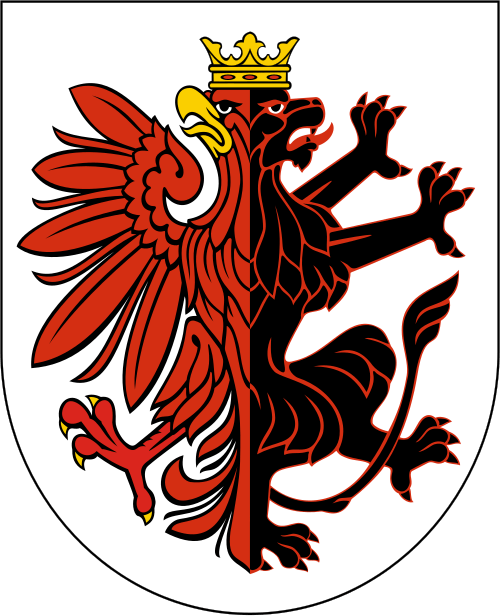
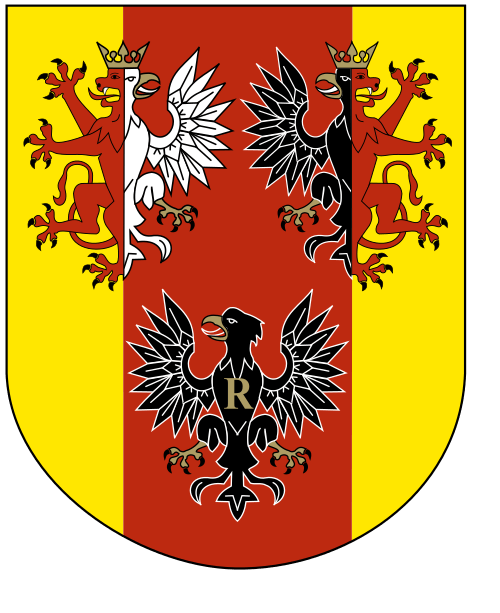
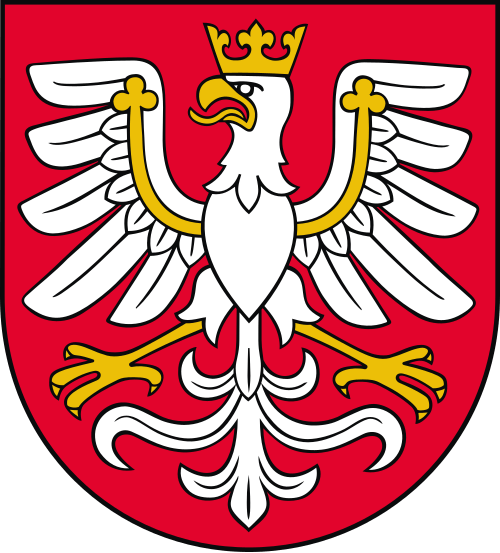
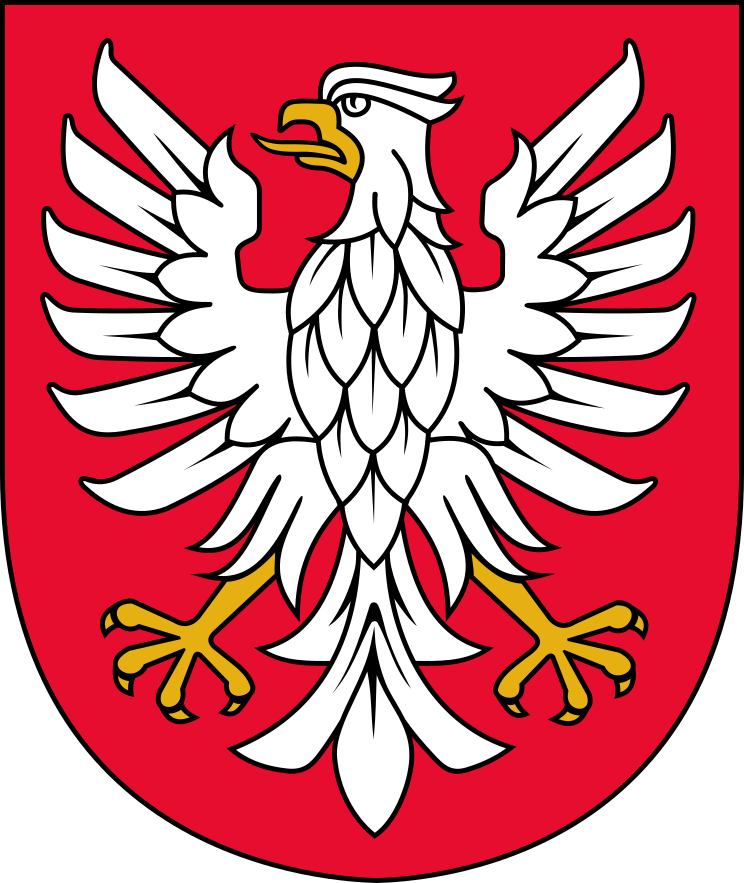
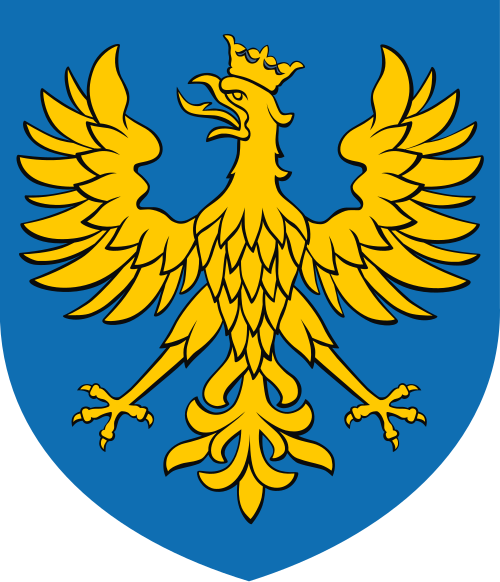
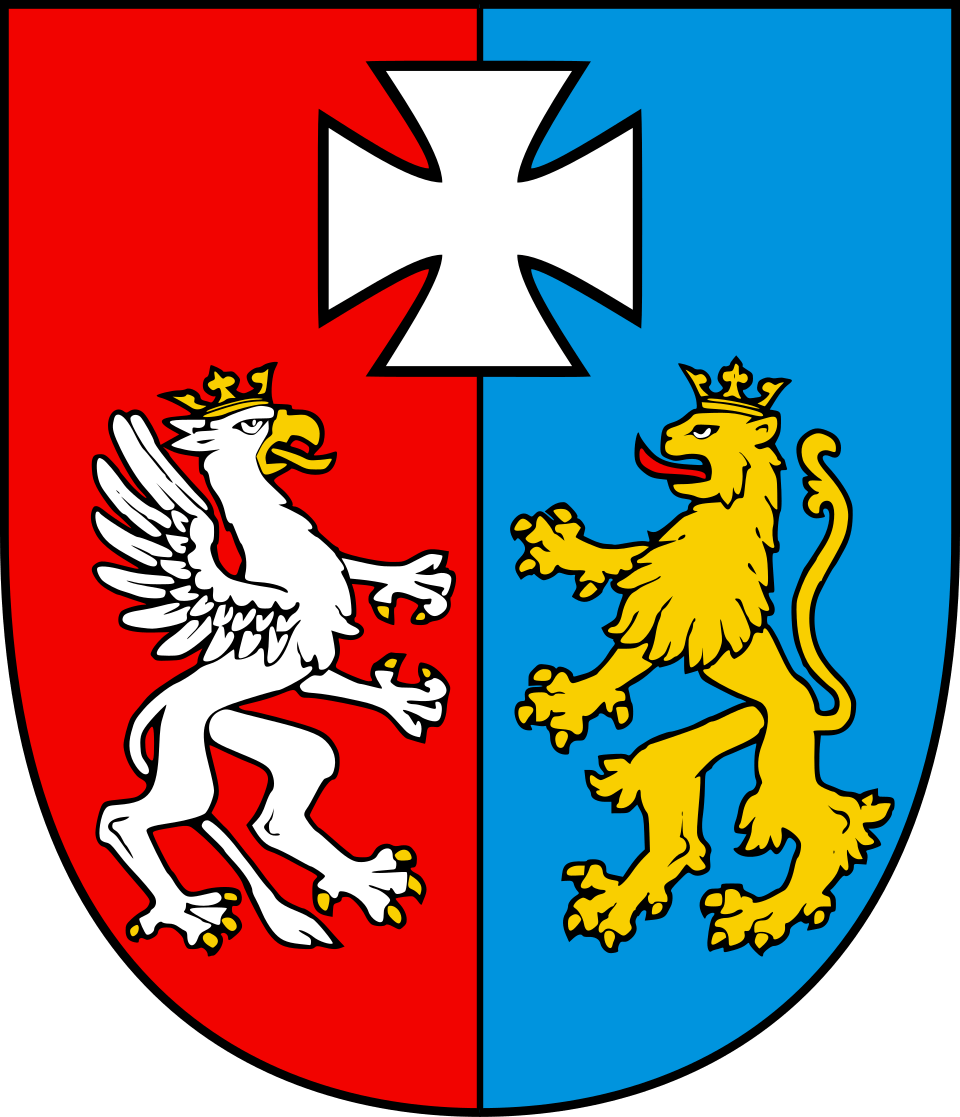
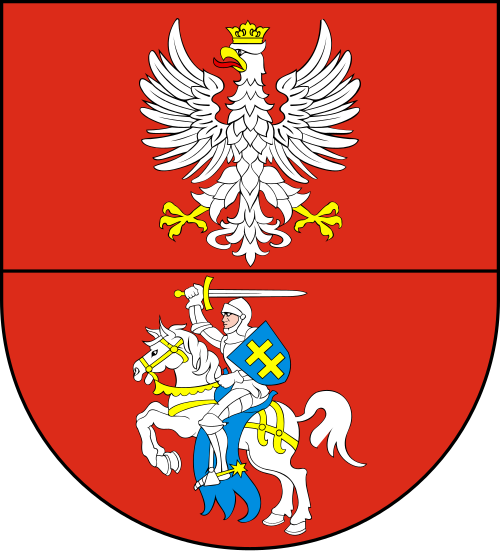
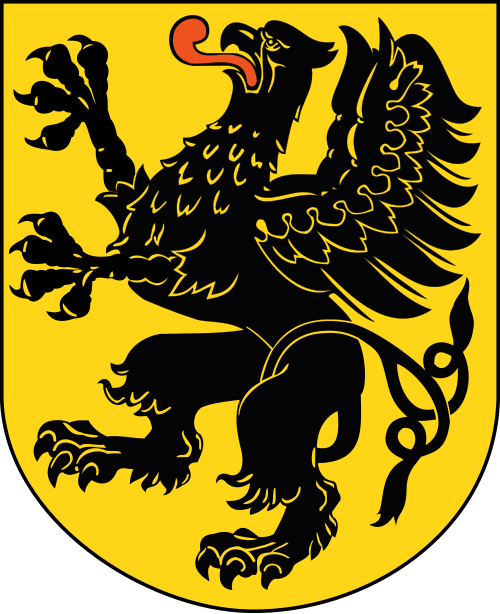
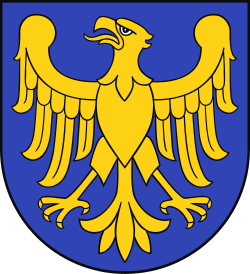
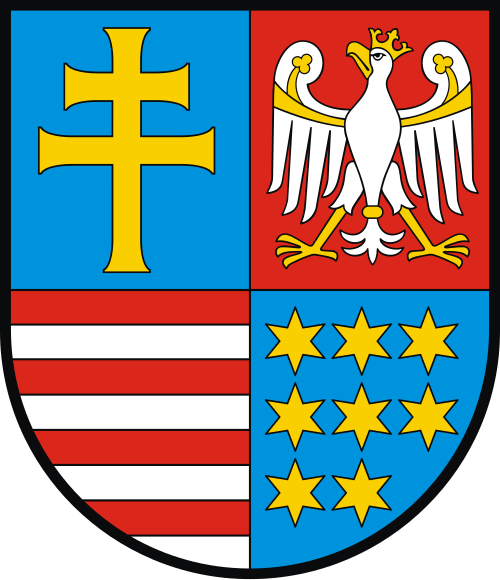
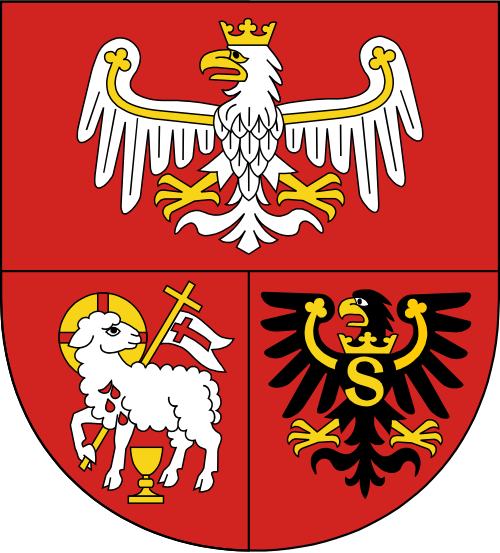
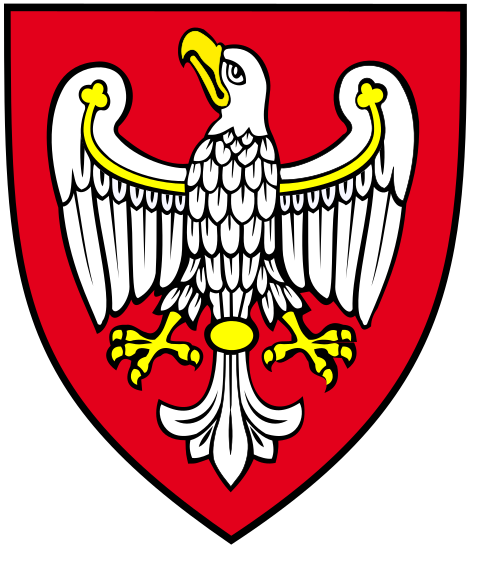
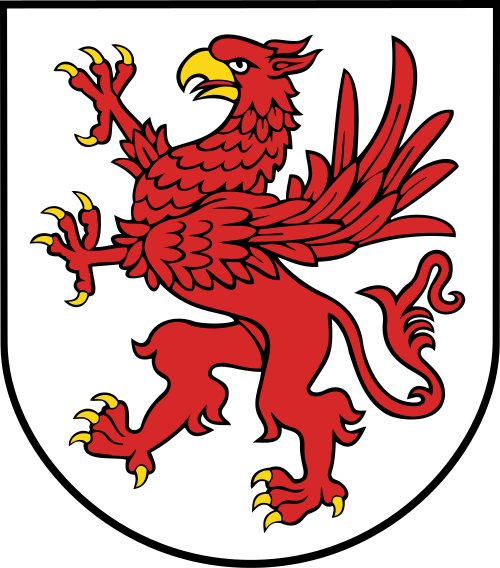
At the regional level, Poland’s 16 voivodeships (województwa) carry official coats of arms that often recall the historic duchies and provinces of the Piast and Jagiellonian periods. The eagle of Silesia, the griffin of Pomerania, the bison of Podlasie, and the bear of Przemyśl are among the most recognisable voivodeship charges.
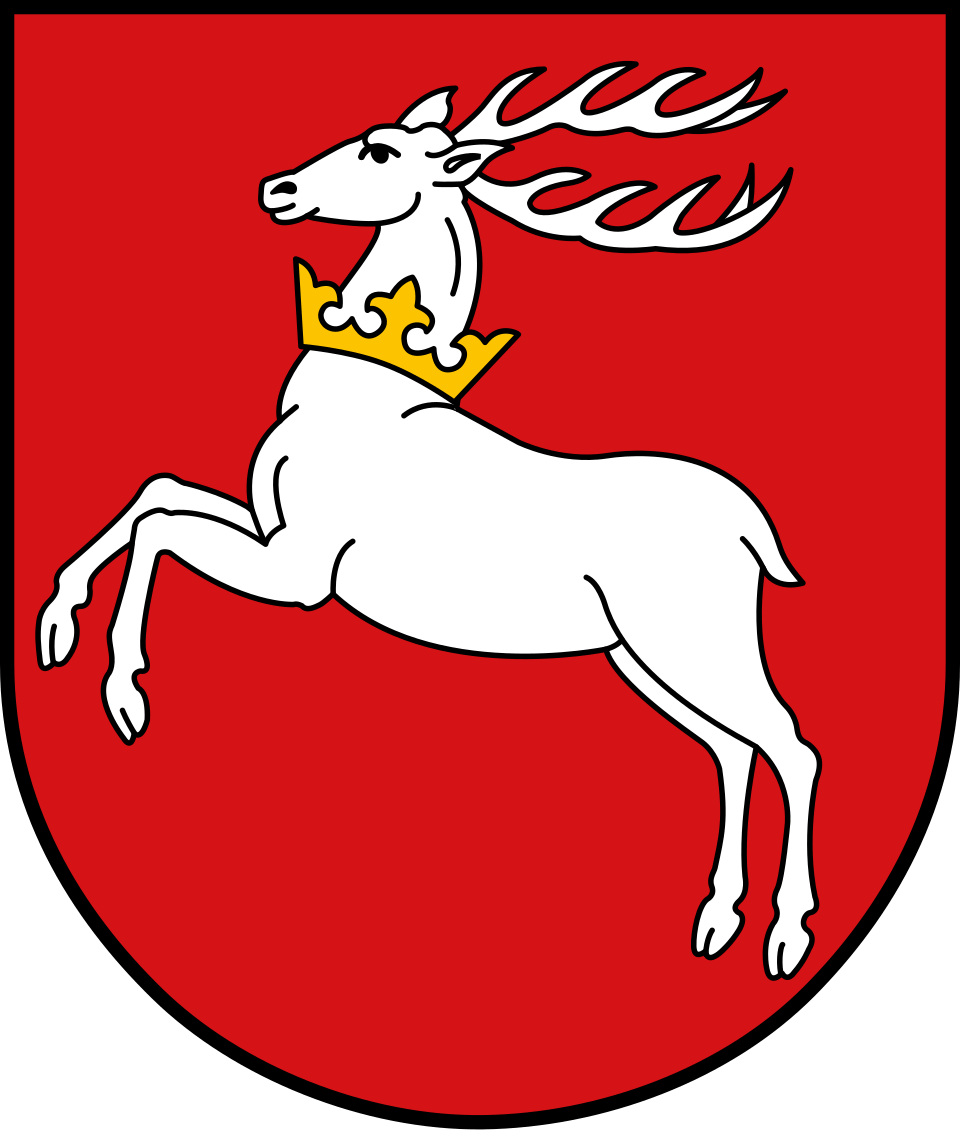
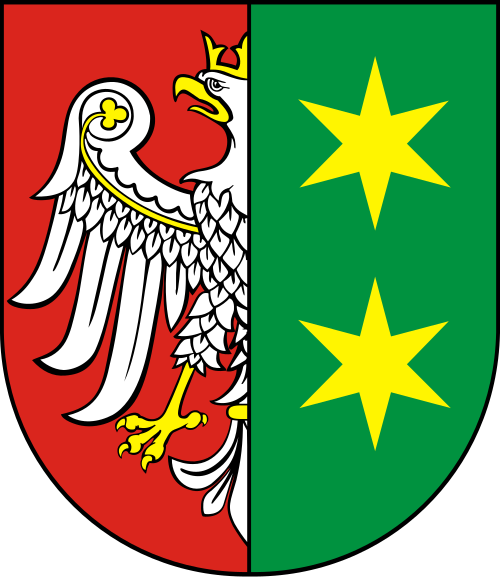
Each of Poland’s voivodeships carries a coat of arms rooted in centuries of regional identity. Here are eight notable examples:
The coat of arms is blazoned as Gules, an eagle Argent crowned, beaked and armed Or — a white eagle with a golden crown, beak, and talons on a red shield. Known as the Orzeł Biały (White Eagle), it is one of the oldest state symbols in Europe, with roots in the Piast dynasty. The current version was adopted in 1990 after the fall of communism restored the golden crown.
The eagle motif appears on coins of Bolesław I Chrobry (the Brave) minted around the year 1000. By 1295, King Przemysł II was using the white eagle on a red shield as a state coat of arms, marking the shift from a personal Piast emblem to a symbol of the Polish kingdom. It has been in continuous use — with variations — for over seven centuries.
The white and red derive from the tinctures of the coat of arms — the White Eagle (Argent) on the red shield (Gules). These colours were formally adopted as the national cockade on 7 February 1831 during the November Uprising, and the white-and-red bicolour became the official flag on 1 August 1919 after Poland regained independence.
When Poland became a communist People’s Republic in 1944, the golden crown was removed from the eagle — an act seen by many Poles as a politically motivated desecration of the national symbol. The crown was restored on 31 December 1989, shortly after the fall of communism, and the current crowned design was formally adopted in 1990.
Poland has 16 voivodeships (województwa), the country’s top-level administrative divisions. For statistical purposes (NUTS 2), Mazowieckie is split into two regions, making 17 NUTS 2 units. Each voivodeship maintains its own coat of arms, often rooted in the heraldic traditions of the historic Polish provinces and the duchies of the Piast era.
Explore the coat of arms of each of Poland’s voivodeships (NUTS 2 regions).
Last reviewed by the Emblema Mundi editorial team on 2026-06-22.