Country
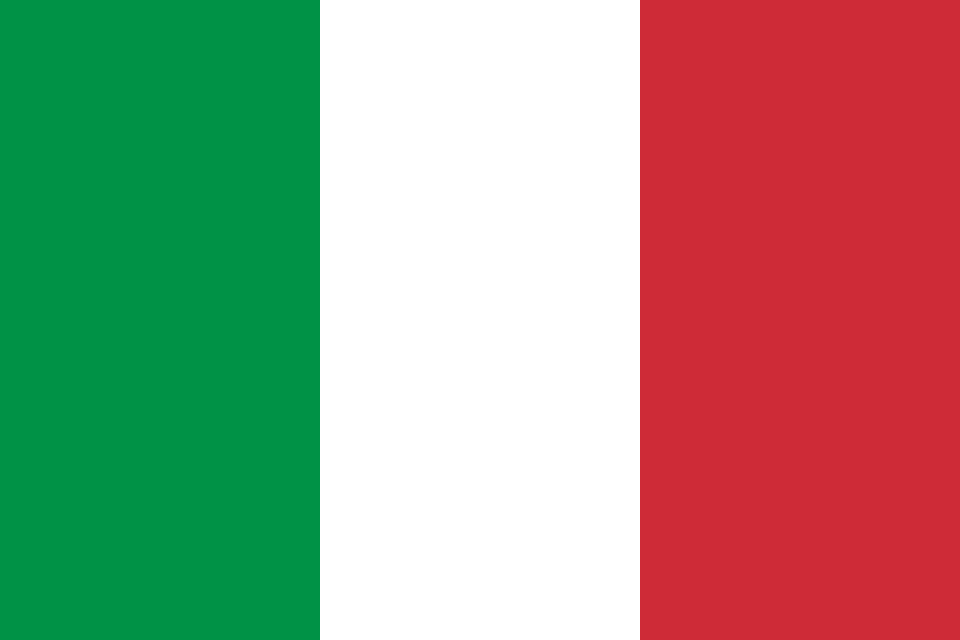
Italy is represented by an emblem, not a coat of arms: the white star of Italy on a cogwheel, between olive and oak, adopted in 1948. Until 1946 the Kingdom bore the arms of the House of Savoy, a white cross on red, under ornaments set in 1870 and changed in 1890 and 1929, the last time with the fasces of the fascist regime. The green, white and red tricolour, older than unification, carried the Savoy shield until the Republic removed it.
Flag
Not available
Coat of Arms
Not available
| Flag | Green, white and red in three vertical bands of equal size |
|---|---|
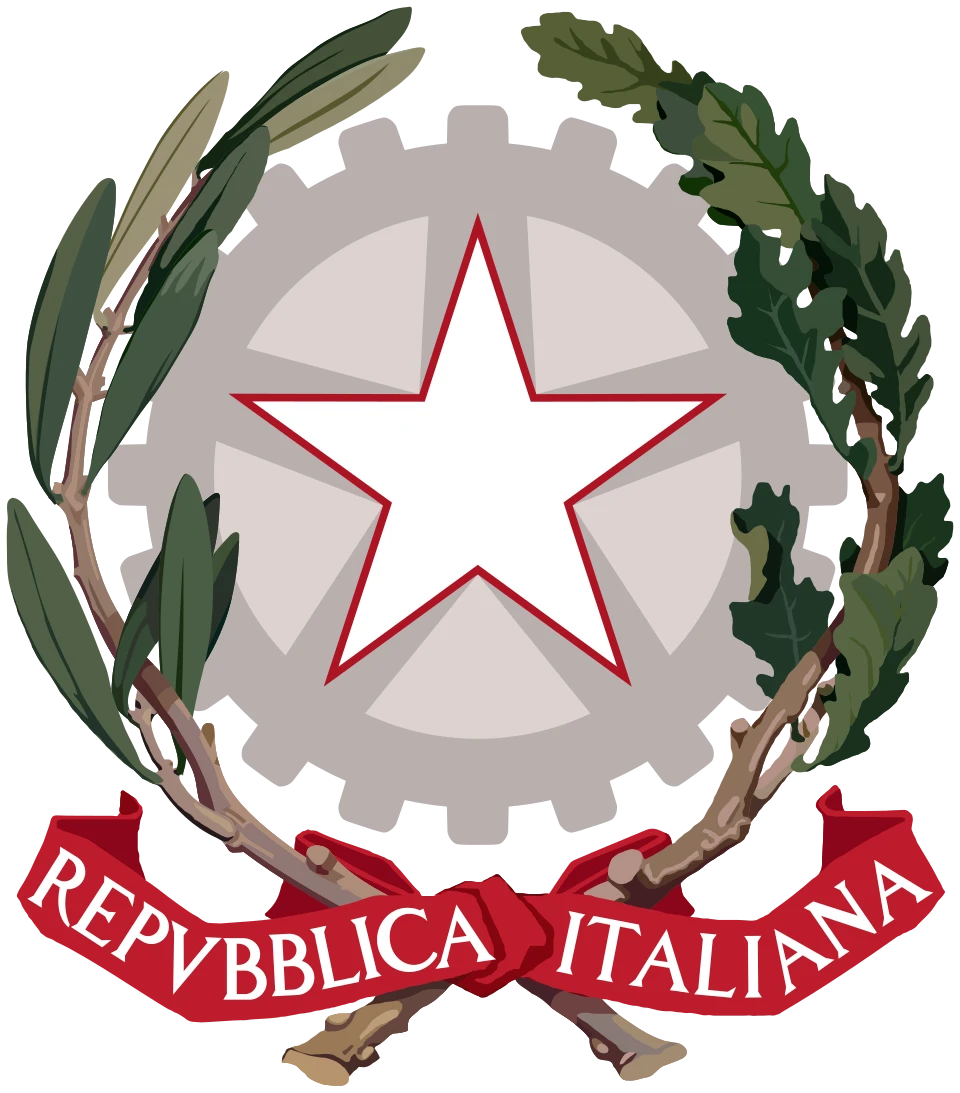
| Emblem | The Stella d’Italia on a cogwheel, between olive and oak |
| Designer | Paolo Paschetto |
| Adopted | Emblem 5 May 1948; flag in Article 12 of the Constitution |
| Before 1946 | The Savoy cross: Gules, a cross Argent |
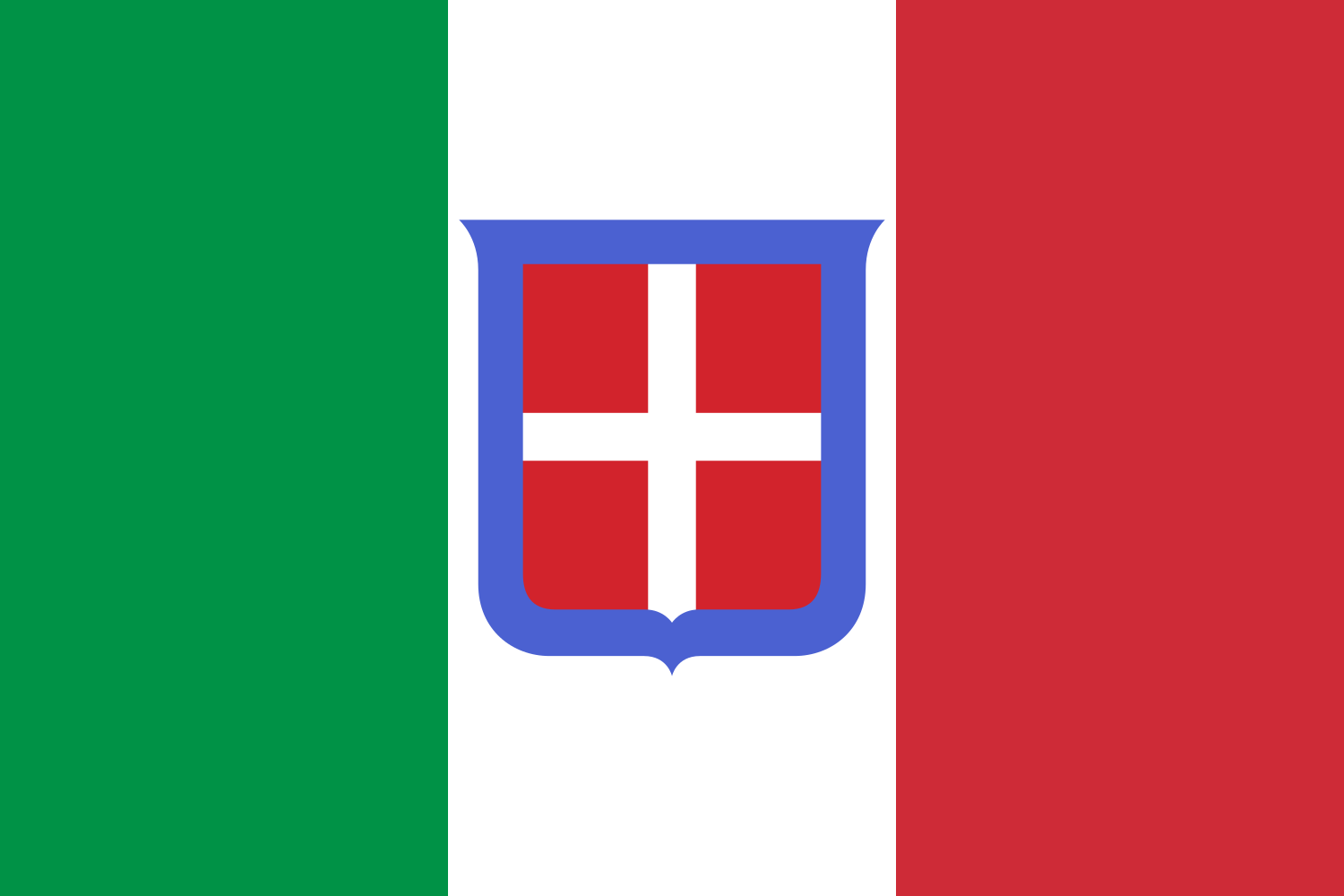
The green, white and red tricolour became the flag of united Italy in 1861 and has stayed so through the Kingdom and the Republic; only the shield on its white band changed. These are its two stages since unification.
Click the thumbnails to browse the flags.
1861
The tricolour was born before Italy itself. The Lombard Legion carried the first green, white and red military standard in Milan in October 1796: green, it is said, for the uniforms of the city militia, white and red for the ancient arms of Milan. On 7 January 1797 the Cispadane Republic adopted the green, white and red, then in horizontal bands, as its national flag: for the first time, the flag of a sovereign Italian state.
On 23 March 1848, King Carlo Alberto announced that his troops entering Lombardy and Venetia would carry “the Shield of Savoy superimposed on the Italian tricolour flag”; that year it became the national flag of the Kingdom of Sardinia, and in 1861 the flag of the Kingdom of Italy. From 1851 the Savoy shield on the flag, a white cross on red, was edged with a thin blue border.
1946
With the birth of the Republic on 2 June 1946, a decree of 19 June 1946 removed the Savoy shield. The Constituent Assembly confirmed the choice on 24 March 1947 with Article 12 of the Constitution: “The flag of the Republic is the Italian tricolour: green, white and red, in three vertical bands of equal size.” The shades were only fixed much later, by government circulars of 2002 and 2003 and then a decree of 14 April 2006, after an Italian MEP noticed in 2002, at the seat of the Council of the European Union, that the red of the Italian flag had turned almost orange.
From 1861 to 1946 the Kingdom of Italy bore the arms of the House of Savoy, a white cross on red, whose ornaments were set in 1870, redrawn in 1890 and changed under fascism. The Republic replaced them in 1948 with an emblem. These are their stages.
Click the thumbnails to browse the arms.
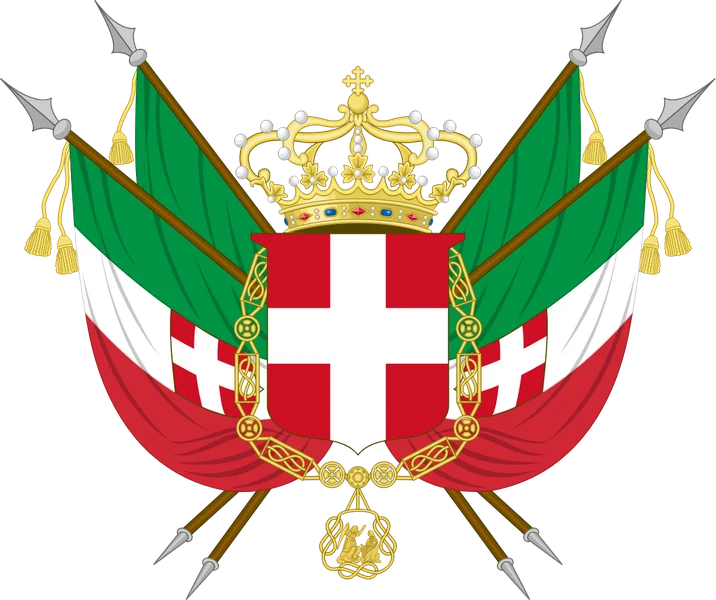
1861
Gules, a cross Argent; the shield encircled by the collar of the Supreme Order of the Most Holy Annunciation and ensigned with the royal crown, four national flags issuing from behind it.
At unification no new arms were set. Government offices used versions of the Savoy shield, a white cross on red, with the collar of the Order of the Annunziata and the royal crown. The most common, used on laws and decrees by the Kingdom of Sardinia since 1848, showed four national flags rising behind the shield.
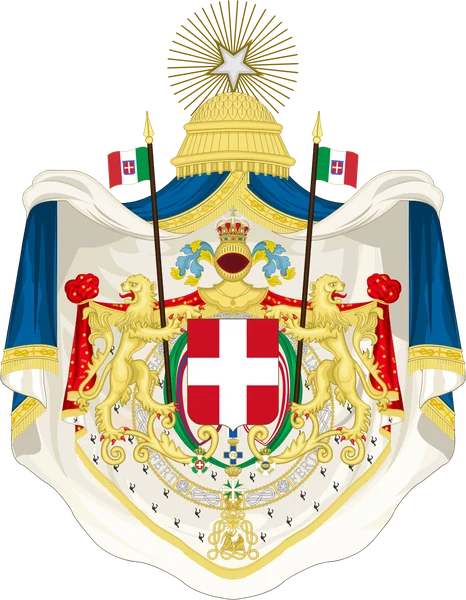
1870
Gules, a cross Argent; crested with the royal helm and the royal crown, encircled by the collar of the Annunziata and the sashes of the orders; supported by two lions holding Italian banners; on a purple mantle strewn with roses and Savoy knots, lined with ermine, under a pavilion of blue velvet surmounted by a star Argent rayonnant Or.
The first official arms of the Kingdom were set by the Consulta Araldica, the heraldic council, on 4 May 1870, nine years after the kingdom was proclaimed. The two lions hold banners in the national colours, and above the pavilion shines the Stella d’Italia, the star of Italy, which returned in 1948 as the heart of the Republic’s emblem.
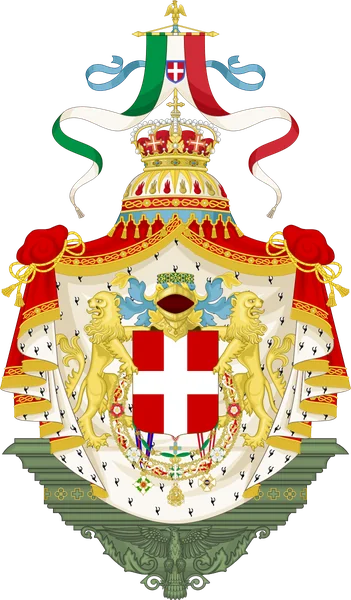
1890
Gules, a cross Argent; crested with the royal helm bearing the Iron Crown; supported by two lions; encircled by the great insignia of the Italian orders; under a royal pavilion surmounted by the royal crown, against the staff of the gonfalon of Italy bearing a crowned golden eagle.
A royal decree of 27 November 1890, prepared under Francesco Crispi “according to historical and national traditions”, redrew the arms in a more Savoyard style: the mantle and the lances disappeared, the royal crown moved to the pavilion and the Iron Crown sat on the helm. The star left the arms and went to the collars of the army, as the stellette. These arms lasted, with an interruption under fascism, until 1946.
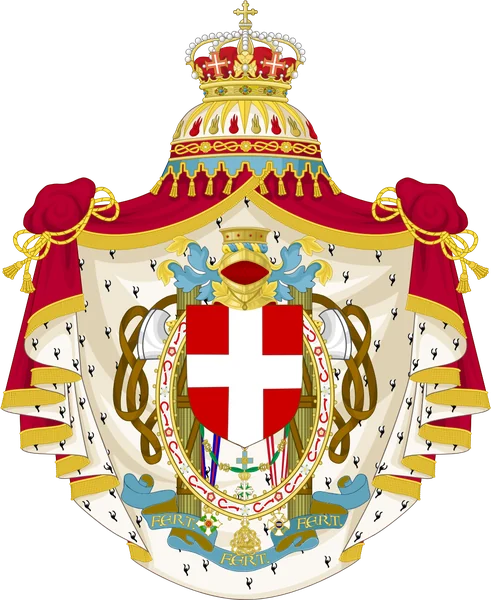
1929
Gules, a cross Argent; crested with the royal helm and the Iron Crown; supported by two fasces with the axe turned outward, bound with leather straps forming Savoy knots; under a purple pavilion ensigned with the royal crown.
Mussolini proclaimed the fasces, the symbol of the National Fascist Party, an emblem of the state in December 1926, and in 1927 it was placed beside the existing arms. The royal decree no. 504 of 11 April 1929 merged the two: the lions were replaced by two fasces. These arms were used until the fall of Mussolini on 25 July 1943.
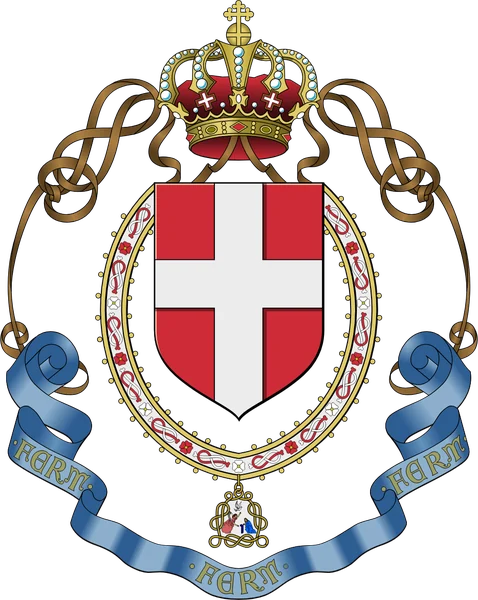
1943
Gules, a cross Argent: the lesser arms of the Kingdom, without the fasces.
After the deposition of Mussolini, a lesser version of the arms without the fasces was used from July 1943. After the liberation of Rome, the arms of 1890 were reinstated from 26 October 1944 and remained in force until they were replaced by the emblem of the Republic.
1948
A five-pointed star Argent, edged Gules, set upon the spokes of a steel cogwheel, between a branch of olive and a branch of oak, tied by a ribbon Gules bearing in white capitals the words REPVBBLICA ITALIANA.
The Republic chose an emblem rather than a coat of arms. It is described in detail below.
Emblem of the Italian Republic — adopted on 5 May 1948.
A five-pointed star Argent, edged Gules, set upon the spokes of a steel cogwheel, between a branch of olive and a branch of oak, tied by a ribbon Gules bearing in white capitals the words REPVBBLICA ITALIANA.
The emblem was officially adopted on 5 May 1948 by Legislative Decree no. 535. Its shape recalls a Roman crown.
The white star, the Stella d’Italia, is the oldest Italian patriotic symbol: the Greeks associated Italy, west of their peninsula, with the evening star of Venus, and Italy was long shown as a woman with a turreted crown beneath a shining star. The steel cogwheel stands for work, on which Article 1 of the Constitution founds the Republic. The oak on the right stands for the strength and dignity of the Italian people, the olive on the left for its will for peace.
On 27 October 1946 the government of Alcide De Gasperi set up a commission, chaired by Ivanoe Bonomi, and opened a national competition: party symbols were banned and the star of Italy was required. Paolo Paschetto won, but his design, shown in Rome in February 1947, was mocked by a Roman newspaper as “a washtub”. A second competition, centred on the idea of work, was again won by Paschetto, unanimously. The Constituent Assembly approved the emblem on 31 January 1948, after a heated debate.
Each of the 21 regions and autonomous provinces has its own page with its flag.
The first green, white and red military standard was carried by the Lombard Legion in Milan in 1796: green is linked to the uniforms of the Milanese city militia, worn since 1782, white and red to the arms of Milan. On 7 January 1797 the Cispadane Republic adopted a green, white and red tricolour, then in horizontal bands, as its national flag, on the motion of Giuseppe Compagnoni.
The tricolour bore the Savoy shield, a white cross on red edged in blue, on the white band. King Carlo Alberto placed the shield there in 1848 for the Kingdom of Sardinia, with the blue border from 1851; the flag passed to the Kingdom of Italy in 1861 and was removed by a decree of 19 June 1946.
A white star edged in red, the Stella d’Italia, on a steel cogwheel standing for work, between an olive branch for peace and an oak branch for strength, tied by a red ribbon reading REPVBBLICA ITALIANA.
Paolo Paschetto, who won both competitions held in 1946–1948. The Constituent Assembly approved the emblem on 31 January 1948, and it was adopted on 5 May 1948.
The arms of the House of Savoy, Gules, a cross Argent, with external ornaments that changed over time: the arms set by the Consulta Araldica in 1870, those of the royal decree of 1890, and from 1929 to 1943 a version with fasces.
Mussolini made the fasces, the symbol of the Fascist Party, an emblem of the state in 1926; in 1929 they replaced the lions supporting the royal arms. They disappeared after his fall in July 1943, and the arms of 1890 were reinstated in 1944.
The white five-pointed star is the oldest Italian patriotic symbol, linked since antiquity to the evening star of Venus seen to the west of Greece. It shone above the royal arms of 1870 and is at the centre of the emblem of the Republic.
Illustrations: Wikimedia Commons. Arms of 1861 and 1870 © Facquis (CC BY-SA 4.0); arms of 1890 © Sodacan and others and arms of 1929 © Wikimedia Commons contributors (CC BY-SA 3.0); flags, arms of 1943 and emblem: public domain.
Last reviewed by the Emblema Mundi editorial team on 4 October 2026.