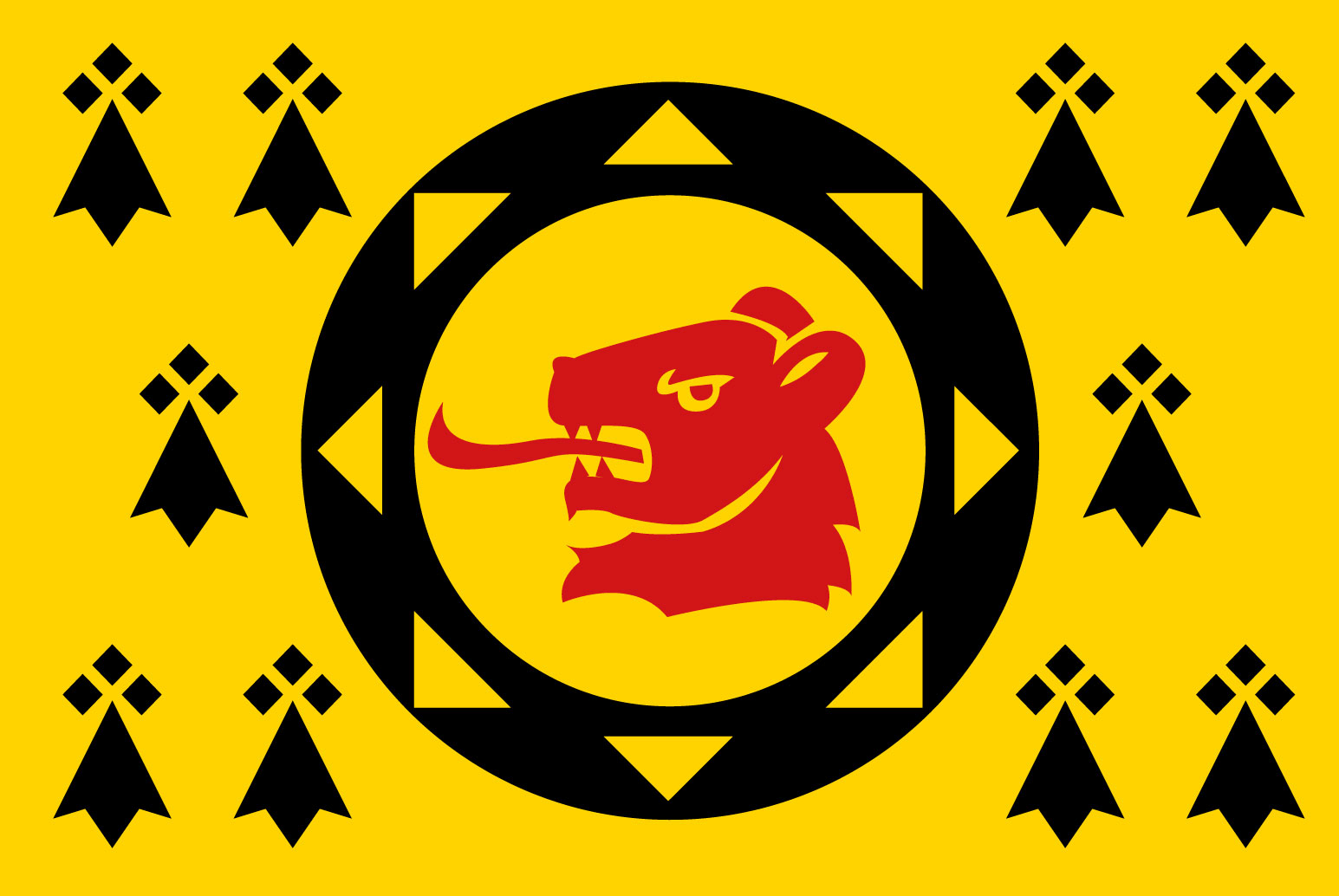
Historical Region
Brittany (Breizh) possesses one of the most distinctive heraldic identities in Europe. Its coat of arms — Ermine plain — is among the simplest and most celebrated blazons ever created: a white field scattered with black ermine spots (mouchetures d’hermine), introduced by Pierre de Dreux around 1213 and adopted as the sole charge by Duke Jean III in 1316. The modern flag — the Gwenn-ha-du (“White and Black”) — designed by Morvan Marchal in 1923, marries nine stripes representing the historic dioceses with an ermine canton. Alongside these, the mediaeval Kroaz Du (Black Cross) and the ermine’s own motto — Plutôt la mort que la souillure — complete a heraldic tradition that spans nine centuries. This atlas maps 60 traditional Breton pays (broioù) and their sub-territories (paouioù), each with its own flag and identity.
Click on a country to learn more
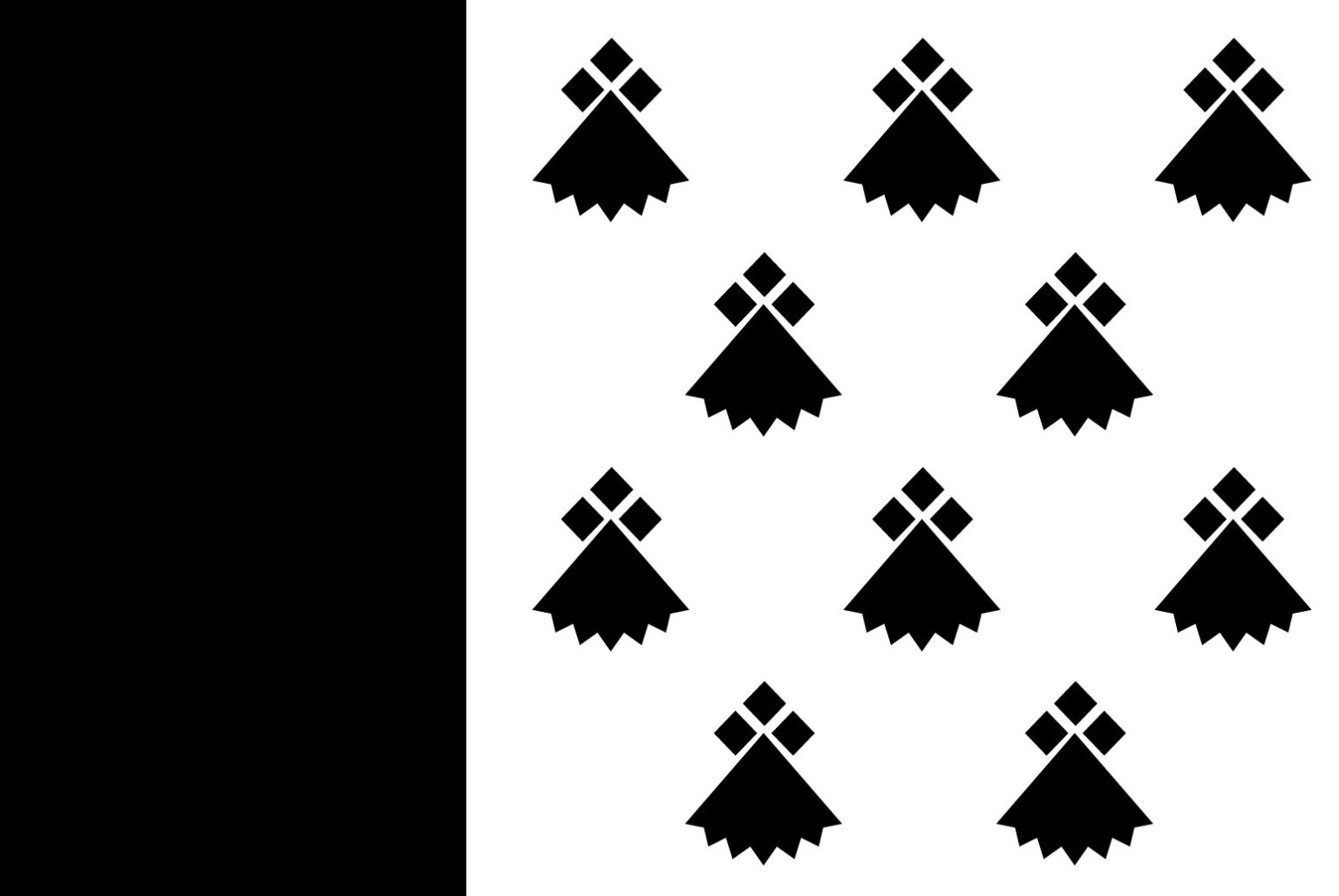
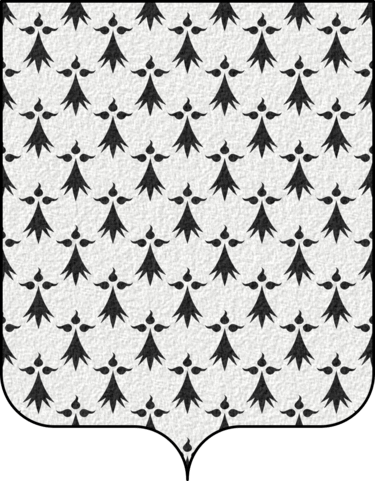
Ermine plain.
Two words. No charge, no partition, no supporters — just the ermine fur covering the entire field. Very few sovereign arms in Europe are made of a fur alone, with no charge and no partition; Brittany’s are by far the best known of them.
Arms of Brittany — Ermine plain: no charge, no partition, no supporters.
Pierre de Dreux (Mauclerc) was the son of Robert II de Dreux, himself son of Robert Ier de Dreux, son of Louis VI of France — a great-grandson of the king, not a grandson. Betrothed to Alix de Thouars in January 1213 and married to her in the spring of 1214, he became Duke of Brittany by that marriage. He differenced his Dreux arms (chequeré Or and Azure, a bordure Gules) with an ermine quarter, and over the following century the ermine spread across the whole shield.
Four generations later, in December 1316, Jean III set aside the arms inherited from his forebear and took Ermine plain as the definitive blazon of Brittany — a gesture read since as a step away from the French crown, though personal reasons seem to have weighed more.
The device bound most closely to Brittany is « Plutôt la mort que la souillure » — in Latin Potius mori quam foedari, “rather death than defilement”. It comes from the legend that the ermine would sooner die than soil its white coat in the mud, and it belongs to the duchy and to the Order of the Ermine, founded by Jean IV in 1381, rather than to any single ruler.
Anne de Bretagne (1477–1514) took up the ducal motto « A ma vie », added « Non mudera » (“I shall not change”) to the device of the Order of the Ermine, and left « Amavi » (“I have loved”) carved on the Grand Logis of the château de Nantes. She was the last duchess to rule in her own right: the duchy passed to her daughter Claude de France, and was formally united with the kingdom only in 1532.
European blazon divides its tinctures into metals and colours, and then admits two things that are neither: the furs. Ermine is one of them, vair the other. Ermine is a field of argent strewn with black spots — not silver bearing spots, but a fur, read as a single substance.
The moucheture is a piece of tailoring that heraldry copied without quite understanding it. Furriers cut the black tip from the ermine’s tail and set it in the middle of each white pelt as the pelts were sewn side by side, fixing it with three clasps arranged in a cross. What the blazon draws is that arrangement: a small raised cross with disjointed, irregular arms, the three upper ones very short and often reduced to dots, the foot usually patty and ending in three points. Three is the common number; it can run to nine, and very rarely to one.
Brittany’s blazon is not argent semé of ermine spots but simply Ermine — the fur itself, edge to edge. The spots run off the sides of the shield instead of being counted on it, which is exactly why the arms can be stated in one word. It is the difference between a field covered in a material and a field charged with a pattern, and it is the whole reason the Breton arms read as they do.
Reverse the tinctures and the fur becomes counter-ermine, sable strewn with silver spots. Fleck the spots with red and it becomes erminites. English blazon adds two more to the set: erminois, gold with black spots, and pean, sable with gold spots. Brittany uses the plainest member of the family, and has made it the best known.
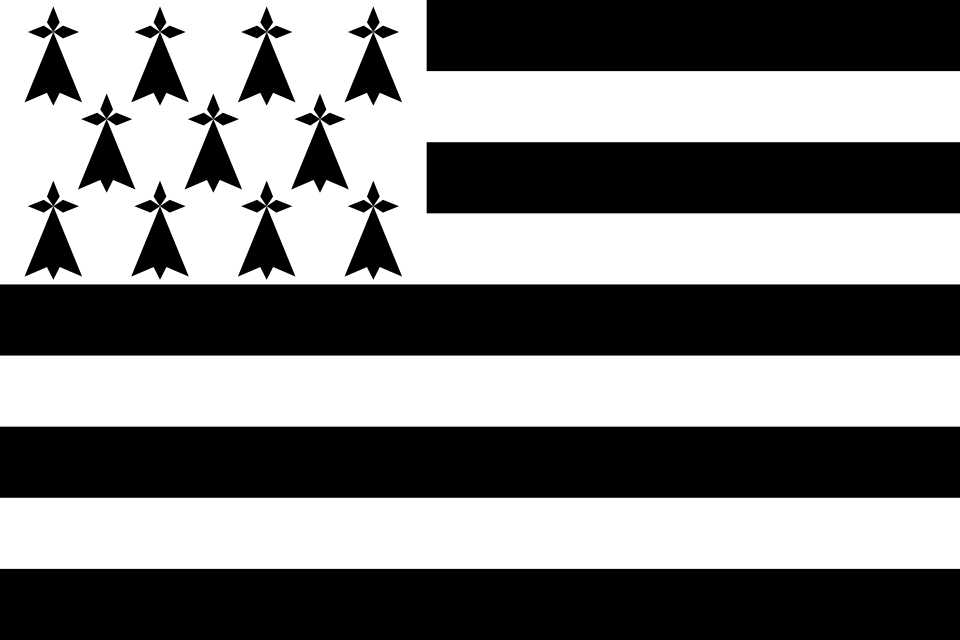
The Gwenn-ha-du (“White and Black”) is the modern flag of Brittany, the work of Morvan Marchal, who designed it between 1923 and 1925. Nine horizontal stripes of equal width alternate black and white, with an ermine canton at the upper hoist.
Gwenn-ha-du — Nine stripes alternating black and white, with an ermine canton at the upper hoist.
The nine stripes stand for the nine traditional pays of Brittany, which broadly follow the nine historic dioceses. The five black stripes are the five pays of Haute-Bretagne, the Gallo-speaking east — Rennes, Nantes, Dol, Saint-Malo and Saint-Brieuc (Penthièvre). The four white stripes are the four pays of Basse-Bretagne, the Breton-speaking west — Léon, Trégor, Cornouaille and Vannetais. No single band can be matched to one particular pays: the linguistic boundary has shifted over the centuries, and the flag was never drawn that precisely.
The canton carries the ermine spots of the duchy, usually eleven of them, set in three rows.
The coat of arms itself — the ermine field — is also used as a banner flag, particularly in heraldic and ceremonial contexts. It is the oldest Breton vexillological symbol, directly transposing the ducal arms onto a rectangular flag.
Argent, a cross sable.
A black cross on a white field: the older Breton flag, and the one that went to sea.
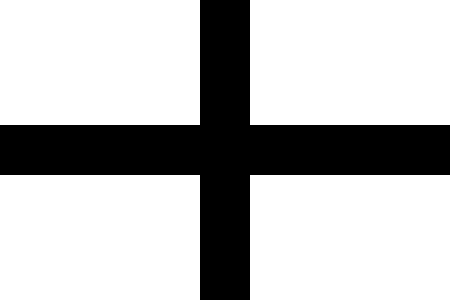
Kroaz Du — a black cross on a white field, in a 3:2 flag.
The popular account sends the black cross back to the Third Crusade. At the conference of Gisors in 1188, the crusading powers agreed to tell themselves apart by the colour of their cross — red for France, silver on red for England, green for Flanders — and the Bretons, so the story goes, took black. It is a good story, and the sources do not carry it: no text and no image confirms a Breton black cross in the twelfth or thirteenth century.
Breton tradition reaches back further still, crediting Alan IV (c. 1060–1119) with raising the first flag in history, a black cross on white. That too is tradition rather than record — but it shows how far back the Bretons themselves place their cross.
Documented use begins in the fifteenth century. An illumination in the Compillations de Cronicques et Ystores des Bretons puts the black cross on the surcoats of Breton fighters; the black-cross standard appears for the taking of Vannes in 1342 and again at Saint-Aubin-du-Cormier. The events are of the fourteenth and fifteenth centuries — the manuscripts that show them are later, which is exactly why the earlier claim cannot be pushed further back.
Above all the Kroaz Du was a maritime flag, flown by the Breton ships that worked the Atlantic. Portolan charts pair it with the ermine spots of the dukes, the two Breton signs side by side on the same coast. After the union of 1532, variants stayed in use with the Amirauté de Bretagne — an office abolished by Richelieu in 1626, restored by Louis XIV, and abolished again in 1789.
The Kroaz Du may lie behind Saint Piran’s flag, the banner of Cornwall: the same black and white cross, in the Brythonic country directly across the water.
The flag came back the way it had left — by the sea. Revived at the end of the 1980s through the maritime federations, it moved ashore with the bagadoù, and now flies alongside the Gwenn-ha-du rather than against it.
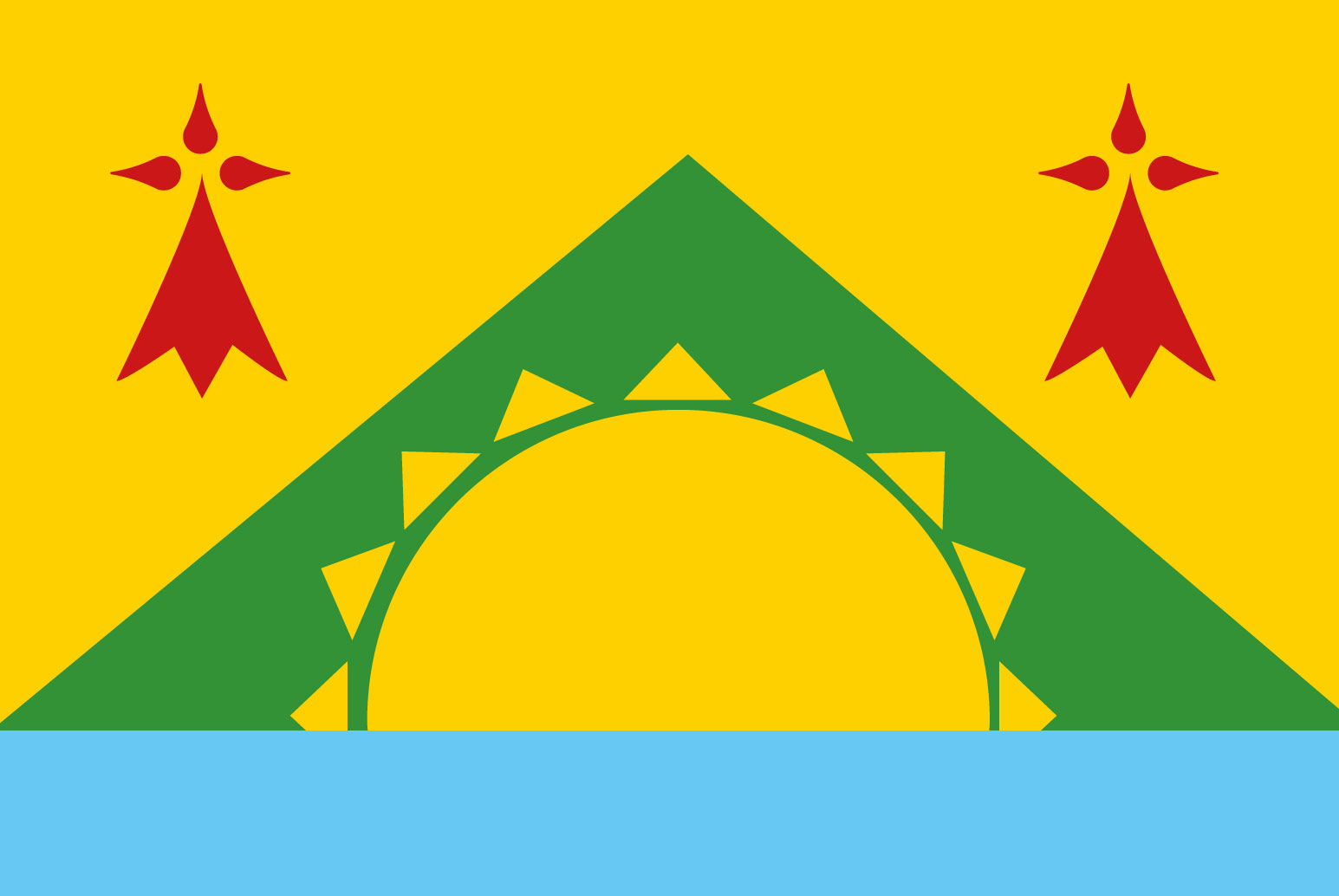
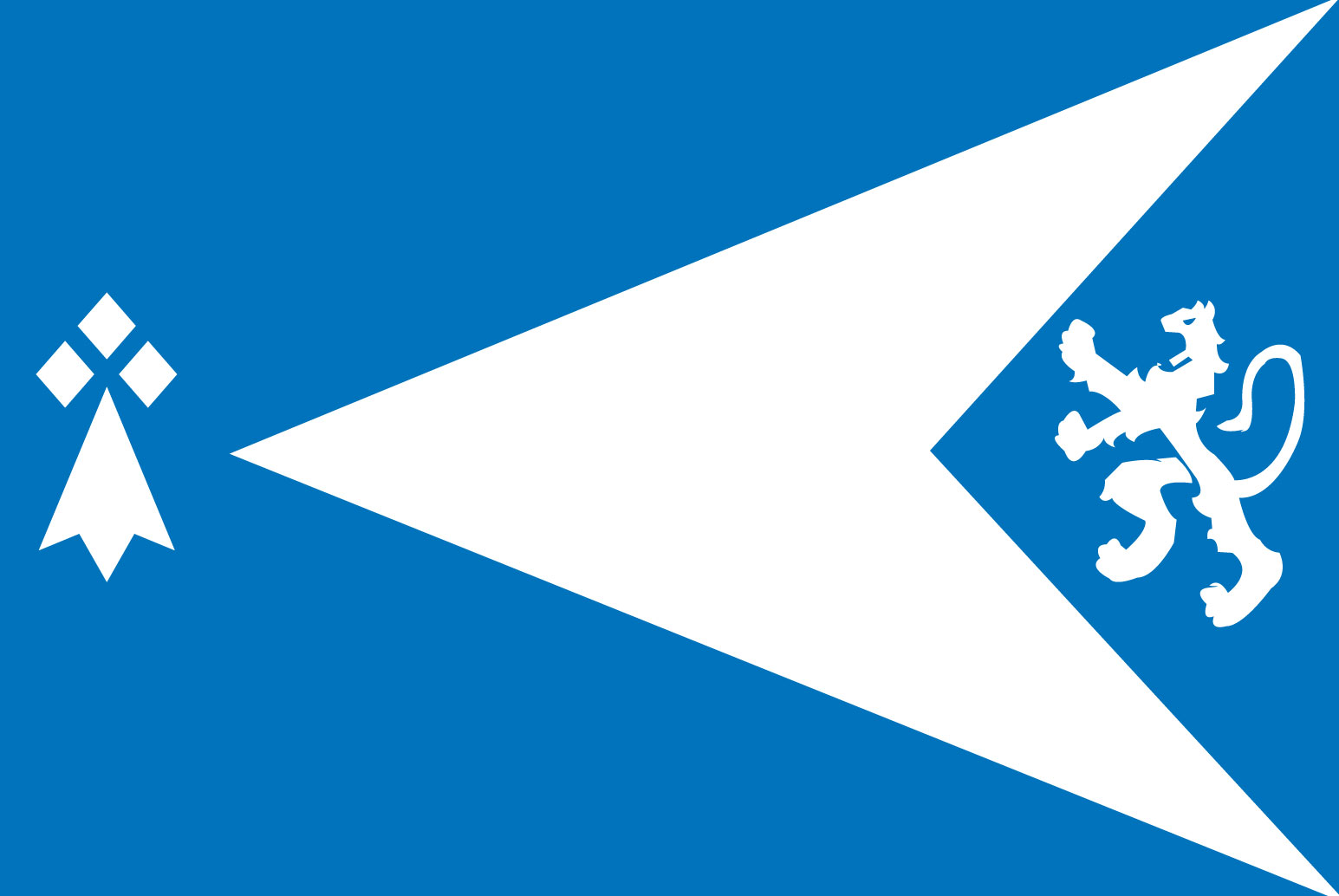
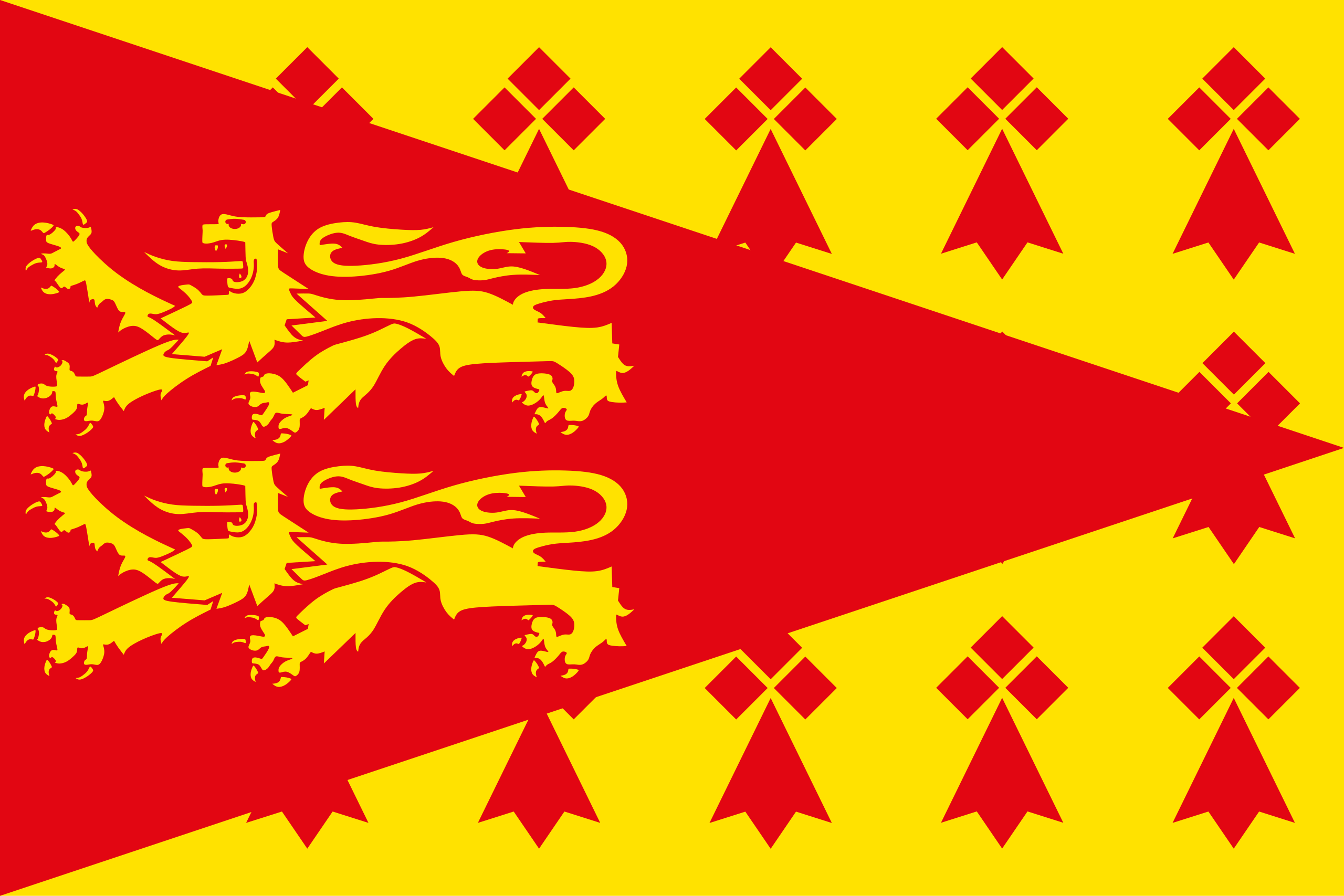
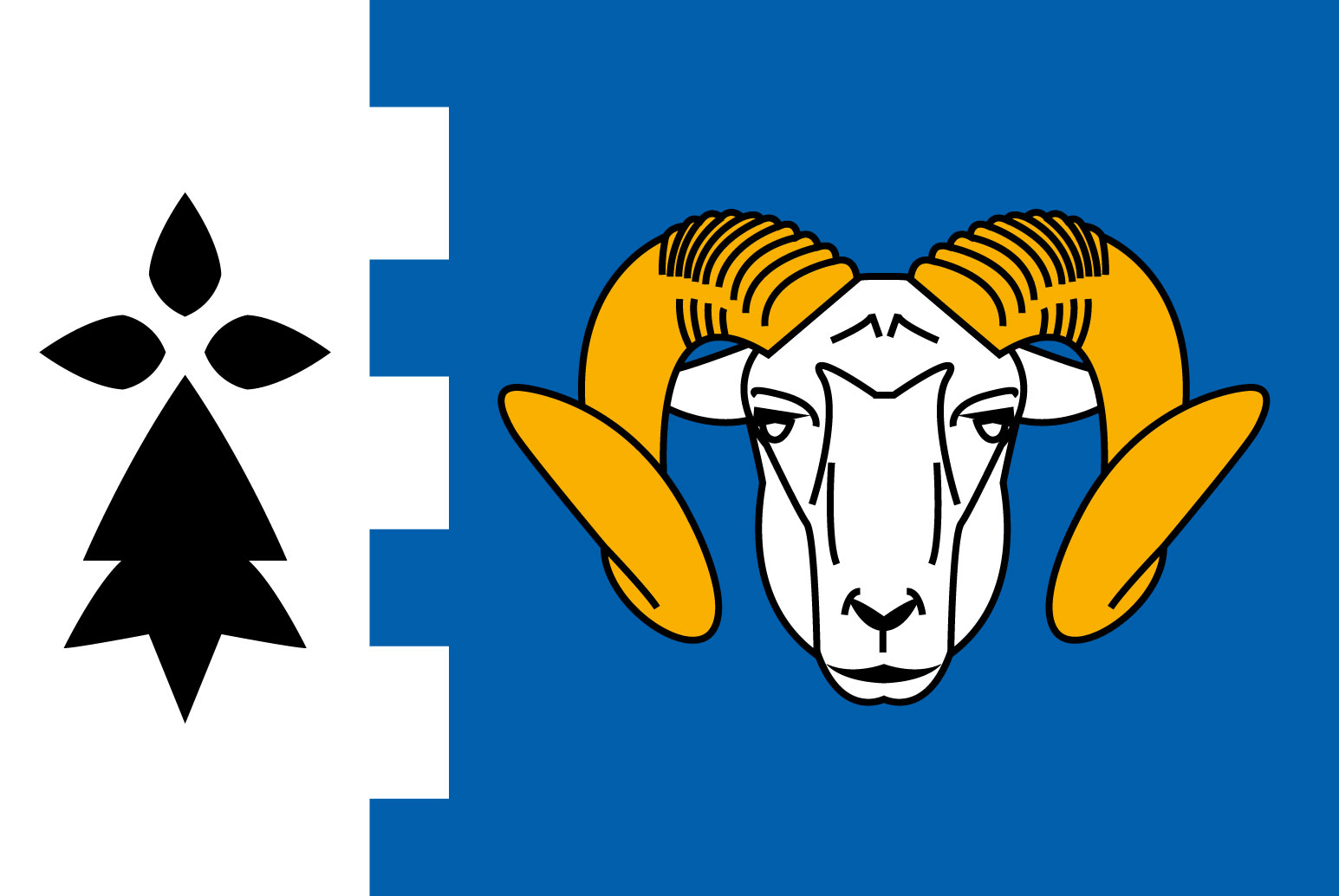
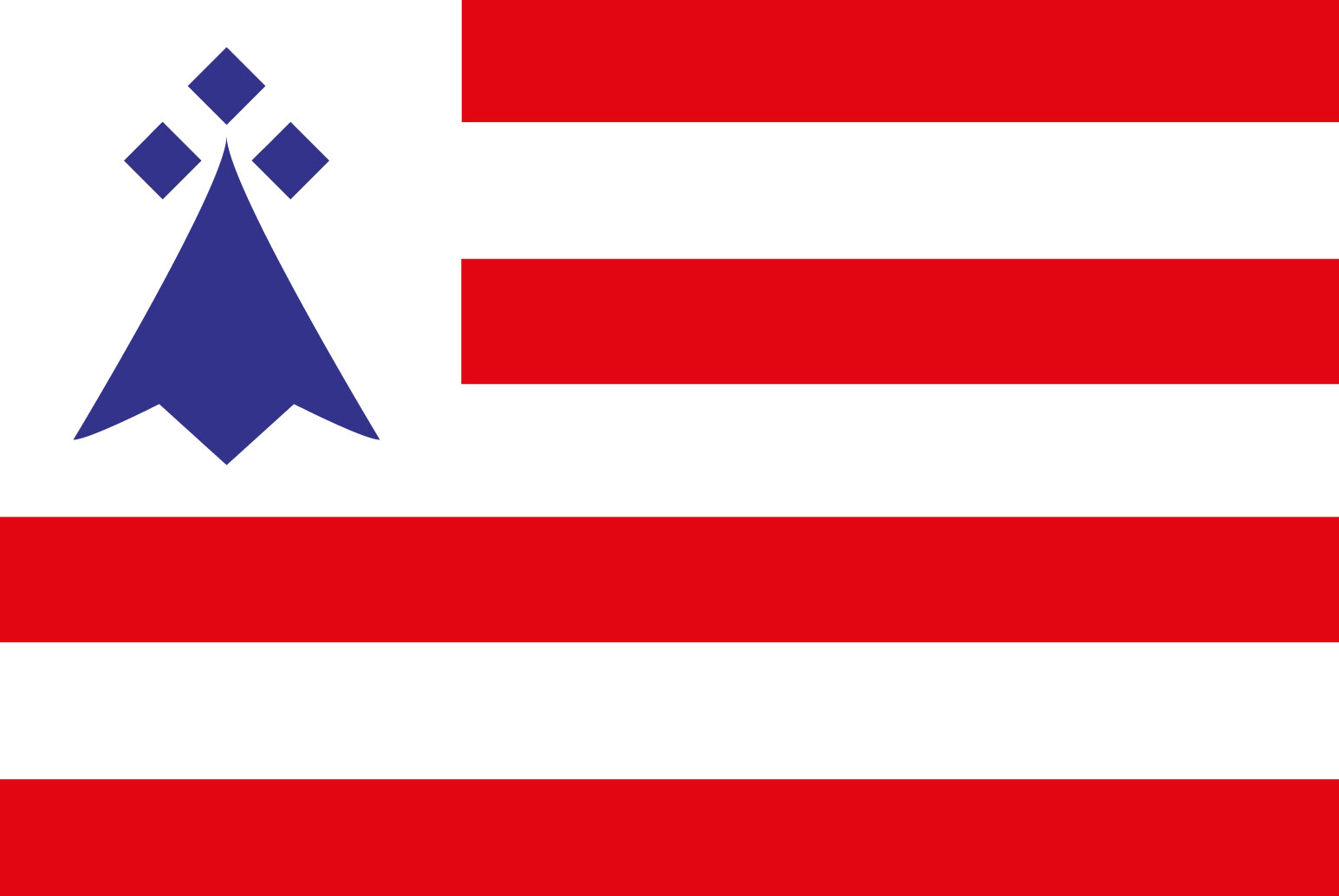
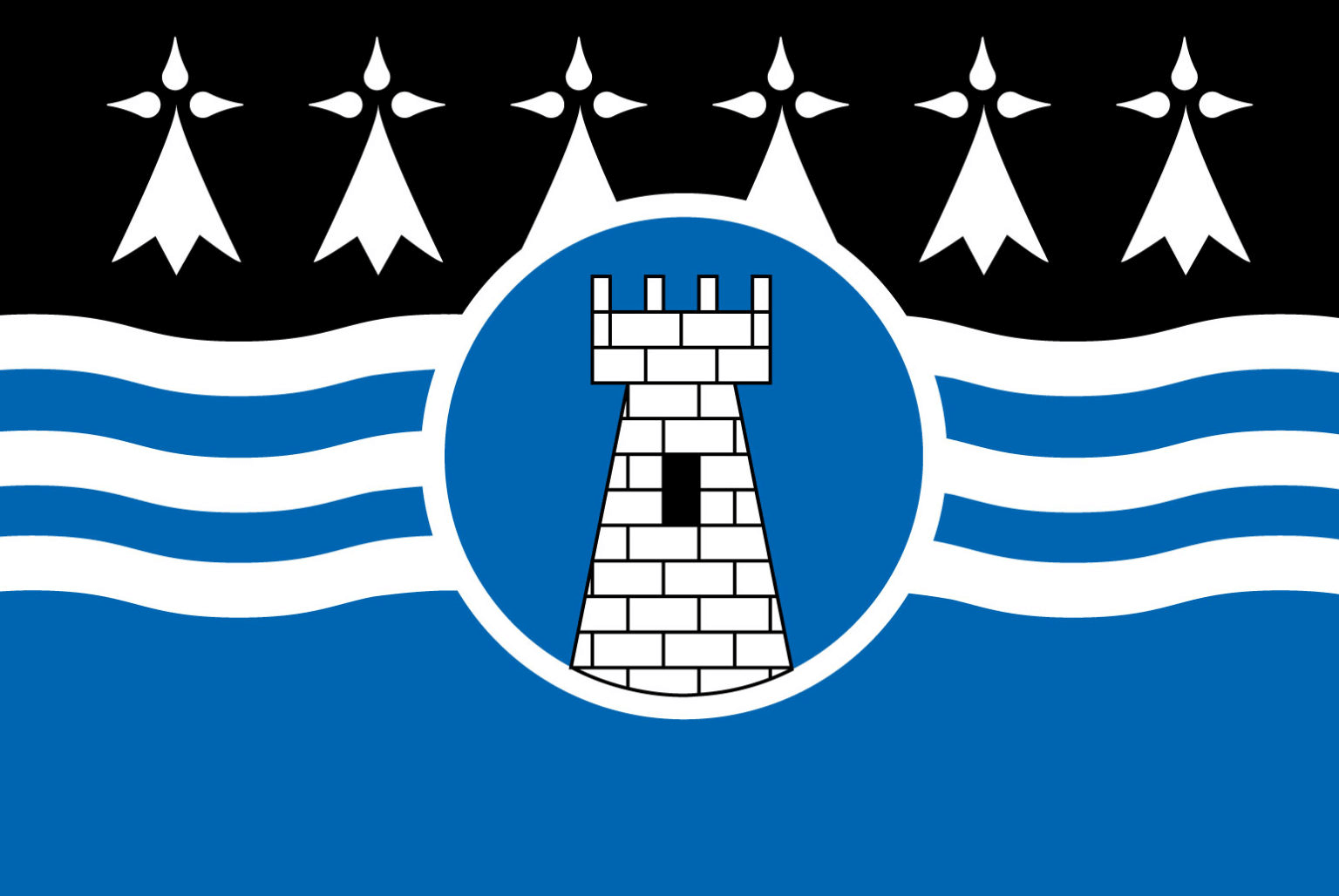
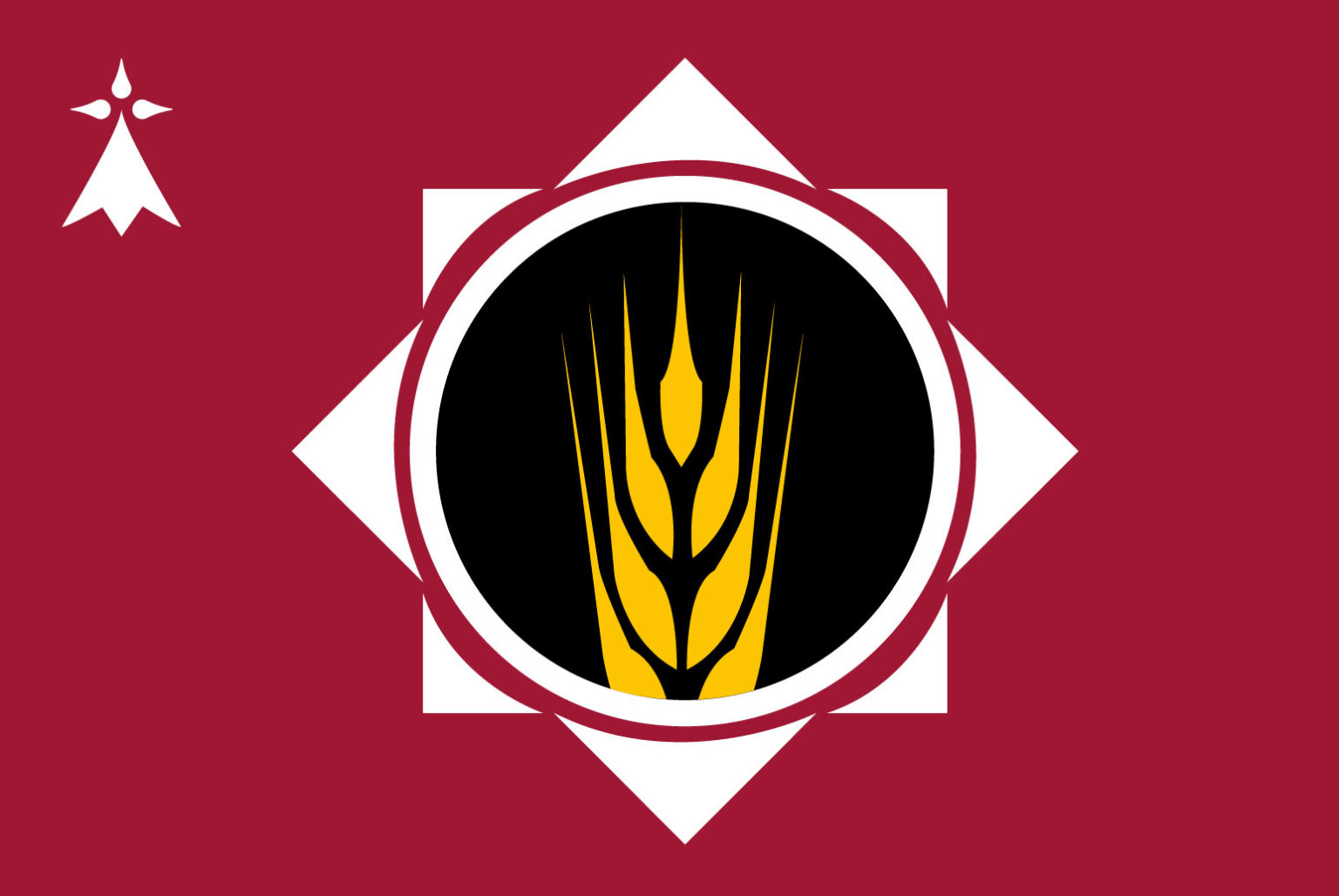
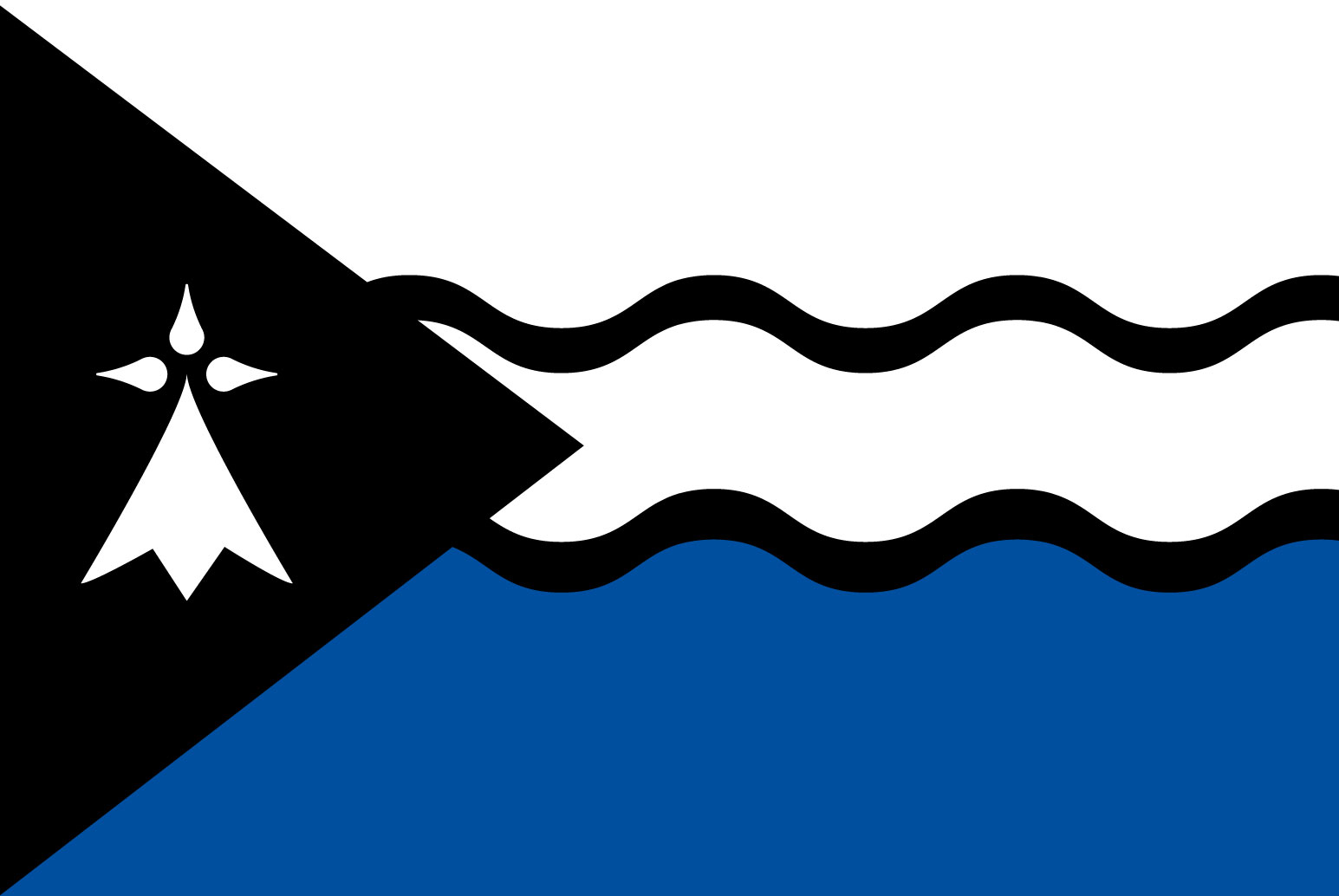
Brittany is traditionally divided into broioù (singular: bro) — historic “pays” or territories roughly corresponding to the nine mediaeval dioceses and their cultural subdivisions. Each bro is further divided into paouiòu (singular: paou), smaller sub-territories with their own flags and identities.
This atlas maps 60 of these traditional divisions. Click on any territory on the interactive map above to discover its flag, its history, and its place in the Breton heraldic tapestry. Notable broioù include:
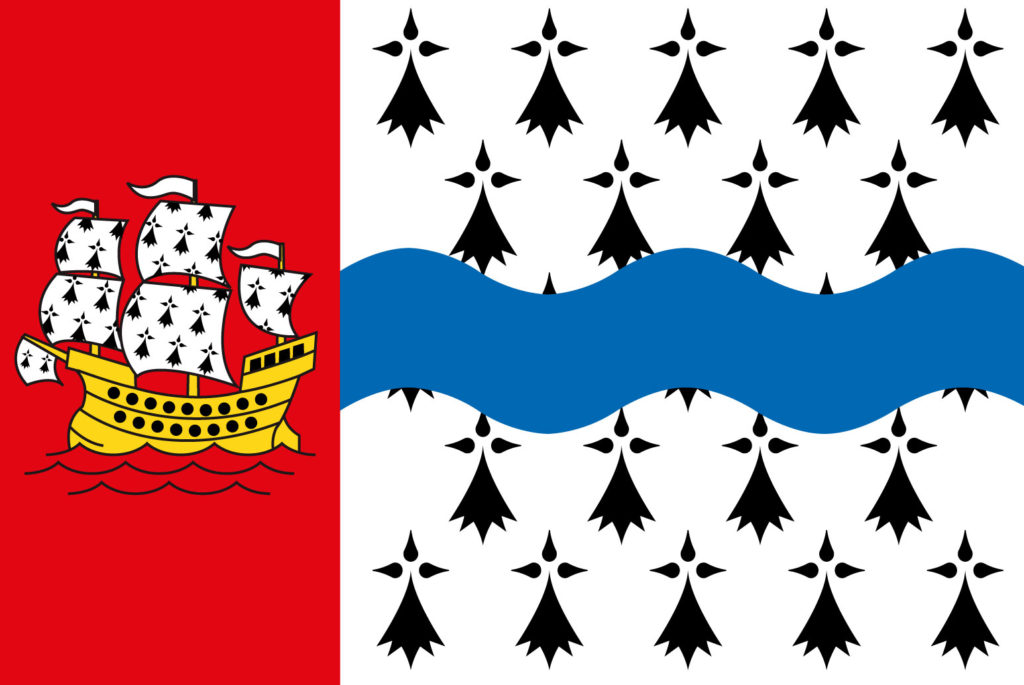
This atlas covers historic Brittany: nine dioceses, sixty pays, the Nantes country included. That is not the same ground as the administrative region delimited in 1956, which has four departments — Côtes-d’Armor, Finistère, Ille-et-Vilaine, Morbihan — and leaves Loire-Atlantique to the Pays de la Loire. The arms and flag of that region are on its own page.
The coat of arms of Brittany is Ermine plain — a white field scattered with black ermine spots (mouchetures d’hermine). It is one of the simplest and most recognisable blazons in European heraldry. The ermine was introduced by Pierre de Dreux around 1213 and became the sole charge under Duke Jean III in 1316.
The Gwenn-ha-du (“White and Black” in Breton) is the modern flag of Brittany, designed by Morvan Marchal in 1923. It features nine horizontal stripes alternating black and white (representing the nine historic dioceses) with an ermine canton. The five black stripes stand for the five pays of Haute-Bretagne, the Gallo-speaking east; the four white stripes for the four pays of Basse-Bretagne, the Breton-speaking west.
Broioù (singular: bro) are the traditional Breton “pays” — historic territories corresponding roughly to the nine mediaeval dioceses. Paouiòu (singular: paou) are smaller sub-territories within each bro. This atlas maps 60 of these traditional divisions with their flags and heraldic symbols.
The Kroaz Du (“Black Cross” in Breton) is the historic Breton cross flag: a black cross on a white field. Its attested use dates from the fifteenth century, and it was flown at sea by Breton ships throughout the late Middle Ages.
The ermine was introduced into Breton heraldry by Pierre de Dreux (Mauclerc), who became Duke of Brittany around 1213. From that legend comes the motto of the duchy and of the Order of the Ermine, « Plutôt la mort que la souillure » (“Rather death than dishonour”), comparing the ermine’s refusal to soil its white coat to the honour of Brittany.
Last reviewed by the Emblema Mundi editorial team on 2026-06-24.